
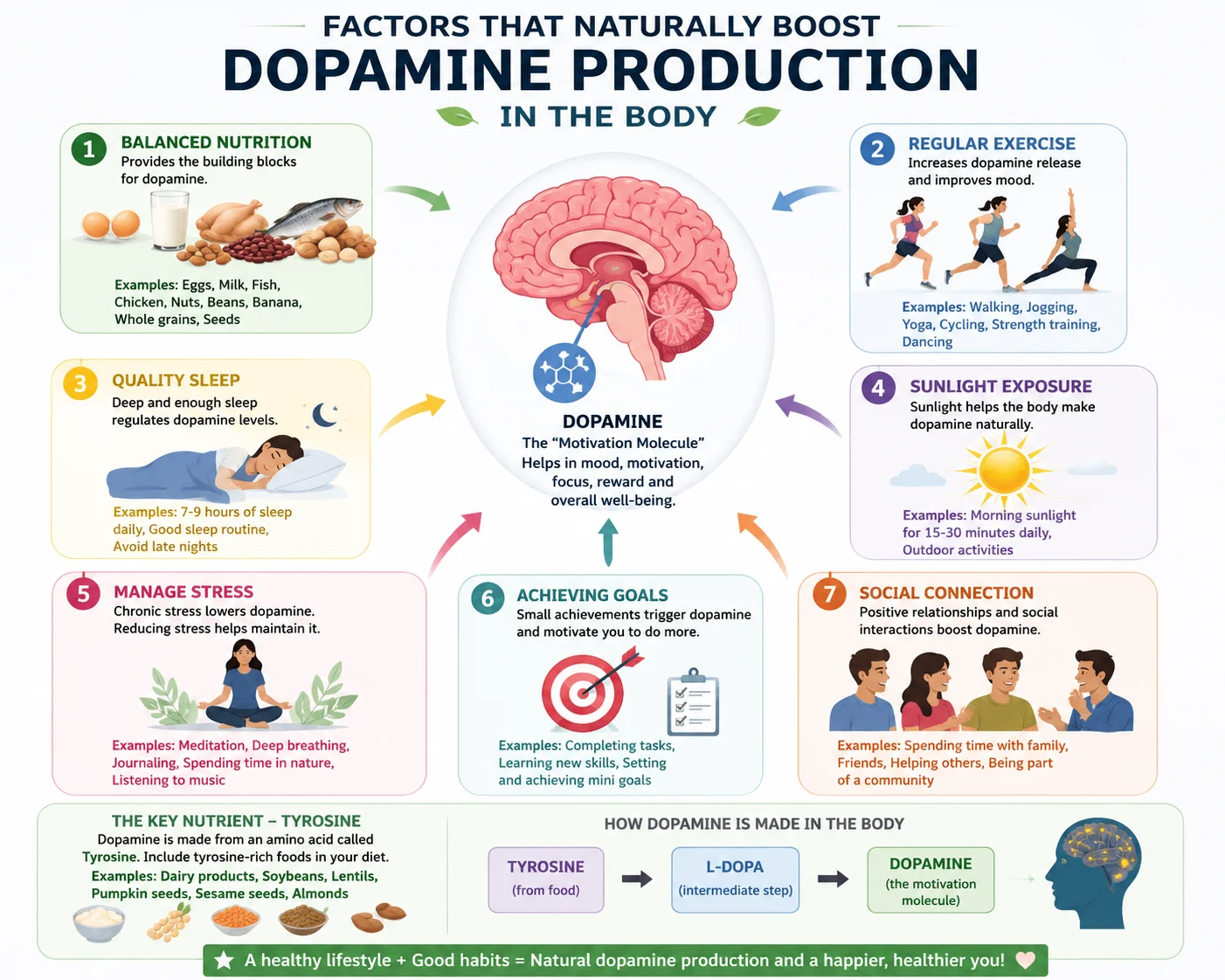
Dopamine is a powerful chemical messenger in the brain that plays a major role in how we feel, think, and act. Often called the “feel-good neurotransmitter,” dopamine is closely linked with motivation, pleasure, reward, learning, and focus. It is released when we experience something enjoyable, achieve a goal, or anticipate a reward, helping us feel satisfied and motivated to repeat positive behaviors.
Beyond pleasure, dopamine is essential for many important body functions, including movement, memory, attention, mood regulation, and decision-making. A healthy dopamine balance helps us stay motivated, energetic, and emotionally stable, while too little or too much dopamine may affect mental and physical health.
In everyday life, dopamine influences activities such as eating favorite foods, listening to music, exercising, learning new skills, and achieving success. Because of its deep connection with motivation and reward, dopamine is often described as the brain’s “motivation molecule” that drives us toward goals and achievements.
Dopamine is a natural chemical in the brain that helps to feel motivated, happy, and focused.
Main Sources of Dopamine in the Body
Dopamine is naturally produced in the body, mainly in the brain and nervous system. It is made from the amino acid tyrosine, which comes from protein-rich foods such as milk, eggs, fish, meat, nuts, and beans.
1. Brain (Primary Source)
Certain areas of the brain produce dopamine through specialized nerve cells called dopaminergic neurons.
Important dopamine-producing regions include:
Substantia Nigra – helps control body movement and coordination.
Ventral Tegmental Area (VTA) – involved in pleasure, reward, motivation, and emotions.
Hypothalamus – helps regulate hormones and body balance.
These brain regions release dopamine to communicate between nerve cells.
2. Adrenal Glands
The adrenal glands, located above the kidneys, also produce small amounts of dopamine. Here, dopamine acts as a chemical involved in stress response and blood circulation.
3. Kidneys and Digestive System
Dopamine is also produced in:
Kidneys – help regulate blood flow and salt balance.
Digestive tract (gut) – supports digestion and communication between the gut and brain.
Interestingly, a large amount of dopamine is present in the digestive system, though it does not directly enter the brain because of the blood–brain barrier.
How Dopamine Is Made
The body makes dopamine through a step-by-step process:
Tyrosine → L-DOPA → Dopamine
The amino acid tyrosine is converted into L-DOPA, which is then converted into dopamine by specific enzymes.
Natural Factors That Support Dopamine Production
Healthy dopamine production can be supported by:
Regular exercise
Good sleep
Sunlight exposure
Meditation
Achieving goals
Listening to music
Protein-rich foods containing tyrosine
Examples of tyrosine-rich foods include:
Eggs
Chicken
Fish
Dairy products
Almonds
Soybeans
Bananas
Dopamine is therefore not obtained directly from food but is produced naturally by the body using nutrients and healthy lifestyle habits.
How the Body Reacts to Low Dopamine
When the body does not produce enough dopamine, the brain and nervous system may not function properly because dopamine is essential for movement, motivation, pleasure, attention, and emotional balance. Low dopamine levels can affect both the mind and body in different ways.
Emotional and Mental Effects
A person may experience:
Low motivation or lack of interest
Sadness or depressed mood
Difficulty feeling pleasure (anhedonia)
Fatigue or low energy
Poor concentration and memory
Reduced confidence and enthusiasm
Mood swings or irritability
Because dopamine is strongly linked with the brain’s reward system, low dopamine can make everyday activities feel less enjoyable or meaningful.
Physical Effects
Low dopamine may also affect body movement and coordination, causing:
Slower movements
Muscle stiffness
Tremors or shaking
Poor balance
Reduced facial expressions
Lack of physical energy
Severely low dopamine in certain brain areas is associated with Parkinson's disease, where dopamine-producing nerve cells gradually degenerate.
Behavioral Changes
The body and brain may try to seek quick dopamine stimulation through:
Excessive social media use
Overeating sugary foods
Addiction-related behaviors
Constant search for excitement or rewards
This happens because the brain attempts to compensate for the low-reward feeling.
Conditions Linked to Low Dopamine
Low dopamine activity has been connected with several conditions, including:
Parkinson's disease
Depression
Attention-deficit hyperactivity disorder (ADHD)
Chronic stress and burnout
Sleep deprivation
Can Dopamine Levels Be Improved?
In many cases, dopamine function can improve through:
Proper sleep
Exercise
Healthy protein-rich nutrition
Stress reduction
Sunlight exposure
Social connection and meaningful activities
In medical conditions, doctors may use treatments such as therapy or medications that help increase dopamine activity in the brain.
Medical Approaches Used When Dopamine Is Low
If lifestyle changes are not enough to improve dopamine production or dopamine function, the next step is usually medical evaluation and targeted treatment. The remedy depends on why dopamine activity is low, because dopamine imbalance can occur from neurological disorders, mental health conditions, chronic stress, medication effects, hormonal problems, or other medical causes.
1. Dopamine-Enhancing Medications
Doctors may prescribe medicines that increase dopamine levels or improve how dopamine works in the brain.
Examples include:
Levodopa
Commonly used in Parkinson's disease. The brain converts it into dopamine.Pramipexole and Ropinirole
These mimic dopamine’s action in the brain.Certain medications used for attention-deficit hyperactivity disorder may increase dopamine signaling to improve focus and motivation.
Some antidepressant medicines may indirectly affect dopamine pathways in people with Depression.
These medicines should only be used under medical supervision because excessive dopamine activity can also cause problems.
2. Treating the Underlying Cause
Sometimes dopamine problems occur because of:
Chronic stress
Sleep disorders
Substance abuse
Nutritional deficiencies
Thyroid or hormonal imbalance
Neurological diseases
Treating the root condition may restore healthier dopamine function.
3. Psychological and Behavioral Therapy
If low motivation, reward response, or mood problems are involved, therapies such as:
Cognitive Behavioral Therapy (CBT)
Stress-management therapy
Addiction treatment programs
can help retrain the brain's reward pathways.
4. Advanced Treatments (In Specific Cases)
For severe neurological disorders such as advanced Parkinson's disease, doctors may recommend:
Deep Brain Stimulation (DBS)
Specialized neurological treatment programs
These are used only in carefully selected patients.
Important Note
Dopamine imbalance is complex. Symptoms that seem like “low dopamine” can sometimes actually result from:
Anxiety
Burnout
Sleep deprivation
Hormonal imbalance
Depression
Medication side effects
So self-medicating with dopamine-related drugs or supplements can be risky. Proper diagnosis by a neurologist or psychiatrist is important when symptoms become persistent or severe.
This topic may seem boring and difficult to understand at first. So, to make it simpler, more interesting, and easier for the general public, I am presenting it through a story. Stories help us connect with ideas emotionally and understand complex concepts naturally and enjoyably. Through characters and real-life situations, scientific ideas become easier to remember and relate to. Instead of learning through complicated definitions alone, readers can experience the concept in a practical and meaningful way. This approach also makes learning less stressful and more engaging for people of all ages. I hope this story will help readers understand dopamine not only with their minds, but also with their emotions and daily experiences.
The story
The Little Spark of Dopamine
Riya was a bright college student who once loved painting, singing, and spending time with friends. But over time, life became stressful. Endless assignments, lack of sleep, and constant pressure slowly drained her energy. Every morning felt heavy, and even the things she once enjoyed no longer made her happy.
One evening, while sitting alone in her room, she looked at her unfinished painting on the wall. Months ago, colors had brought excitement to her heart. Now, the brush felt lifeless in her hand.
Her biology teacher, Mr. Sen, noticed the change in her behavior and gently said, “Your brain has its own motivational messenger called dopamine. When it becomes low, the world may start looking dull, even when beauty still exists around you.”
Riya became curious. Mr. Sen explained that dopamine is not only about pleasure—it is also about hope, motivation, movement, and the excitement of trying again.
He advised her to begin with very small steps:
Wake up early and walk in the sunlight.
Sleep properly.
Exercise a little every day.
Reduce endless scrolling on her phone.
Celebrate even tiny achievements.
At first, the changes felt meaningless. But slowly, something shifted inside her. One morning, after finishing a short walk, she felt a tiny spark of energy. Another day, she smiled while listening to music. A week later, she picked up her paintbrush again.
The painting was not perfect, but it made her feel alive.
Months passed, and Riya realized an important truth: happiness does not suddenly appear all at once. Sometimes, the brain heals through small repeated moments of effort, hope, and reward.
That tiny chemical called dopamine had quietly begun rebuilding her motivation—one small step at a time.
And from then on, whenever life became difficult, Riya remembered:
“Even the smallest positive action can light up the brain’s little spark again.”
Simple Summary:
Dopamine works by transmitting signals between brain cells that drive motivation, reward, movement, and learning. Balanced dopamine = better focus, mood, and productivity.
Dopamine is a natural chemical in the brain that helps you feel motivated, happy, and focused.
It is released when you achieve a goal or do something enjoyable.
It encourages you to repeat healthy and rewarding activities.
It helps control body movements and coordination.
Low dopamine can cause low motivation and tiredness.
Balanced dopamine keeps your mind active and positive.
Healthy Ways to Boost Dopamine
✔ Regular exercise ✔ Good sleep ✔ Sunlight exposure ✔ Setting small goals ✔ Spending time with loved ones