Serotonin (5-Hydroxytryptamine or 5-HT)
Serotonin, scientifically known as 5-hydroxytryptamine (5-HT), is an important chemical messenger that helps regulate many functions of the body and mind. It acts mainly as a neurotransmitter, carrying signals between nerve cells, and plays a major role in mood, emotions, sleep, digestion, and overall well-being.
Serotonin is often called the “feel-good neurotransmitter” because healthy serotonin levels are associated with:
Emotional balance
Calmness
Happiness
Mental stability
Where Is Serotonin Found?
Serotonin is found in several parts of the body, but the largest amount is located in the digestive system.
Main Locations of Serotonin in the Body
1. Gastrointestinal (GI) Tract — About 90%
Most serotonin is found in the digestive system, especially in specialized cells lining the intestines called enterochromaffin cells (the “second brain” of the gut)
Functions here include:
Regulating bowel movement
Controlling digestion
Influencing appetite and gut activity
This is why serotonin is closely connected with the “gut–brain connection.”
2. Brain and Central Nervous System
A smaller amount is found in the brain, where serotonin acts as a neurotransmitter. Brain serotonin cannot cross the blood–brain barrier, so it must be made inside the brain.
It helps regulate:
Mood
Sleep
Memory
Emotions
Stress response
Important serotonin-producing neurons are mainly located in the raphe nuclei of the brainstem.
A simplified pathway is:
Raphe Nuclei→Serotonin Release in Brain Pathways
3. Blood Platelets
Serotonin is also present in platelets (blood cells involved in clotting).
Functions include:
Blood vessel constriction
Supporting clot formation after injury
Platelets do not make serotonin themselves; they absorb it from the blood.
4. Peripheral Nervous System
Some serotonin is found in nerves outside the brain and spinal cord, where it helps regulate body functions.
How Serotonin Is Made in the Body
Serotonin is produced from an essential amino acid called tryptophan, which comes from the food we eat. The body cannot make tryptophan on its own, so it must be obtained through diet.
Foods containing tryptophan include:
Milk
Eggs
Nuts
Fish
Chicken
Bananas
Soy products
Step-by-Step Formation of Serotonin
1. Tryptophan Enters the Body
After food is eaten and digested, tryptophan is absorbed into the bloodstream.
2. Conversion to 5-Hydroxytryptophan (5-HTP)
An enzyme called tryptophan hydroxylase converts tryptophan into 5-hydroxytryptophan (5-HTP).
This is the rate-limiting and important first step.
A simplified reaction is:
Tryptophan→5-HTP
3. Conversion of 5-HTP to Serotonin
Another enzyme called aromatic L-amino acid decarboxylase converts 5-HTP into serotonin (5-HT).
The next step is:
5-HTP→Serotonin (5-HT)
Where This Production Happens
Serotonin synthesis occurs mainly in:
The gastrointestinal tract
Serotonin-producing neurons in the brainstem (raphe nuclei)
Factors Needed for Healthy Serotonin Production
Proper serotonin synthesis depends on:
Adequate dietary tryptophan
Vitamins such as vitamin B6
Healthy brain and gut function
Good sleep and stress balance
The complete simplified pathway is:
Tryptophan→5-HTP→Serotonin (5-HT)
Thus, serotonin production begins with nutrients from food and depends on several enzymes and the healthy body system.
Functions of Serotonin
Serotonin (5-HT) is an important neurotransmitter that influences many functions of the brain, nervous system, and body organs. It helps maintain both emotional and physical balance.
1. Regulates Mood and Emotions
One of serotonin’s best-known functions is helping maintain emotional stability.
Healthy serotonin activity is associated with:
Calmness
Happiness
Emotional balance
Sense of well-being
Low serotonin activity has been linked with:
Depression
Anxiety
Irritability
A simplified relationship is:
Healthy Serotonin Activity→Balanced Mood
2. Helps Control Sleep
Serotonin helps regulate:
Sleep cycles
Relaxation
Wakefulness
It also helps in the production of melatonin, the sleep hormone.
3. Regulates Appetite and Digestion
Most serotonin is found in the gastrointestinal tract, where it helps:
Control bowel movement
Regulate appetite
Support digestion
4. Influences Memory and Learning
Serotonin contributes to:
Concentration
Cognitive function
Memory processing
5. Helps Manage Stress and Anxiety
Serotonin supports emotional control and helps the brain respond more calmly to stress.
Effects may include:
Reduced anxiety
Improved emotional resilience
Relaxation
6. Modulates Pain Perception
Serotonin participates in pain-control pathways in the brain and spinal cord.
It can influence:
Pain sensitivity
Headache mechanisms
Chronic pain responses
7. Supports Social Behavior
Healthy serotonin activity may help with:
Emotional communication
Social confidence
Behavioral balance
8. Helps in Blood Clotting
Platelets store serotonin and release it during injury.
This helps:
Narrow blood vessels
Support clot formation
9. Influences Sexual Function
Serotonin also affects:
Sexual desire
Arousal
Reproductive behavior
10. Regulates Body Functions
Serotonin helps regulate several body systems, including:
Temperature control
Nausea response
Hormonal balance
Serotonin→Mood+Sleep+Digestion+Stress Regulation
Because serotonin affects both the brain and the body, it is considered one of the most important neurotransmitters for overall health and well-being.
Conditions in Which Serotonin May Become Low in the Body
Serotonin levels or serotonin activity may decrease due to physical, emotional, nutritional, or medical factors. Usually, it is not only the amount of serotonin that matters, but also how effectively the brain uses it.
1. Chronic Stress
Long-term stress can disturb normal brain chemistry and affect serotonin regulation.
Stress hormones such as cortisol may interfere with healthy serotonin function.
Effects may include:
Anxiety
Irritability
Emotional exhaustion
2. Depression and Mood Disorders
Low serotonin activity has been strongly associated with:
Depression
Anxiety disorders
Panic disorders
Though mood disorders are complex and involve many brain chemicals, serotonin plays an important role.
Low Serotonin Activity→Low Mood and Emotional Imbalance
3. Poor Diet or Tryptophan Deficiency
Serotonin is made from tryptophan obtained through food.
Poor nutrition or low tryptophan intake may reduce serotonin synthesis.
Foods rich in tryptophan include:
Eggs
Milk
Nuts
Fish
Soy products
4. Lack of Sunlight
Reduced sunlight exposure may affect serotonin activity.
This is one reason some people experience:
Seasonal low mood
Seasonal affective disorder (SAD)
5. Poor Sleep
Sleep and serotonin influence each other closely.
Chronic sleep deprivation can disrupt serotonin balance and emotional regulation.
6. Lack of Physical Activity
Regular exercise helps support serotonin function.
Physical inactivity may contribute to lower serotonin activity and poorer mood regulation.
7. Hormonal Changes
Hormonal fluctuations may influence serotonin pathways.
Examples:
Menstrual cycle changes
Pregnancy
Menopause
8. Certain Medical Conditions
Some disorders may affect serotonin production or regulation, including:
Chronic pain conditions
Digestive disorders
Neurological diseases
9. Alcohol and Drug Misuse
Long-term misuse of alcohol or drugs can disturb neurotransmitter systems, including serotonin pathways.
10. Some Medications
Certain medicines can affect serotonin levels, serotonin receptors, or serotonin signaling in the brain. If these medicines are misused, taken in excess, combined improperly, or stopped suddenly, serotonin balance may become disturbed.
Those are: Antidepressants, SNRIs (Serotonin–Norepinephrine Reuptake Inhibitors), MAO Inhibitors (MAOIs), Migraine Medicines (Triptans), Some Cough Medicines, Certain Pain Medicines, and Recreational Drugs
11. Genetic Factors
Some people may naturally have differences in serotonin receptors or transport systems that affect serotonin function.
Stress, Poor Sleep, Poor Diet, and Inactivity→Reduced Serotonin Function
Low serotonin activity may contribute to symptoms such as:
Low mood
Anxiety
Sleep problems
Fatigue
Reduced motivation
Emotional imbalance
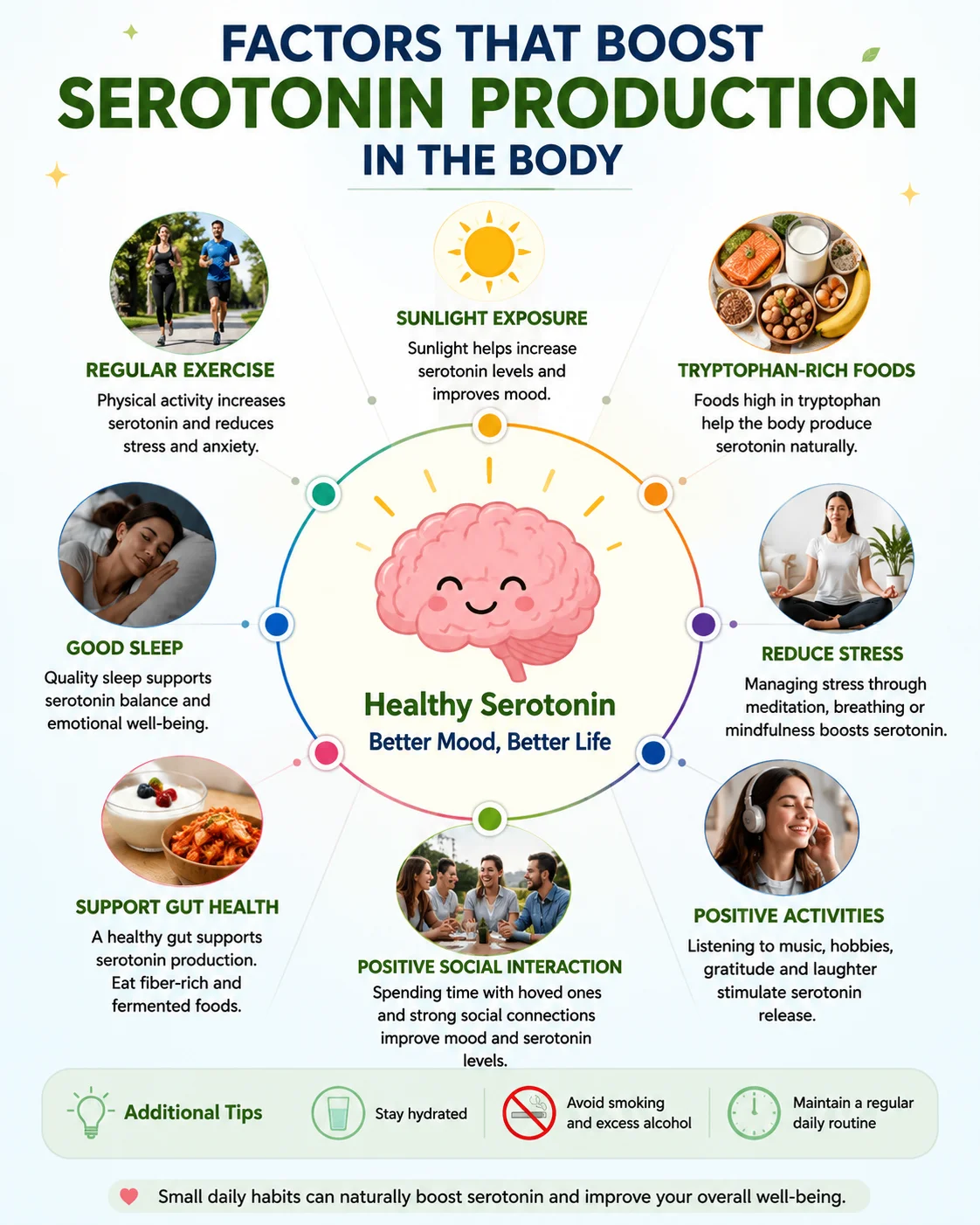
Natural Ways to Boost Serotonin in the Body
Serotonin levels can be supported naturally through healthy lifestyle habits, nutrition, physical activity, and stress management. Since serotonin influences mood, sleep, and emotional balance, maintaining healthy daily routines is very important.
1. Regular Exercise
Exercise is one of the best natural ways to support serotonin activity.
Physical activity helps:
Improve mood
Reduce stress
Enhance brain signaling
Examples:
Walking
Running
Cycling
Swimming
Yoga
Exercise→Increased Serotonin Activity
2. Sunlight Exposure
Sunlight helps stimulate serotonin production and regulation.
Regular exposure to morning or daytime sunlight may improve:
Mood
Energy
Sleep rhythm
This is why low sunlight exposure can affect emotional well-being.
3. Eat Tryptophan-Rich Foods
Serotonin is made from tryptophan, an amino acid obtained from food.
Foods rich in tryptophan include:
Egg
Milk
Salmon
Banana
Soybean
Almond
These foods support serotonin synthesis.
4. Maintain Good Sleep
Healthy sleep supports serotonin balance, and serotonin also helps regulate sleep cycles.
Helpful habits:
Consistent sleep schedule
Limiting late-night screen exposure
Relaxation before sleep
5. Reduce Chronic Stress
Long-term stress can disturb serotonin pathways.
Stress-reduction methods include:
Meditation
Deep breathing
Mindfulness
Prayer
Relaxation exercises
6. Positive Social Interaction
Healthy relationships and emotional connections can improve mood and support serotonin function.
Examples:
Spending time with loved ones
Supportive conversation
Social activities
7. Listening to Music
Enjoyable music may stimulate mood-related brain pathways linked with serotonin and dopamine.
8. Gut Health Support
Most serotonin is found in the digestive system.
Healthy gut habits may support serotonin balance:
Fiber-rich foods
Fermented foods
Proper hydration
Examples of fermented foods:
Yogurt
Kimchi
9. Practice Gratitude and Positive Activities
Positive emotional experiences may support healthy neurotransmitter balance.
Examples:
Hobbies
Creative work
Helping others
Gratitude practices
Healthy Lifestyle Habits→Better Serotonin Function and Mood Balance
Natural serotonin support works best through regular healthy habits rather than quick temporary stimulation.
Medical requirement:
If the body is not producing enough serotonin naturally, the remedy depends on the cause and severity of the symptoms. In many cases, serotonin function can improve through lifestyle changes, while some people may require medical treatment.
1. Counseling or Psychotherapy
For persistent low mood, anxiety, or emotional difficulties, professional counseling may help improve emotional regulation and mental health.
2. Medical Treatment (When Needed)
If serotonin-related problems are severe, doctors may prescribe medicines that improve serotonin activity.
Examples include antidepressants such as:
Fluoxetine
Sertraline
Escitalopram
These medicines help increase serotonin availability in the brain.
Important Safety Note
Serotonin-related medicines:
Should only be taken under medical supervision
Should not be stopped suddenly
Should not be mixed carelessly with supplements or other drugs
Healthy Lifestyle+Medical Care if Needed→Better Serotonin Balance
For many people, improving sleep, exercise, nutrition, stress management, and emotional support can significantly help natural serotonin function.
Simple Message:
Balanced serotonin = Stable mood + Good sleep + Healthy digestion.