
Breast milk is the most natural and complete source of nutrition for a newborn baby. It provides essential nutrients, antibodies, and emotional comfort that support the baby’s healthy growth and development. However, many mothers become worried when they feel that their breast milk supply is low or insufficient for their baby’s needs. This concern is especially common among first-time mothers who are still learning and adjusting to breastfeeding.
In most cases, breast milk production can be increased naturally with proper breastfeeding practices, healthy lifestyle habits, good nutrition, adequate rest, and emotional support. The mother’s body works on a natural demand-and-supply system—the more effectively and frequently the baby feeds, the more milk the body is encouraged to produce.
Natural methods to improve breast milk supply are usually safe, healthy, and beneficial for both mother and baby. Proper latching, frequent feeding, staying hydrated, eating nutritious foods, reducing stress, and getting enough sleep all play important roles in supporting milk production.
It is also important for mothers to remember that stress, anxiety, self-doubt, and exhaustion may sometimes affect breastfeeding confidence and milk flow. Therefore, emotional reassurance, family support, patience, and self-care are equally important parts of successful breastfeeding.
With love, regular practice, and proper care, many mothers can successfully improve their breast milk supply naturally and continue a healthy breastfeeding journey with their babies.
Frequency of breastfeeding:
Newborn babies usually need breastfeeding 8 to 12 times in 24 hours. This means feeding about every 2 to 3 hours, including during the night. Some babies may be fed on demand, i.e., the baby is crying or not sleeping, sometimes more often during growth spurts.
Avoid long gaps between feeds
Let the baby fully empty one breast before switching
Next time, put the baby on the other breast that was not fed
Ensure proper latch (very important)
👉 Poor latch = less milk removal = lower supply
Here is a simple guide by age:
0–1 month: 8–12 times a day
1–3 months: 7–9 times a day
3–6 months: 6–8 times a day
6 months and above: Breastfeeding continues along with solid foods
Signs that the baby is getting enough milk:
Passing urine 6–8 times daily
Steady weight gain
Baby seems calm and satisfied after feeding
Good sleep between feeds
A baby should be breastfed whenever they show hunger signs such as:
Sucking fingers
Opening mouth and searching for the breast
Lip-smacking
Restlessness or crying
Exclusive breastfeeding is recommended for the first 6 months of life.
Do Skin-to-Skin Contact While Breastfeeding Your Baby
Holding your baby skin-to-skin during breastfeeding means placing the baby’s bare chest directly against the mother’s bare chest. This simple contact gives comfort, warmth, and emotional bonding.
Benefits of Skin-to-Skin Contact During Breastfeeding
Helps the baby latch properly to the breast
Makes breastfeeding easier and more comfortable
Increases breast milk production naturally
Keeps the baby warm and calm
Helps stabilise the baby’s heartbeat and breathing
Reduces crying and stress in babies
Strengthens emotional bonding between mother and baby
Encourages the release of oxytocin, the “love hormone.”
How to Do It
Place the baby, wearing only a diaper, on the mother’s bare chest
Cover the baby’s back with a soft blanket if needed
Hold the baby safely and comfortably
Allow the baby to move toward the breast and feed naturally
Best Time for Skin-to-Skin Contact
Immediately after birth
During breastfeeding sessions
Whenever the baby feels fussy or restless
Even a few minutes of daily skin-to-skin contact can support healthy breastfeeding and emotional connection.
Breast pumping:
Why Pumping Breast Milk After Feeding May Be Needed
Pumping after breastfeeding is not always necessary, but in some situations it can be very helpful for both mother and baby.
Common Reasons for Pumping After Feeding
To increase milk supply
Extra pumping tells the body to produce more milk. This is useful if the milk supply seems low.If the baby is not emptying the breast well
Some babies are sleepy, weak, premature, or have difficulty latching properly. Pumping helps fully drain the breast.To relieve breast fullness or engorgement
Pumping can reduce pain, tightness, and pressure in overly full breasts.To store milk for later use
Mothers returning to work or needing time away from the baby may pump and store milk.If the baby is in the NICU (Neonatal Intensive Care Unit) or unable to breastfeed directly
Pumping helps maintain milk production until direct breastfeeding becomes possible.To prevent blocked ducts and reduce mastitis risk
Emptying the breast properly may help avoid milk blockage and infection.
When Pumping May Not Be Necessary
If:
The baby is feeding well,
gaining weight normally,
producing enough wet diapers,
and the mother feels comfortable,
Then routine pumping after every feed is usually not required.
Best Time to Pump
About 10–20 minutes after breastfeeding
Early morning is often best because milk supply is naturally higher
Important Tip
Too much unnecessary pumping may sometimes lead to:
oversupply of milk,
breast discomfort,
leaking,
or engorgement.
A balanced routine based on the mother’s and baby’s needs is most helpful.
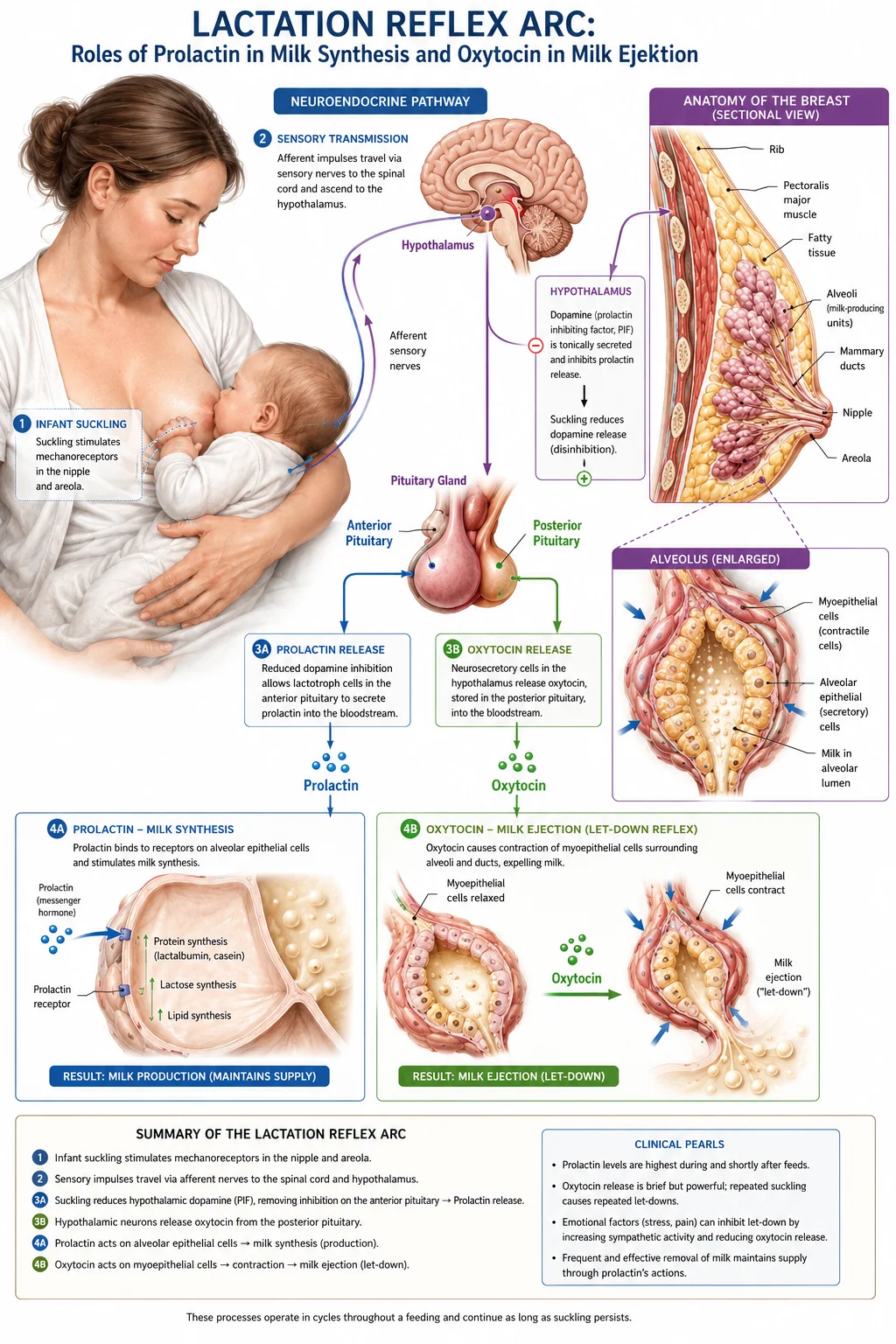
When a baby sucks the breast, a natural reflex pathway starts in the mother’s body that leads to the release of oxytocin, known as the “love hormone.”
Pathway of Oxytocin Release During Breastfeeding
1. Baby sucks the nipple
Nerve endings present in the nipple and areola become stimulated.
2. Nerve signals travel to the brain
Nerve impulse passes via the thoracic (4, 5, and 6) afferent neural arc to the paraventricular and supraoptic nuclei of the hypothalamus to synthesise and transport oxytocin to the posterior pituitary
3. The posterior pituitary releases oxytocin into the bloodstream
Oxytocin via the bloodstream produces contraction of the myoepithelial cells of the alveoli and ducts containing the milk. This is the 'milk ejection' or ' milk let down reflex.'
4. The milk is forced down into the ampulla of the lactiferous ducts
The muscles around the alveoli contract and push milk into the milk ducts, helping the baby receive milk easily.
The milk can then be sucked by the baby, or the mother can express it.
Simple Flow Pathway
Baby suckling the breast
→ Nipple nerve stimulation
→ Hypothalamus activated
→ Posterior pituitary stimulated
→ Oxytocin released
→ Milk let-down reflex occurs
Oxytocin also helps create feelings of love, relaxation, bonding, and emotional attachment between mother and baby.
Milk-Boosting Foods (Galactagogues)
Galactagogues are foods and herbs that may help increase breast milk production in breastfeeding mothers. They work best when combined with frequent breastfeeding, proper hydration, rest, and good nutrition.
Common Milk-Boosting Foods
1. Fenugreek (Methi)
Traditionally used to support milk supply
Can be taken as seeds, tea, or cooked in food
May have a mild maple-like smell
2. Fennel (Saunf)- Mouri
May help digestion and support lactation
Commonly used after meals in India
3. Oats
Rich in iron and fiber
A nutritious food often recommended during breastfeeding
4. Garlic
Traditionally believed to encourage feeding
Adds flavor and nutrition to meals
5. Cumin Seeds (Jeera)
Commonly used in Indian diets
May support digestion and lactation
6. Sesame Seeds (til)
Good source of calcium and healthy fats
7. Green Leafy Vegetables
Examples:
Spinach
Moringa leaves (sojne pata)
Dill leaves (Shulpha)
These provide vitamins, minerals, and iron.
8. Nuts and Dry Fruits
Examples:
Almonds
Walnuts
Dates
They provide energy and healthy nutrients for nursing mothers.
9. Drink plenty of water (at least 2.5–3 litres daily
Important Things That Truly Help Milk Supply
The most effective natural stimulators of milk production are:
Frequent breastfeeding
Correct baby latch
Skin-to-skin contact
Emptying the breasts regularly
Adequate fluids and nutrition
Proper sleep and reduced stress
Important Note
Not every galactagogue works the same for every mother. Some herbs may cause an allergy, stomach upset, or interact with medicines. If the milk supply remains low, consulting a lactation expert or doctor is helpful.
Rest and Reduce Stress for Better Breast Milk Production
Adequate rest and a calm mind play an important role in healthy breast milk production. When a mother feels relaxed, the body releases hormones more effectively, especially oxytocin and prolactin, which support breastfeeding.
How Rest Helps Milk Production
Helps the body recover after childbirth
Supports hormone balance
Improves energy needed for breastfeeding
Helps maintain a healthy milk supply
How Stress Affects Breastfeeding
Stress, anxiety, fear, and exhaustion may:
Interfere with the let-down reflex,
Reduce oxytocin release,
Make breastfeeding more difficult temporarily.
The milk may still be present in the breast, but stress can slow its flow.
Ways to Reduce Stress Naturally
Sleep Whenever Possible
Rest when the baby sleeps
Short naps can help recovery
Skin-to-Skin Contact
Holding the baby close calms both mother and baby
Encourages oxytocin release
Eat Nutritious Food and Drink Enough Water
A healthy body supports healthy milk production
Ask for Family Support
Help with household work reduces physical and mental strain
Gentle Relaxation
Deep breathing
Soft music
Quiet environment
Light walking if medically allowed
Positive Emotional Bonding
Looking at, touching, and talking to the baby can improve emotional comfort and hormone release
Simple Understanding
A relaxed mother
→ Better oxytocin and prolactin release
→ Improved milk let-down and milk production
→ More comfortable breastfeeding experience
Avoid These
Formula supplementation (unless medically needed)
Pacifiers in early weeks (may reduce feeding frequency)
Smoking
Certain medications (consult doctor)
Doing a hurry while feeding
Nipple pain (if poor latching)
When to See a Doctor
Baby not gaining weight
Fewer than 6 wet diapers/day after the first day of life for 5 days
Severe breast pain or fever (possible mastitis)