
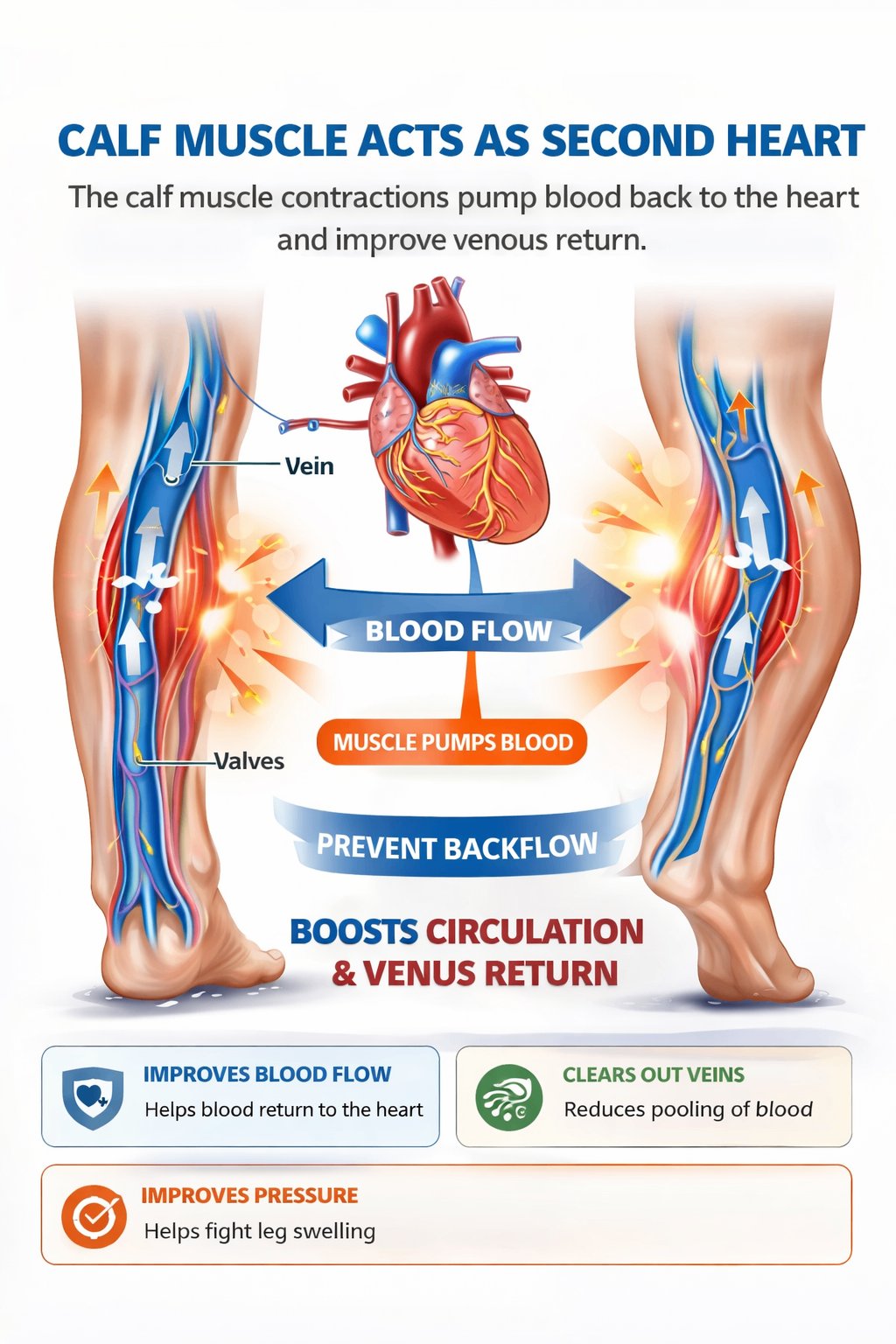
During a walk:
The calf muscles contract
They squeeze the deep veins in the leg
Blood is pushed upward toward the heart
One-way valves in the veins prevent backward flow
When the muscles relax, veins refill with blood — ready for the next step.
👉 Each step acts like a mini pump cycle
Benefits of Daily Walking for Leg Circulation
✔ Improves venous return
✔ Reduces leg swelling (edema)
✔ Prevents blood pooling in lower limbs
✔ Lowers risk of varicose veins
✔ Reduces risk of deep vein thrombosis (DVT)
✔ Decreases heaviness and fatigue in the legs
How Much Walking Helps?
20–30 minutes daily brisk walking
Or frequent short walks (5–10 minutes every hour if sitting long)
Especially helpful for:
People with sedentary jobs
Elderly individuals
Patients with mild venous insufficiency
Important Tip
Avoid long periods of:
Standing still
Sitting without movement
If you sit for long hours:
Flex ankles up and down
Do heel raises
Take short walking breaks
Every day walking activates the calf muscle pump, improving venous return and supporting heart circulation. It is one of the best natural methods to maintain healthy leg veins.