
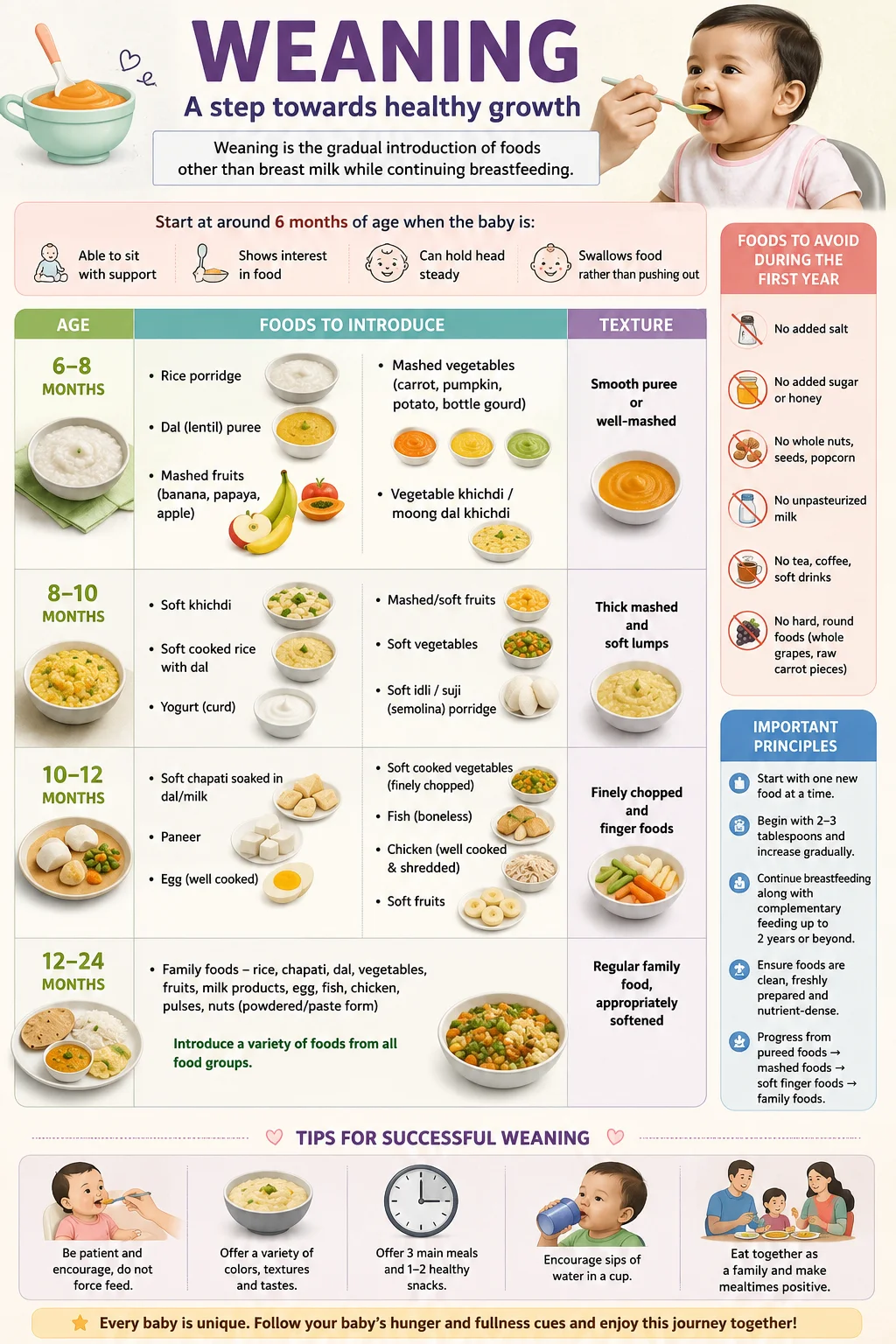
Transitioning from breastfeeding to solid foods is a significant and exciting milestone in a baby's journey of growth and development. During the first six months of life, breast milk provides all the essential nutrients, energy, antibodies, and hydration required for healthy growth. However, as babies grow, their nutritional needs increase, and breast milk alone is no longer sufficient to meet all their requirements. This is the stage when complementary foods are gradually introduced while breastfeeding continues, creating a balanced approach to nutrition.
The introduction of solid foods is not merely about providing additional nutrients; it is also an important developmental process. It helps babies learn new skills such as chewing, swallowing, self-feeding, and coordinating hand-to-mouth movements. Exposure to different tastes, textures, colors, and aromas encourages sensory development and helps build healthy eating habits from an early age. A gradual and patient approach allows infants to become familiar with a wide variety of foods, reducing the likelihood of picky eating later in childhood.
Breastfeeding remains an important source of nutrition, comfort, and immune protection during this transition period. The continued presence of breast milk alongside complementary foods ensures that babies receive valuable nutrients and protective factors while adapting to a new diet. This combination helps bridge the nutritional gap and supports steady physical growth, brain development, and a strong immune system.
Introducing solid foods at the appropriate time also supports digestive maturation. As a baby's digestive system develops, it becomes better equipped to handle a wider range of foods and nutrients. Starting with soft, easily digestible foods and gradually progressing to more varied textures allows the digestive system to adapt comfortably. This process helps improve nutrient absorption, supports healthy gut development, and encourages positive eating experiences.
The transition from breastfeeding to solid foods is not a sudden change but a gradual journey that varies for every child. Some babies readily accept new foods, while others may need repeated exposure before developing a preference for them. Parents and caregivers play a crucial role by offering nutritious foods, maintaining patience, and creating a positive mealtime environment. Responsive feeding practices, where caregivers recognize and respond to a baby's hunger and fullness cues, help foster a healthy relationship with food.
This important phase also provides an opportunity to introduce nutrient-rich foods that support rapid growth and development. Foods rich in iron, protein, healthy fats, vitamins, and minerals become increasingly important as the baby's nutritional demands increase. A balanced and diverse diet during infancy contributes to stronger bones, healthy muscles, improved cognitive function, and overall well-being.
Ultimately, the transition from breastfeeding to solid foods marks the beginning of lifelong eating habits. A thoughtful and gradual introduction of complementary foods, combined with continued breastfeeding, helps ensure optimal nutrition, supports healthy development, and lays a strong foundation for future health. By nurturing positive feeding experiences during this stage, parents can help their children develop healthy dietary patterns that benefit them throughout their lives.
When Should Weaning Foods Be Started and Why?
Weaning, also known as the introduction of complementary foods, should generally begin at around 6 months (180 days) of age while breastfeeding continues. At this stage, breast milk alone can no longer fully meet the growing infant's nutritional and energy requirements.
Why Should Weaning Foods Be Started at 6 Months?
1. Increased Nutritional Needs
By six months of age, babies require more energy, protein, iron, zinc, and other nutrients than breast milk alone can provide. Complementary foods help fill this nutritional gap and support healthy growth.
2. Depletion of Iron Stores
Infants are born with iron stores that usually last for about six months. After this period, additional iron-rich foods are needed to prevent iron deficiency and support brain development.
3. Rapid Growth and Development
The first year of life is a period of rapid physical and mental growth. Introducing nutritious complementary foods provides the extra nutrients needed for proper development of the brain, muscles, bones, and immune system.
4. Maturation of the Digestive System
Around six months of age, the baby's digestive system becomes more mature and better able to digest and absorb a variety of foods safely and effectively.
5. Development of Feeding Skills
At this age, babies begin developing the skills needed for eating solid foods, including chewing, swallowing, and moving food from the front to the back of the mouth.
6. Readiness for Solid Foods
Most babies around six months show signs of readiness, such as:
Sitting with little or no support.
Holding their head steady.
Showing interest in food.
Opening their mouth when food is offered.
Losing the tongue-thrust reflex that pushes food out of the mouth.
Why Should Weaning Not Be Started Too Early?
Introducing complementary foods before 6 months may:
Increase the risk of infections and diarrhea.
Reduce breast milk intake.
Put stress on the immature digestive system.
Increase the risk of food allergies in some infants.
Why Should Weaning Not Be Delayed?
Starting complementary feeding after 6 months may:
Lead to nutrient deficiencies, especially iron deficiency.
Causes poor growth and weight gain.
Delay the development of chewing and feeding skills.
Increase the risk of feeding difficulties later in childhood.
In summary, weaning foods should be introduced at around 6 months of age because breast milk alone is no longer sufficient to meet the infant's growing nutritional needs. Timely introduction of complementary foods, along with continued breastfeeding, ensures optimal growth, development, and long-term health.
Does Milk Production Change?
Breast milk production works on a supply-and-demand principle:
If the baby continues to breastfeed frequently, milk production is usually maintained.
If breastfeeding sessions decrease because more solid foods are offered, milk production may gradually decrease over time.
This decrease occurs because of reduced stimulation of the breasts, not simply because the baby has reached 6 months of age.
Weaning is the gradual process of introducing foods and liquids other than breast milk while continuing breastfeeding. Complementary foods are usually started at around 6 months of age, as breast milk alone can no longer meet all of the baby's increasing nutritional needs, especially for energy, iron, zinc, and protein.
Age of Baby | Recommended Weaning Foods | Texture |
|---|---|---|
6–8 months | Rice porridge, mashed banana, mashed potato, mashed sweet potato, cooked and mashed apple, mashed papaya, dal water, soft khichdi, mashed vegetables, infant cereals | Smooth puree or well-mashed |
8–10 months | Soft khichdi, mashed rice and dal, yogurt (curd), soft fruits, scrambled egg yolk, well-cooked vegetables, soft idli, suji (semolina) porridge | Thick mashed and soft lumps |
10–12 months | Soft chapati soaked in milk or dal, paneer, soft-cooked egg, fish (boneless), chicken (well-cooked and shredded), cooked vegetables, soft fruits, upma, daliya | Finely chopped and finger foods |
12–24 months | Family foods such as rice, chapati, dal, vegetables, fruits, milk products, eggs, fish, chicken, pulses, nuts (powdered or paste form) | Regular family food, appropriately softened |
Foods to Avoid During the First Year
Honey (risk of infant botulism)
Whole nuts (choking hazard)
Unpasteurized milk products
Excess salt and sugar
Tea, coffee, and soft drinks
Hard, round foods that may cause choking (whole grapes, popcorn, large nut pieces)
Important Principles of Weaning
Start with one new food at a time.
Introduce foods gradually and observe for allergies.
Begin with 2–3 tablespoons and slowly increase the amount.
Continue breastfeeding along with complementary feeding up to 2 years of age or beyond.
Ensure foods are clean, freshly prepared, and nutrient-dense.
Progress from pureed foods → mashed foods → soft finger foods → family foods as the child grows.
A well-planned weaning diet helps ensure proper growth, brain development, immunity, and healthy eating habits throughout childhood.
Why should salt be avoided during weaning?
1. Baby's kidneys are immature
A baby's kidneys are still developing during the first year of life and cannot efficiently handle excess sodium (salt). Too much salt can place unnecessary strain on the kidneys.
2. Breast milk and foods already provide enough sodium
Breast milk, infant formula, and natural foods contain sufficient sodium to meet an infant's needs. Additional salt is usually unnecessary.
3. Helps develop healthy eating habits
Introducing foods without salt allows babies to appreciate the natural flavors of foods. Babies who become accustomed to salty foods early may develop a preference for salty foods later in life.
4. May reduce future health risks
A high-salt diet throughout life is associated with an increased risk of high blood pressure and cardiovascular disease. Early dietary habits can influence later food preferences.
When can salt be introduced?
After 12 months of age, small amounts of salt can be included as part of family foods. However, even then, it is best to keep salt intake low.
How can weaning foods be made tasty without salt?
You can use natural flavors such as:
Breast milk or formula mixed into foods
Mashed fruits (banana, apple, pear, papaya)
Sweet potato or pumpkin
Mild herbs and spices after 6–8 months (such as a tiny amount of cumin or cinnamon, depending on local dietary practices)
Different textures and combinations of fruits, vegetables, and cereals
Examples of suitable low-salt weaning foods (6–8 months)
Rice porridge without salt
Mashed banana
Mashed sweet potato
Khichdi made without added salt
Dal puree
Mashed pumpkin or carrot
Oatmeal prepared with water or breast milk
In summary: For babies younger than 1 year, it is recommended not to add salt to weaning foods, because their kidneys are immature and natural foods already provide the sodium they need. After 1 year, small amounts of salt can be used, but moderation remains important.
Why should sugar be avoided during weaning?
1. Babies do not need added sugar
Breast milk naturally contains lactose (milk sugar), and fruits contain natural sugars. These are sufficient to provide sweetness and energy for the baby.
2. Encourages unhealthy food preferences
If sugar is added early, babies may develop a preference for very sweet foods and become less willing to eat naturally flavored fruits, vegetables, and cereals.
3. Increases the risk of tooth decay
Even before all the teeth have erupted, frequent exposure to sugary foods can increase the risk of dental caries (cavities).
4. May contribute to excessive weight gain
Regular consumption of sugary foods and drinks can increase calorie intake without providing essential nutrients.
5. Reduces appetite for nutritious foods
Sweet foods may fill the baby up and reduce the intake of nutrient-rich foods needed for growth and development.
What can be used instead of sugar?
Natural sweetness can come from:
Mashed banana
Ripe mango
Papaya
Pear
Apple puree
Sweet potato
Pumpkin
For example:
Suji (semolina) porridge can be mixed with mashed banana instead of sugar.
Oatmeal can be sweetened with apple puree.
Rice porridge can be combined with mashed pumpkin or sweet potato.
When can sugar be introduced?
After 1 year of age, small amounts of sugar may be used occasionally, but it is still best to limit added sugars. Health organizations generally recommend minimizing added sugars in young children's diets.
Summary
Under 1 year: Avoid adding sugar to weaning foods.
Natural sugars from breast milk, fruits, and vegetables are sufficient.
After 1 year: Small amounts may be used occasionally, but excessive sugar should still be avoided.
A good rule during weaning is: "No added salt and no added sugar—let the baby enjoy the natural taste of foods." This helps establish healthy eating habits that can last a lifetime.