
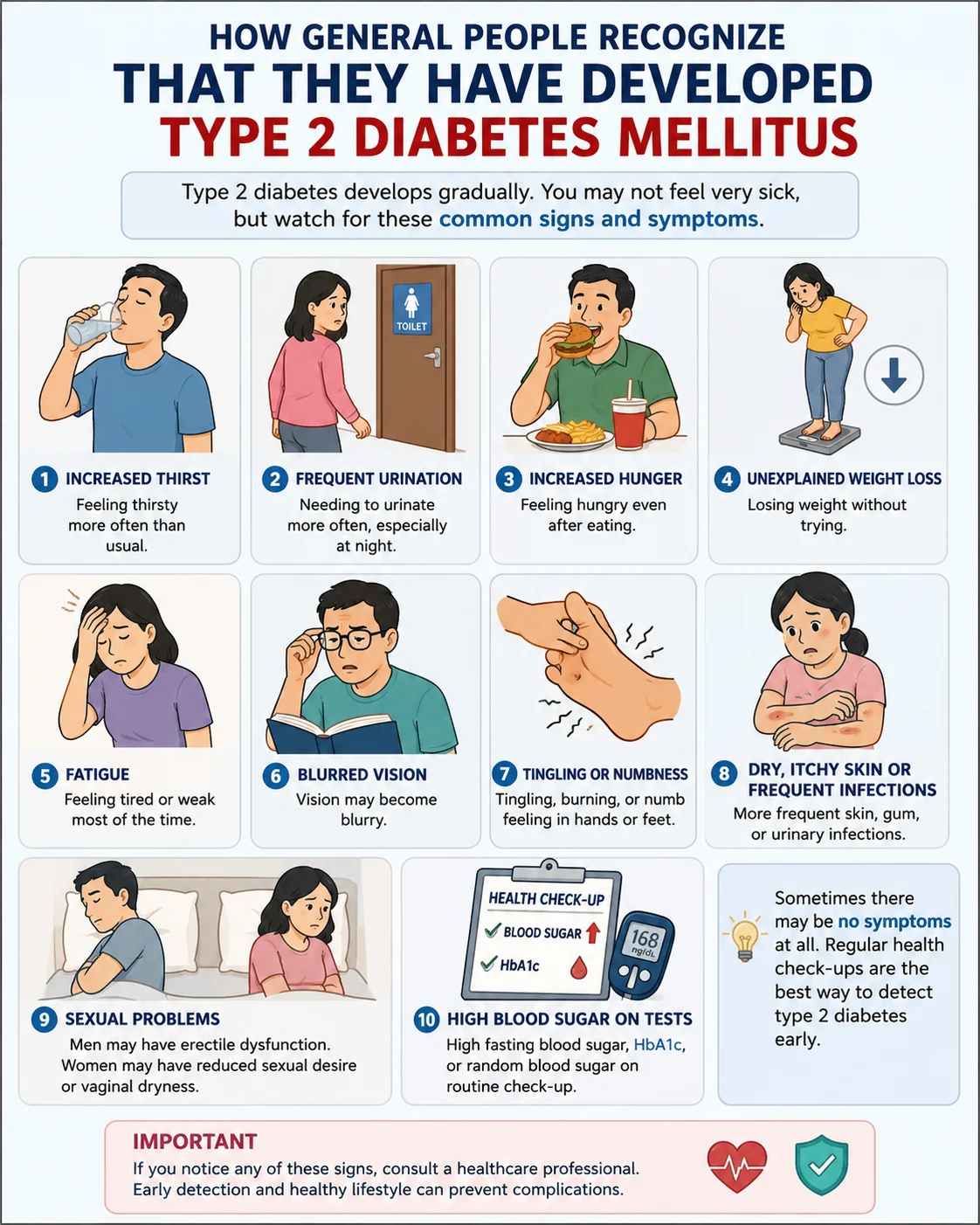
Type 2 diabetes mellitus often develops gradually, making its early warning signs easy to overlook or mistake for everyday problems such as stress, aging, or a busy lifestyle. Symptoms like increased thirst, frequent urination, persistent fatigue, blurred vision, slow-healing wounds, and recurrent infections may appear slowly and worsen over time. Recognizing these warning signs at an early stage is essential because timely diagnosis and appropriate treatment can help control blood glucose levels and prevent serious complications affecting the heart, kidneys, eyes, nerves, and blood vessels. Understanding these common symptoms empowers individuals to seek medical advice promptly and take proactive steps toward better health. Many people with type 2 diabetes mellitus (T2DM) do not realize they have the disease because it often develops slowly over months or years. In fact, some people have no symptoms at all and are diagnosed only during a routine blood test.
The most common ways people recognize they may have developed type 2 diabetes include:
1. Frequent urination (polyuria): Needing to urinate more often, especially at night, because excess glucose draws water into the urine.
In type 2 diabetes mellitus, the body becomes resistant to insulin, causing blood glucose (sugar) levels to rise. Normally, the kidneys filter glucose from the blood and reabsorb almost all of it back into the bloodstream. However, when blood glucose rises above the kidneys' renal threshold (about 180 mg/dL or 10 mmol/L, though this varies among individuals), the kidneys can no longer reabsorb all the glucose. The excess glucose remains in the urine (glucosuria). Because glucose is #osmotically active, it attracts and holds water in the kidney tubules. As a result, more water is excreted along with the glucose, producing a large volume of urine (osmotic diuresis). This leads to frequent urination (polyuria), including waking several times during the night to urinate (nocturia). The excessive fluid loss also causes dehydration, making the person feel very thirsty.
#Glucose is osmotically active means that glucose attracts and holds water. When excess glucose remains in the kidney tubules, it pulls water along with it into the urine, leading to increased urine production (polyuria).
https://pubmed.ncbi.nlm.nih.gov/9398128/
Example
Suppose Mr. Roy, a 52-year-old office worker, has undiagnosed type 2 diabetes. His blood glucose remains high for several weeks. His kidneys cannot reabsorb all the filtered glucose, so glucose spills into his urine. The glucose pulls extra water into the urine, causing him to urinate every one to two hours during the day and wake up three or four times every night to use the bathroom. Because he is losing so much water, he feels constantly thirsty and drinks large amounts of water. These symptoms eventually prompt him to visit a doctor, where blood tests confirm type 2 diabetes
2. Excessive thirst (polydipsia): Feeling unusually thirsty due to fluid loss from frequent urination.
In type 2 diabetes mellitus, high blood glucose causes excess glucose to spill into the urine. The glucose pulls large amounts of water into the urine (osmotic diuresis), leading to frequent urination (polyuria). As the body loses more water than normal, it becomes dehydrated. The brain's thirst center in the hypothalamus detects this fluid loss and increased blood concentration, triggering a strong urge to drink water. This results in excessive thirst (polydipsia).
Example
A woman with undiagnosed type 2 diabetes urinates every hour throughout the day. Because she loses a large amount of water in her urine, she feels her mouth becoming dry and finds herself drinking several bottles of water, yet she still feels thirsty. This persistent, unusual thirst is one of the classic warning signs of type 2 diabetes.
Study link:
National Institute of Diabetes and Digestive and Kidney Diseases (NIDDK): https://www.niddk.nih.gov/health-information/diabetes/overview/symptoms-causes
https://www.niddk.nih.gov/health-information/diabetes/overview/symptoms-causes
American Diabetes Association: https://diabetes.org/about-diabetes/symptoms
https://diabetes.org/about-diabetes/type-2
3. Increased hunger (polyphagia): Feeling hungry even after eating because glucose cannot enter the body's cells efficiently.
In type 2 diabetes mellitus, the body becomes resistant to insulin, so glucose cannot enter muscle, fat, and other body cells efficiently, even though there is plenty of glucose in the bloodstream. As a result, the cells do not receive enough energy and behave as if the body is starving. The brain detects this energy shortage and stimulates the hunger center in the hypothalamus, increasing appetite. Consequently, the person feels hungry even after eating, a symptom known as polyphagia.
Example
A 45-year-old man eats a full lunch but feels hungry again within an hour. Although his blood glucose level is high, his cells cannot use the glucose effectively because of insulin resistance. His brain interprets this as a lack of energy and signals him to eat more, leading to persistent hunger.
Study links:
National Institute of Diabetes and Digestive and Kidney Diseases (NIDDK): https://www.niddk.nih.gov/health-information/diabetes/overview/symptoms-causes
https://www.niddk.nih.gov/health-information/diabetes/overview/symptoms-causes
MSD Manual Professional Edition: https://www.msdmanuals.com/professional/endocrine-and-metabolic-disorders/diabetes-mellitus-and-disorders-of-carbohydrate-metabolism/diabetes-mellitus
4. Unexplained weight loss: Despite eating normally or more than usual, the body breaks down fat and muscle for energy.
In type 2 diabetes mellitus, insulin resistance prevents glucose from entering the body's cells efficiently. Although there is plenty of glucose in the blood, the cells cannot use it effectively for energy. As a result, the body thinks it is starving and begins to break down stored fat and muscle proteins to produce energy. This loss of fat and muscle causes unexplained weight loss, even if the person is eating normally or more than usual. In addition, some calories are lost in the urine because excess glucose is excreted, further contributing to weight loss.
Example
A 50-year-old woman notices that she has lost 6 kg over three months without dieting or exercising more. She has been eating normally but also feels thirsty and urinates frequently. Blood tests reveal that she has type 2 diabetes. Her body had been breaking down fat and muscle for energy because her cells could not use glucose efficiently.
Study links:
National Institute of Diabetes and Digestive and Kidney Diseases (NIDDK): https://www.niddk.nih.gov/health-information/diabetes/overview/symptoms-cause
https://www.niddk.nih.gov/health-information/diabetes/overview/symptoms-causes
American Diabetes Association: https://diabetes.org/about-diabetes/symptoms
https://diabetes.org/about-diabetes/type-2
5. Persistent fatigue: Feeling tired or lacking energy because cells cannot use glucose effectively.
In type 2 diabetes mellitus, the body's cells become resistant to insulin, so glucose cannot enter the cells efficiently. Since glucose is the body's main source of energy, the cells do not receive enough fuel to function properly, making the person feel tired, weak, and lacking energy. In addition, frequent urination causes dehydration, which further contributes to fatigue. Over time, the breakdown of fat and muscle for energy and poor sleep due to nighttime urination can make the tiredness even worse.
Example
A 48-year-old teacher sleeps for eight hours every night but still feels exhausted during the day. She struggles to concentrate and becomes tired after simple activities like climbing stairs. She also notices increased thirst and frequent urination. Blood tests later confirm that she has type 2 diabetes mellitus, and her fatigue improves after her blood glucose is brought under control.
Study links:
National Institute of Diabetes and Digestive and Kidney Diseases (NIDDK): https://www.niddk.nih.gov/health-information/diabetes/overview/symptoms-causes
American Diabetes Association: https://diabetes.org/about-diabetes/symptoms
National Center for Biotechnology Information (NCBI): https://www.ncbi.nlm.nih.gov/books/NBK513253/
https://www.ncbi.nlm.nih.gov/books/NBK513253/
6. Blurred vision: High blood glucose causes temporary changes in the eye's lens, affecting vision.
In type 2 diabetes mellitus, high blood glucose increases the amount of glucose inside the lens of the eye. This glucose is converted into sorbitol, which draws water into the lens. As the lens swells, its shape and focusing ability temporarily change, making it difficult to focus light properly on the retina. As a result, the person experiences blurred vision. Once blood glucose levels return to a healthy range, the swelling usually decreases and vision often improves.
If high blood glucose remains uncontrolled for a long time, it can also damage the tiny blood vessels of the retina, leading to diabetic retinopathy, a more serious cause of vision loss.
Example
A 55-year-old man notices that words in a newspaper suddenly look blurry, even though his glasses are the correct prescription. He also has increased thirst and frequent urination. After his blood glucose is treated and brought under control, his vision gradually becomes clear again because the swelling of the eye's lens subsides.
Study links:
National Eye Institute: https://www.nei.nih.gov/learn-about-eye-health/eye-conditions-and-diseases/diabetic-eye-disease
https://www.nei.nih.gov/eye-health-information/eye-conditions-and-diseases/diabetic-retinopathy
National Institute of Diabetes and Digestive and Kidney Diseases (NIDDK): https://www.niddk.nih.gov/health-information/diabetes/overview/symptoms-causes
American Diabetes Association: https://diabetes.org/about-diabetes/symptoms
7. Slow-healing cuts and wounds: High blood sugar impairs blood circulation and immune function, delaying healing.
In type 2 diabetes mellitus, high blood glucose damages small blood vessels, reducing blood flow to the skin and tissues. As a result, less oxygen and fewer nutrients reach the wound, slowing tissue repair. At the same time, high blood glucose weakens the immune system, especially the function of white blood cells (neutrophils and macrophages) that normally fight bacteria and remove damaged tissue. This makes wounds more likely to become infected and delays the healing process.
Example
A 58-year-old man with undiagnosed type 2 diabetes gets a small cut on his foot while walking barefoot. Even after three weeks, the wound remains open, heals very slowly, and becomes infected. After his diabetes is diagnosed and his blood glucose is controlled, along with proper wound care, the wound begins to heal more effectively.
Study links:
National Institute of Diabetes and Digestive and Kidney Diseases (NIDDK): https://www.niddk.nih.gov/health-information/diabetes/overview/preventing-problems/foot-problems
https://www.niddk.nih.gov/health-information/diabetes/overview/preventing-problems/foot-problems
American Diabetes Association: https://diabetes.org/about-diabetes/complications/foot-complications
https://diabetes.org/about-diabetes/complications/foot-complications
National Center for Biotechnology Information (NCBI): https://www.ncbi.nlm.nih.gov/books/NBK537328/
https://www.ncbi.nlm.nih.gov/books/NBK537328/
8. Frequent infections: Recurrent skin, gum, urinary tract, or vaginal infections may occur because high glucose promotes microbial growth and weakens immunity.
In type 2 diabetes mellitus, high blood glucose provides an ideal environment for bacteria and fungi to grow and multiply. At the same time, high glucose weakens the immune system by reducing the ability of white blood cells (especially neutrophils) to move to the site of infection, engulf microbes, and destroy them. In addition, poor blood circulation reduces the delivery of oxygen, nutrients, and immune cells to infected tissues, making it harder for the body to fight infections. As a result, people with diabetes are more likely to develop recurrent skin, gum, urinary tract, and vaginal infections.
Example
A 46-year-old woman experiences repeated urinary tract infections and vaginal yeast infections over several months. Despite receiving treatment, the infections keep returning. Blood tests reveal that she has type 2 diabetes mellitus. After her blood glucose is brought under control, the frequency of these infections decreases significantly.
Study links:
National Institute of Diabetes and Digestive and Kidney Diseases (NIDDK): https://www.niddk.nih.gov/health-information/diabetes/overview/symptoms-causes
https://www.niddk.nih.gov/health-information/diabetes/overview/symptoms-causes
Centers for Disease Control and Prevention (CDC): https://www.cdc.gov/diabetes/about/index.html
https://www.cdc.gov/diabetes/about/index.html
National Center for Biotechnology Information (NCBI): https://www.ncbi.nlm.nih.gov/books/NBK279509/
https://www.ncbi.nlm.nih.gov/books/NBK279509/
9. Tingling, numbness, or burning in the hands or feet: A sign of diabetic nerve damage (peripheral neuropathy).
In type 2 diabetes mellitus, persistently high blood glucose damages the small blood vessels that supply the nerves. This reduces the delivery of oxygen and nutrients to the nerves, causing them to function poorly. High glucose also directly injures nerve cells through #oxidative stress and the accumulation of #harmful metabolic by-products. As a result, the nerves gradually become damaged, a condition known as diabetic peripheral neuropathy. Damaged nerves may send abnormal signals, causing tingling, burning, or stabbing pain, or they may fail to transmit signals properly, leading to numbness and reduced sensation, especially in the feet and hands.
#Oxidative stress is a condition in which the body produces more harmful molecules called free radicals (reactive oxygen species, ROS) than its natural #antioxidants can neutralize. These Free radicals are highly reactive molecules that can damage cells. In type 2 diabetes, persistently high blood glucose causes cells to produce excessive free radicals.These free radicals damage nerve cells, blood vessels, proteins, fats, and DNA, contributing to diabetic complications.
#Antioxidants are protective substances that neutralize harmful free radicals, preventing them from damaging cells, tissues, and DNA.
#Harmful metabolic by-products: When blood glucose stays high for a long time, it produces harmful substances such as free radicals, AGEs (Advanced Glycation End Products), and sorbitol. These substances gradually damage nerves and the small blood vessels that supply them, leading to diabetic peripheral neuropathy.
Example
A 60-year-old man with undiagnosed type 2 diabetes notices a burning sensation and tingling in both feet, especially at night. Over time, parts of his feet become numb, making it difficult to feel small injuries. Blood tests confirm type 2 diabetes, and he is diagnosed with diabetic peripheral neuropathy.
Study links:
National Institute of Diabetes and Digestive and Kidney Diseases (NIDDK): https://www.niddk.nih.gov/health-information/diabetes/overview/preventing-problems/nerve-damage-diabetic-neuropathies
American Diabetes Association: https://diabetes.org/about-diabetes/complications/neuropathy
https://diabetes.org/about-diabetes/complications/neuropathy
National Center for Biotechnology Information (NCBI): https://www.ncbi.nlm.nih.gov/books/NBK442009/
https://www.ncbi.nlm.nih.gov/books/NBK442009/
10. Dark, thickened patches of skin (acanthosis nigricans): Often found on the neck, armpits, or groin, this can be an early sign of insulin resistance.
Acanthosis nigricans is an early sign of insulin resistance, which often develops before or alongside type 2 diabetes mellitus.
In insulin resistance, the body does not respond properly to insulin, so the pancreas produces more insulin (hyperinsulinemia) to keep blood glucose under control. The excess insulin not only acts on its usual target tissues but also stimulates skin cells (keratinocytes) and pigment-producing cells (melanocytes) to grow and multiply. As a result, the skin becomes thicker, darker, and velvety, especially in body folds such as the neck, armpits, and groin.
Example
A 16-year-old overweight boy notices dark, velvety patches on the back of his neck and under his arms. Although he has no obvious symptoms of diabetes, tests show that he has insulin resistance, placing him at high risk of developing type 2 diabetes in the future.
Study links:
National Institute of Diabetes and Digestive and Kidney Diseases (NIDDK): https://www.niddk.nih.gov/health-information/diabetes/overview/symptoms-causes
https://www.niddk.nih.gov/health-information/diabetes/overview/symptoms-causes
National Center for Biotechnology Information (NCBI): https://www.ncbi.nlm.nih.gov/books/NBK431057/
https://www.ncbi.nlm.nih.gov/books/NBK431057/
American Diabetes Association: https://diabetes.org/about-diabetes/risk-factors/type-2-diabetes-risk-factors
https://www.heart.org/en/health-topics/diabetes/understand-your-risk-for-diabetes
11. Dry skin and itching: Caused by dehydration and reduced skin moisture.
In type 2 diabetes mellitus, high blood glucose causes frequent urination (polyuria), leading to excessive loss of water from the body. This dehydration reduces the moisture content of the skin, making it dry and rough. In addition, high blood glucose can damage small blood vessels and nerves, reducing blood flow and sweat production in the skin. Less sweating further decreases the skin's natural moisture, causing dryness and itching (pruritus). Skin infections, which are more common in diabetes, can also contribute to itching.
Example
A 54-year-old woman with undiagnosed type 2 diabetes develops dry, itchy skin, especially on her lower legs. She also experiences increased thirst and frequent urination. After her blood glucose is controlled and she uses moisturizers, her skin becomes less dry and the itching improves.
Study links:
National Institute of Diabetes and Digestive and Kidney Diseases (NIDDK): https://www.niddk.nih.gov/health-information/diabetes/overview/preventing-problems/skin-problems
American Diabetes Association: https://diabetes.org/about-diabetes/complications/skin-complications
https://diabetes.org/about-diabetes/complications/skin-complications
National Center for Biotechnology Information (NCBI): https://www.ncbi.nlm.nih.gov/books/NBK481900/
https://www.ncbi.nlm.nih.gov/books/NBK481900/
12. Sexual dysfunction: Men may experience erectile dysfunction, while women may have reduced sexual desire or recurrent genital infections.
In type 2 diabetes mellitus, persistently high blood glucose damages blood vessels and nerves that are essential for normal sexual function.
In men: Damage to the blood vessels reduces blood flow to the penis, while nerve damage interferes with the signals needed to achieve and maintain an erection. This can lead to erectile dysfunction (ED).
In women: Reduced blood flow and nerve damage can decrease vaginal lubrication, sensation, and sexual desire. In addition, high blood glucose promotes the growth of bacteria and fungi, increasing the risk of recurrent vaginal and genital infections, which can make sexual activity uncomfortable or painful.
Example
A 55-year-old man with undiagnosed type 2 diabetes gradually develops difficulty achieving an erection. After evaluation, blood tests reveal high blood glucose, and his erectile function improves after diabetes treatment and blood glucose control.
A 48-year-old woman experiences repeated vaginal yeast infections, vaginal dryness, and discomfort during intercourse. Further testing confirms type 2 diabetes. As her blood glucose is controlled, the frequency of infections decreases and her symptoms improve.
Study links:
National Institute of Diabetes and Digestive and Kidney Diseases (NIDDK): https://www.niddk.nih.gov/health-information/diabetes/overview/preventing-problems/sexual-urologic-problems
American Diabetes Association: https://diabetes.org/about-diabetes/complications/sexual-health
National Center for Biotechnology Information (NCBI): https://www.ncbi.nlm.nih.gov/books/NBK562253/
https://www.ncbi.nlm.nih.gov/books/NBK562253/
Sometimes there are no symptoms
i). Many people with type 2 diabetes feel completely well. They may discover they have diabetes only when:
Type 2 diabetes mellitus often develops slowly over many months or years. In the early stages, the pancreas produces extra insulin to overcome insulin resistance and keep blood glucose from rising too high. As a result, blood glucose may increase gradually, causing little or no noticeable symptoms.
Even when blood glucose is mildly elevated, it may not yet be high enough to cause classic symptoms such as frequent urination, excessive thirst, or weight loss. Therefore, many people feel completely healthy and are unaware that they have diabetes until a routine blood test detects high blood glucose or complications begin to appear.
Example
A 50-year-old man goes for a routine health check-up for his job. He feels healthy and has no symptoms. However, his #HbA1c and fasting blood glucose are found to be elevated, leading to a diagnosis of type 2 diabetes mellitus.
Study links:
National Institute of Diabetes and Digestive and Kidney Diseases (NIDDK): https://www.niddk.nih.gov/health-information/diabetes/overview/symptoms-causes
https://www.niddk.nih.gov/health-information/diabetes/overview/symptoms-causes
Centers for Disease Control and Prevention (CDC): https://www.cdc.gov/diabetes/about/index.html
https://www.cdc.gov/diabetes/about/index.html
American Diabetes Association: https://diabetes.org/about-diabetes/symptoms
#HbA1c (Hemoglobin A1c) is a blood test that measures the average blood glucose level over the previous 2–3 months.
Why is it called HbA1c?
Hb = Hemoglobin, the oxygen-carrying protein inside red blood cells.
A1c = A specific form of hemoglobin that has glucose attached to it (also called glycated hemoglobin).
When blood glucose is high, more glucose sticks to hemoglobin. Since red blood cells live for about 120 days (4 months), the HbA1c level reflects the average blood glucose over the past 2–3 months.
Therefore,
HbA1c is a blood test that shows how well a person's blood glucose has been controlled over the last 2–3 months, rather than at a single point in time.
HbA1c values
HbA1c (%) | Interpretation |
|---|---|
Below 5.7% | Normal |
5.7–6.4% | Prediabetes |
6.5% or higher | Diabetes (confirmed by repeat testing or another diagnostic test if appropriate) |
Example
A person's blood glucose may be normal on the morning of a test because they have been fasting. However, if their blood glucose has been high for the past three months, their HbA1c will still be elevated, helping the doctor diagnose diabetes.
Study links:
American Diabetes Association. Standards of Care in Diabetes: https://diabetesjournals.org/care
https://diabetesjournals.org/care
National Institute of Diabetes and Digestive and Kidney Diseases (NIDDK): https://www.niddk.nih.gov/health-information/diagnostic-tests/a1c-test
https://www.niddk.nih.gov/health-information/diagnostic-tests/a1c-test
Centers for Disease Control and Prevention (CDC): https://www.cdc.gov/diabetes/diabetes-testing/prediabetes-a1c-test.html
https://www.cdc.gov/diabetes/diabetes-testing/prediabetes-a1c-test.html
ii). A routine health check shows high blood sugar.
iii). They are tested because they have obesity, high blood pressure, abnormal cholesterol, or a family history of diabetes.
iv). They develop a complication such as a foot ulcer, vision problem, heart disease, or kidney disease.
Conclusion:
Early recognition and diagnosis are important because lifestyle changes and treatment can help prevent or delay serious complications affecting the eyes, kidneys, nerves, heart, and blood vessels.