
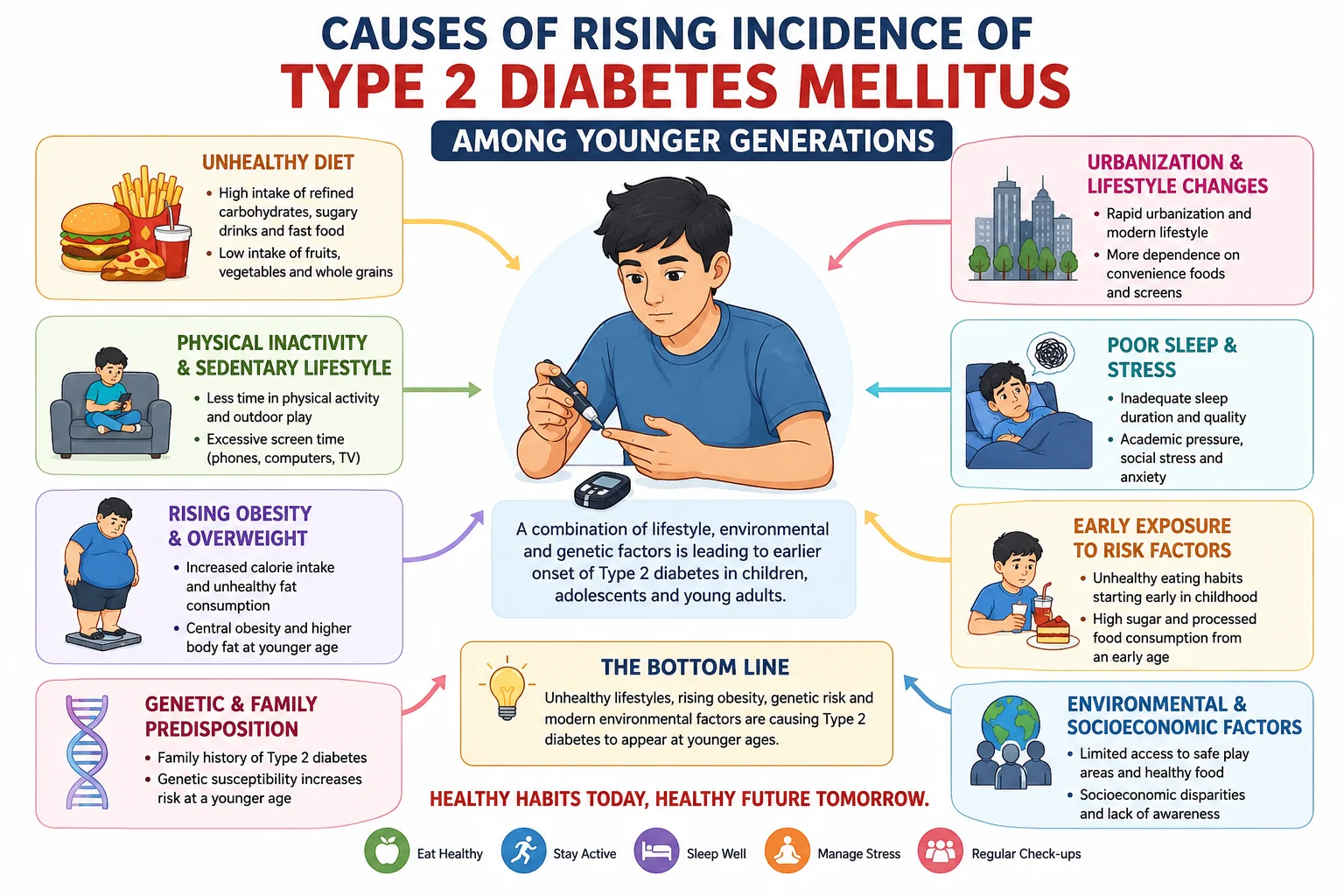
Type 2 diabetes mellitus (T2DM), once considered a disease primarily affecting middle-aged and older adults, is now emerging at an alarming rate among young people under the age of 40. Across the world, increasing numbers of adolescents and young adults are being diagnosed with this chronic metabolic disorder, making it a growing public health concern. Rapid urbanization, sedentary lifestyles, unhealthy dietary habits, rising obesity rates, chronic stress, and reduced physical activity have all contributed to this disturbing trend.
The early onset of Type 2 diabetes is particularly concerning because it exposes individuals to a longer duration of the disease and a greater risk of developing serious complications such as heart disease, kidney disease, nerve damage, vision problems, and stroke. In addition to affecting physical health, diabetes can also impact educational achievement, work productivity, mental well-being, and overall quality of life during the most productive years of adulthood.
The rising prevalence of Type 2 diabetes among youth reflects broader changes in modern lifestyles and highlights the urgent need for preventive action. Promoting healthy eating habits, regular physical activity, weight management, and early screening can play a crucial role in reducing the burden of this disease. Understanding the factors driving this global epidemic is essential for protecting the health of future generations and reversing this growing trend.
Type 2 diabetes (T2DM) is rising rapidly among youth (under 40), with a global prevalence increase from 2.9% to 3.8% between 2013 and 2021, and some regions exceeding 15%. Driven by obesity, inactivity, and poor diet, this early-onset T2DM is more aggressive, causing rapid, severe complications like kidney disease and blindness
ss. A higher percentage increase in the prevalence of T2DM was seen among younger individuals over 10 years. Obesity and family history of diabetes were shown to be the primary contributing factors for the rise in prevalence.
Incidence of Type 2 diabetes mellitus among younger generations:
1. West Bengal, India
A community-based study conducted in Amdanga, North 24 Parganas, West Bengal, found that 45.2% of adults were at high risk and 45.2% were at moderate risk of developing Type 2 diabetes based on the Indian Diabetes Risk Score (IDRS). The study highlighted sedentary lifestyle, lack of exercise, hypertension, and unhealthy dietary habits as important risk factors.
Reference:
Sarkar D, Dalal RK, Sarkar S. Study on prevalence of risk factors of diabetes among adult population in a rural area of West Bengal, India. International Journal of Community Medicine and Public Health. 2020.
2. India
India is among the countries with the highest incidence of youth-onset Type 2 diabetes globally. Studies indicate that Type 2 diabetes is increasingly being diagnosed in adolescents and young adults due to obesity, physical inactivity, unhealthy diets, and genetic susceptibility.
Reference:
Titmuss A, Korula S, Wicklow B, et al. Youth-onset Type 2 Diabetes: An Overview of Pathophysiology, Prognosis, Prevention and Management. Current Diabetes Reports. 2024.
3. Global
A major review reported that the global incidence rate of youth-onset Type 2 diabetes increased from 117.2 per 100,000 population in 1990 to 183.4 per 100,000 population in 2019, demonstrating a substantial worldwide rise. The burden is particularly high in countries such as India, China, and the United States.
Reference:
Titmuss A, Korula S, Wicklow B, et al. Youth-onset Type 2 Diabetes: An Overview of Pathophysiology, Prognosis, Prevention and Management. Current Diabetes Reports. 2024.
Additional Global Evidence
A 2024 review reported that the incidence and prevalence of Type 2 diabetes in people younger than 40 years have increased approximately two- to three-fold in recent decades, making early-onset diabetes a major public health concern worldwide.
Reference:
Strati M, Moustaki M, Psaltopoulou T, et al. Early-onset type 2 diabetes mellitus: an update. Endocrine. 2024.
Obesity a Primary Driver of the Increase in Type 2 Diabetes Among Children and Adolescents:
Obesity is one of the strongest risk factors for the development of Type 2 diabetes in children and adolescents because excess body fat, particularly around the abdomen, interferes with the body's ability to use insulin effectively. This leads to a condition known as insulin resistance, which is the key step in the development of Type 2 diabetes.
https://pubmed.ncbi.nlm.nih.gov/36184528/
1. Causes Insulin Resistance
Excess fat tissue releases fatty acids and inflammatory substances that make the body's cells less responsive to insulin. As a result, glucose cannot enter the cells efficiently and begins to accumulate in the bloodstream.
https://pmc.ncbi.nlm.nih.gov/articles/PMC7516333/?utm_source=chatgpt.com
2. Forces the Pancreas to Work Harder
To overcome insulin resistance, the pancreas produces more insulin. Over time, the insulin-producing beta cells become overworked and may gradually lose their ability to produce enough insulin, leading to high blood sugar levels.
Inaishi J, Saisho Y. (2020)
Beta-Cell Mass in Obesity and Type 2 Diabetes, and Its Relation to Pancreas Fat: A Mini-Review
The authors reported that in obesity, plasma insulin levels increase to compensate for insulin resistance, and β-cell mass may increase by approximately 20–90% as an adaptive response. This demonstrates that the pancreas works harder to meet the increased insulin demand.
Link:
https://doi.org/10.3390/nu12123846
3. Increases Abdominal (Visceral) Fat
Fat stored around the abdomen is especially harmful because it is metabolically active and releases hormones and inflammatory chemicals that worsen insulin resistance and impair glucose metabolism.
https://link.springer.com/article/10.1007/s11892-024-01546-2?utm_source=chatgpt.com
4. Promotes Chronic Inflammation
Obesity is associated with low-grade chronic inflammation. Inflammatory molecules released by excess fat tissue can damage insulin signaling pathways, making it harder for the body to regulate blood sugar.
Donath MY, Shoelson SE. (2011). Type 2 diabetes is an inflammatory disease. Nature Reviews Immunology, 11(2), 98–107.
Link:
PubMed: Type 2 diabetes as an inflammatory disease
Key finding: This review explains that obesity causes chronic low-grade inflammation through the release of inflammatory cytokines from adipose tissue. These inflammatory processes promote insulin resistance and pancreatic β-cell dysfunction, thereby contributing to the development of Type 2 diabetes mellitus.
5. Reduces Physical Activity
Children and adolescents with obesity are often less physically active. Reduced activity decreases the muscles' ability to use glucose for energy, further contributing to insulin resistance.
6. Often Accompanies Unhealthy Eating Habits
Obesity frequently results from diets high in sugary drinks, processed foods, and calorie-dense snacks. These dietary patterns can cause repeated spikes in blood sugar and insulin levels, increasing the risk of diabetes.
Maghsoudi Z, Ghiasvand R, Salehi-Abargouei A. (2016). Empirically derived dietary patterns and incident type 2 diabetes mellitus: a systematic review and meta-analysis of prospective observational studies.
Link:
PubMed Study Link
Key finding: People who followed unhealthy dietary patterns rich in processed foods, refined grains, sweets, desserts, and red/processed meats had a 30% higher risk of developing Type 2 diabetes compared with those consuming healthier diets. This supports the role of unhealthy eating habits in obesity and the subsequent development of Type 2 diabetes.
7. Accelerates Early-Onset Diabetes
Because obesity develops at younger ages, insulin resistance begins earlier in life. This increases the likelihood of developing Type 2 diabetes during childhood, adolescence, or early adulthood.
In Short
Obesity increases the risk of Type 2 diabetes by causing insulin resistance, overworking the pancreas, promoting inflammation, and impairing the body's ability to regulate blood sugar. As childhood obesity rates rise, the incidence of Type 2 diabetes among children and adolescents also increases.
Lifestyle: Decreased physical activity, increased consumption of calorie-dense foods, highly processed foods, and sugar-sweetened beverages, and increased screen time contribute to the development of the disease.
Family History: A strong family history of diabetes is a significant risk factor, with genetics playing a major role in the development of the disease.
Franks PW, Hanson RL, Knowler WC, et al. (2007). Childhood Predictors of Young-Onset Type 2 Diabetes. Diabetes.
Study Link:
PubMed: Childhood Predictors of Young-Onset Type 2 Diabetes
Key finding: This prospective study found that parental history of young-onset Type 2 diabetes significantly increased the risk of developing Type 2 diabetes at a young age, highlighting the important role of family history and genetic susceptibility in youth-onset diabetes.
Environmental Factors: Environmental factors, such as limited access to open spaces for physical activity, also contribute to the rise.
Early Life & In-Utero Exposure: Exposure to maternal diabetes or obesity during pregnancy significantly increases the risk for offspring.
Main Study Link
Dabelea D, et al. Maternal diabetes and obesity increase the risk of Type 2 diabetes in offspring.
Key finding: Children exposed to maternal diabetes during pregnancy have a significantly higher risk of obesity and abnormal glucose metabolism, predisposing them to Type 2 diabetes later in life.
Aggressive Disease Progression:
Youth-onset T2DM is distinguished by a rapid decline in pancreatic beta-cell function—losing 20–35% of function annually compared to just 7% in older adults.
This leads to:
Earlier Complications: Patients often develop microvascular issues like retinopathy (vision loss) and nephropathy (kidney disease) within just 10–15 years of diagnosis.
Higher Lifetime Risk: Individuals diagnosed before age 30 may lose an average of 15 years of life expectancy.
Treatment Challenges: The disease is often less responsive to standard oral medications like metformin, requiring earlier initiation of insulin therapy.
Preventing type 2 diabetes (T2DM) in youth focuses on addressing insulin resistance and excess adiposity through multi-level lifestyle changes and early clinical screening.
1. Core Lifestyle Interventions:
Reduction of calorie surplus and increase in metabolic activity.
Physical Activity: Youth should aim for 60 minutes of moderate-to-vigorous aerobic activity daily. Incorporating strength training at least 3 days per week further improves insulin sensitivity.
Nutrition (The 5-2-1-0 Rule): Many pediatric experts recommend the 5-2-1-0 framework:
5 servings of fruits and vegetables daily.
2 hours or less of recreational screen time.
1 hour of physical activity.
0 sugary drinks; prioritizing water and plain milk instead.
Weight Management:
For the youth who are still growing (pre-pubertal or pubertal), the goal is usually slower weight reduction, because height is still increasing. A practical target is about 5% weight loss over the first 3 months, which often leads to a meaningful reduction in BMI as the child grows taller, as BMI=weight/height2
In older adolescents who have completed growth (post-pubertal), the recommended target is generally 5–10% weight loss, with 10% over the first year being a common goal.
In short:
Growing youth: ~5% BMI/weight reduction initially.
Growth completed: ~7–10% reduction is typically recommended.
https://pmc.ncbi.nlm.nih.gov/articles/PMC10986054/?utm_source=chatgpt.com
2. Early Screening & Risk Identification
Due to rapid progression, detecting prediabetes early is vital. The ADA (American Diabetes Association) recommends screening for children with high BMI and risk factors (e.g., family history) starting at puberty or earlier. Regular, periodic testing is necessary, especially if rapid weight gain occurs.
3. Support Systems & Lifestyle Support
Family-Based Interventions: Programs that involve the whole family are most effective for sustaining healthy, long-term habits.
School-Based Programs: Initiatives encourage healthy, active, and informed environments.
4. Clinical Prevention (Metformin)
For high-risk youth where lifestyle adjustments are insufficient, medications like Metformin may be considered to delay or prevent T2DM onset, showing effectiveness in reducing the progression from prediabetes.
Conclusion:
The rising incidence of type 2 diabetes mellitus among young generations has become a major public health concern worldwide. Increasing rates of obesity, physical inactivity, unhealthy dietary habits, and genetic susceptibility are contributing to the earlier onset of the disease. If left uncontrolled, type 2 diabetes in youth can lead to serious complications at a younger age, affecting quality of life and long-term health. Early prevention through healthy eating, regular physical activity, weight management, and timely screening is essential to reduce the growing burden of this condition and promote a healthier future generation.