
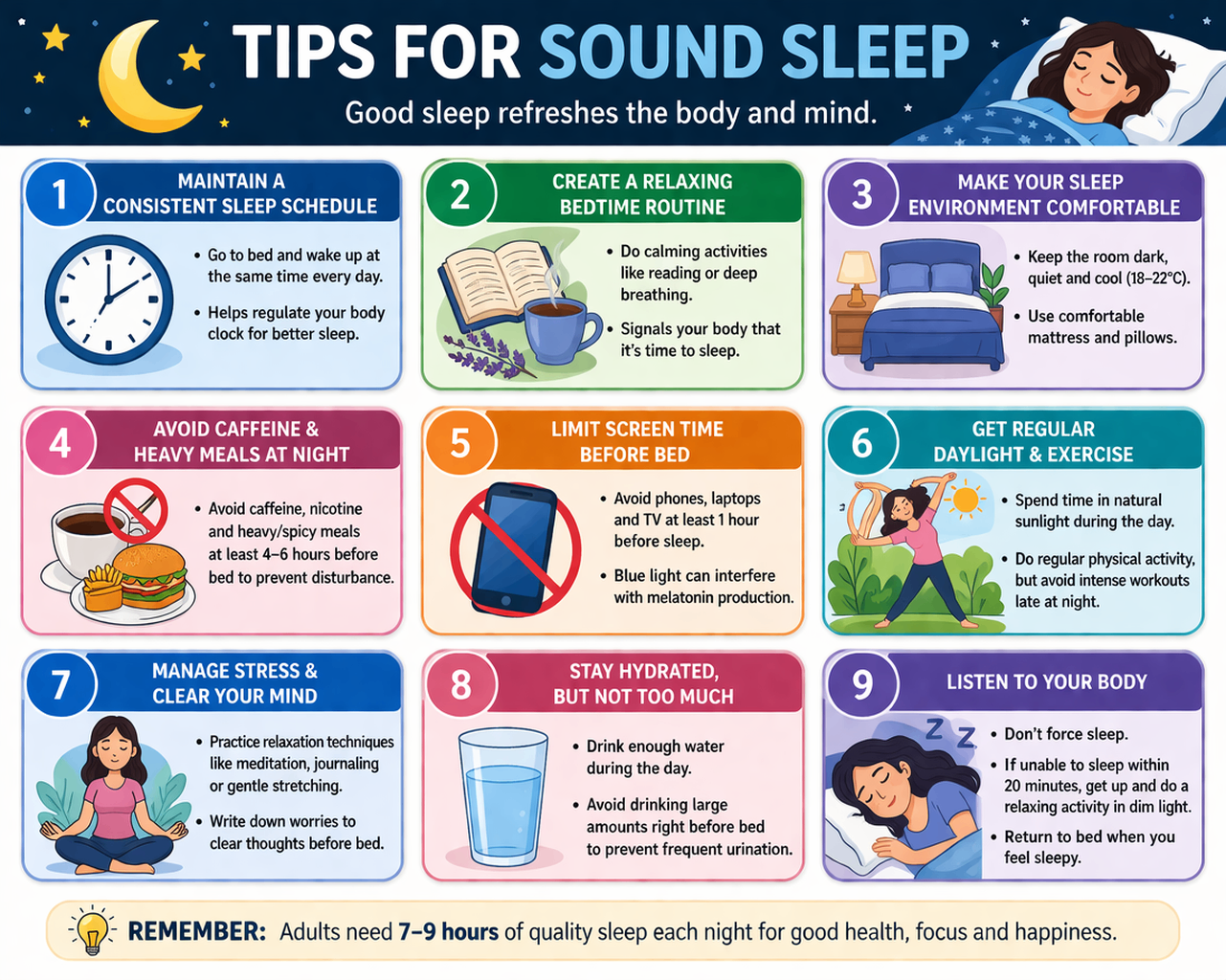
Sleep is one of the most important pillars of a healthy and balanced life. Just as food nourishes the body and water keeps us alive, quality sleep restores the mind, repairs the body, and prepares us for a new day. Good sleep is not simply about the number of hours we spend in bed; it is about how deeply and peacefully the body and brain are able to rest and recover.
In today’s fast-moving world, many people ignore the importance of proper sleep because of stress, busy schedules, excessive screen time, and unhealthy lifestyles. However, poor sleep can negatively affect physical health, mental well-being, memory, concentration, emotions, and even the body’s natural hormones and neurotransmitters such as dopamine and serotonin.
Quality sleep improves energy, mood, immunity, learning ability, and overall productivity. It helps the brain function properly, supports emotional balance, and allows the body to heal and recharge naturally. A well-rested mind can think clearly, make better decisions, and handle daily challenges more effectively.
Therefore, quality sleep is not a luxury but a necessity for a healthier, happier, and more successful life.
The Body’s Natural Sleep Cycle
The body’s natural sleep cycle is an internal biological process that controls when we feel awake and when we feel sleepy. This cycle is mainly regulated by the brain, hormones, and the body’s internal clock, also known as the circadian rhythm. It works according to the natural pattern of day and night.
As evening approaches and darkness increases, the brain releases a hormone called melatonin, which signals the body that it is time to sleep. During sleep, the body moves through different stages, including light sleep, deep sleep, and REM (Rapid Eye Movement) sleep. Each stage plays an important role in physical repair, brain function, memory, emotional balance, and energy restoration.
A healthy sleep cycle includes both REM (Rapid Eye Movement Sleep) and Non-REM sleep working together throughout the night. Non-REM sleep mainly restores the body, while REM sleep refreshes the mind and brain. Both are equally important for maintaining physical health, emotional balance, learning ability, and overall well-being.
Difference Between REM and Non-REM Sleep
Non-REM Sleep | REM Sleep |
|---|---|
The body repairs and restores itself | The brain processes memories and emotions |
Heart rate and breathing slow down | The brain becomes highly active |
Deep physical rest occurs | Most dreams occur |
Important for physical healing | Important for mental and emotional health |
Brain activity is slower | Brain activity is faster |
A healthy natural sleep cycle helps the body:
Fall asleep more easily
Stay asleep peacefully
Wake up feeling refreshed and energetic
Maintain healthy hormones and brain chemicals
Support heart health, immunity, and mental well-being
However, stress, irregular schedules, excessive screen time, caffeine, lack of exercise, and poor lifestyle habits can disturb this natural cycle. When the sleep cycle becomes disrupted, a person may experience insomnia, fatigue, poor concentration, mood changes, and health problems.
Therefore, maintaining the body’s natural sleep cycle is essential for good physical health, emotional balance, and overall quality of life.
How Sleep Protects the Heart
1. Regulates Blood Pressure
During deep sleep, your blood pressure naturally drops (called nocturnal dipping). This gives your heart and blood vessels time to rest and recover, reducing strain.
2. Maintains Healthy Heart Rhythm
Adequate sleep helps regulate the electrical activity of the heart and reduces irregular heartbeats.
e.g.
Irregular heartbeat (arrhythmia)
Palpitations
Sudden cardiac stress
3. Reduces Stress Hormones
Good sleep lowers cortisol and adrenaline levels over time, which are high-stress hormones: These hormones
narrow blood vessels
raise blood pressure
contributing to an increase in heart workload
4. Controls Blood Sugar
Poor sleep reduces insulin sensitivity, increasing the risk of:
Type 2 diabetes
Metabolic syndrome
Both are major risk factors for heart disease.
5. Good sleep also controls weight by regulating hunger hormones: Those are--
Leptin (fullness hormone)
Ghrelin (hunger hormone)
Lack of sleep increases appetite and weight gain, which stresses the heart.
6. Reduces Inflammation
Chronic sleep deprivation increases inflammation in blood vessels, contributing to:
Atherosclerosis (plaque buildup): Atherosclerosis is
a chronic disease where plaque—fat, cholesterol, and calcium—builds up inside artery walls, causing them to narrow, harden, and limit blood flow
Heart attack
Stroke
Chronic sleep deprivation increases inflammation, which contributes to heart problems.
How Much Sleep Is Needed?
According to the American Heart Association:
Adults: 7–9 hours per night
Teenagers: 8–10 hours
Older adults: 7–8 hours
Effects of Poor Sleep on the Heart
High blood pressure (Hypertension)
Increased risk of heart attack
Stroke risk
Obesity
Irregular heartbeat
How We Can Get Quality Sleep
Follow a regular sleep schedule by sleeping and waking up at the same time every day.
Avoid using mobile phones, laptops, or television for at least 1 hour before bedtime.
Create a calm, dark, and quiet sleeping environment.
Avoid caffeine, nicotine, and heavy meals late at night.
Exercise regularly, but avoid intense workouts just before sleeping.
Reduce stress through meditation, deep breathing, prayer, or relaxation techniques.
Get enough natural sunlight during the daytime to maintain the body’s sleep cycle.
Avoid sleeping too much during the day, especially long afternoon naps.
Keep the bedroom comfortable with proper temperature and ventilation.
Listen to soft music or read a peaceful book before sleeping.
Maintain a healthy diet rich in nutrients that support brain and body health.
Avoid overthinking and try to relax the mind before bedtime.
Stay physically active during the day so the body naturally feels tired at night.
Drink enough water during the day, but avoid excessive fluids right before sleep.
Practice good sleep habits consistently, because quality sleep develops through regular routines.
Ideal Sleep Duration
Adults: 7–9 hours per night
Consistent timing is just as important as duration
sleep medicines:
Taking sleep medicines is not always wrong, but they should be used carefully and preferably under a doctor’s guidance. In some situations, sleep medicines can be helpful for short-term sleep problems, severe stress, anxiety, or certain medical conditions. However, depending on them regularly without proper supervision may create health risks.
When Sleep Medicines May Be Helpful
Doctors may prescribe sleep medicines when:
A person has severe insomnia
Stress or anxiety is disturbing sleep
Pain or illness prevents proper rest
Sleep problems are affecting daily life and health
In these cases, medicines may help temporarily while the root cause is being treated.
Risks of Taking Sleep Medicines Frequently
Using sleep medicines for a long time or without medical advice may cause:
Dependence or addiction
Drowsiness during the day
Poor concentration and memory
Weakness or dizziness
Reduced natural sleep quality
Need for higher doses over time
Mood changes or confusion in some people
Some medicines may help a person fall asleep, but they may not always provide deep, refreshing sleep naturally.
Better Long-Term Approach
Doctors usually recommend improving natural sleep first through:
Regular sleep schedule
Reducing screen time at night
Exercise
Stress management
Healthy diet
Relaxation techniques
Avoiding caffeine late at night
If these methods do not work, a doctor may decide whether medicine is necessary.
Important Message
Sleep medicines should not be considered a permanent solution for every sleep problem. The safest and healthiest goal is to improve the body’s natural sleep cycle whenever possible. If sleep problems continue for a long time, consulting a doctor or a sleep specialist is the best option.
How Sleep Comes to Our Eyes: The Role of the Brain and Hormones
Sleep does not come only to the eyes—it actually begins in the brain. The feeling of sleepiness is controlled by a complex connection between the brain, hormones, nerves, and the body’s internal biological clock. Together, they help the body know when it is time to stay awake and when it is time to rest.
Role of the Brain in Sleep
The brain contains a small control center called the hypothalamus, which helps regulate the sleep–wake cycle. Inside it is a group of nerve cells known as the “biological clock” or circadian rhythm center. This clock responds mainly to light and darkness.
During the daytime, sunlight signals the brain to keep us awake and alert.
At night, when darkness increases, the brain understands that it is time to prepare for sleep.
The brain then begins slowing down body activities such as heart rate, body temperature, and alertness, creating the feeling of drowsiness.
Another important part of the brain involved in sleep is the pineal gland, which releases the sleep hormone melatonin.
Role of Hormones in Bringing Sleep
1. Melatonin – The Sleep Hormone
Melatonin is the main hormone responsible for making us feel sleepy.
It is produced more during darkness and less during bright light.
It tells the body that nighttime has arrived and prepares the brain for rest.
Melatonin helps calm the nervous system and supports deep, peaceful sleep.
That is why using bright mobile screens or lights at night can disturb sleep by reducing melatonin production.
2. Adenosine – The Sleep Pressure Chemical
Throughout the day, the brain produces a chemical called adenosine.
The longer we stay awake, the more adenosine builds up in the brain.
This creates “sleep pressure,” making us feel tired and sleepy at night.
During sleep, adenosine levels decrease, helping us feel refreshed the next morning.
Caffeine works by temporarily blocking adenosine signals, which is why coffee can reduce sleepiness.
3. Cortisol – The Alertness Hormone
Cortisol is often called the stress hormone, but it also helps control wakefulness.
Cortisol is usually low at night to help us sleep.
In the morning, cortisol naturally rises to help us wake up and feel alert.
Too much stress can keep cortisol levels high at night, making sleep difficult.
Why the Eyes Feel Heavy
When the brain prepares for sleep:
Eye muscles become relaxed
Blinking becomes slower
Brain alertness decreases
The body conserves energy
As a result, the eyes feel heavy, tired, and ready to close.
Conclusion
Sleep is a natural biological process controlled mainly by the brain and hormones. The brain senses darkness, releases sleep-related hormones, relaxes the body, and prepares the mind for rest. Proper balance of melatonin, adenosine, cortisol, and healthy brain function allows us to fall asleep naturally and wake up refreshed and healthy.