
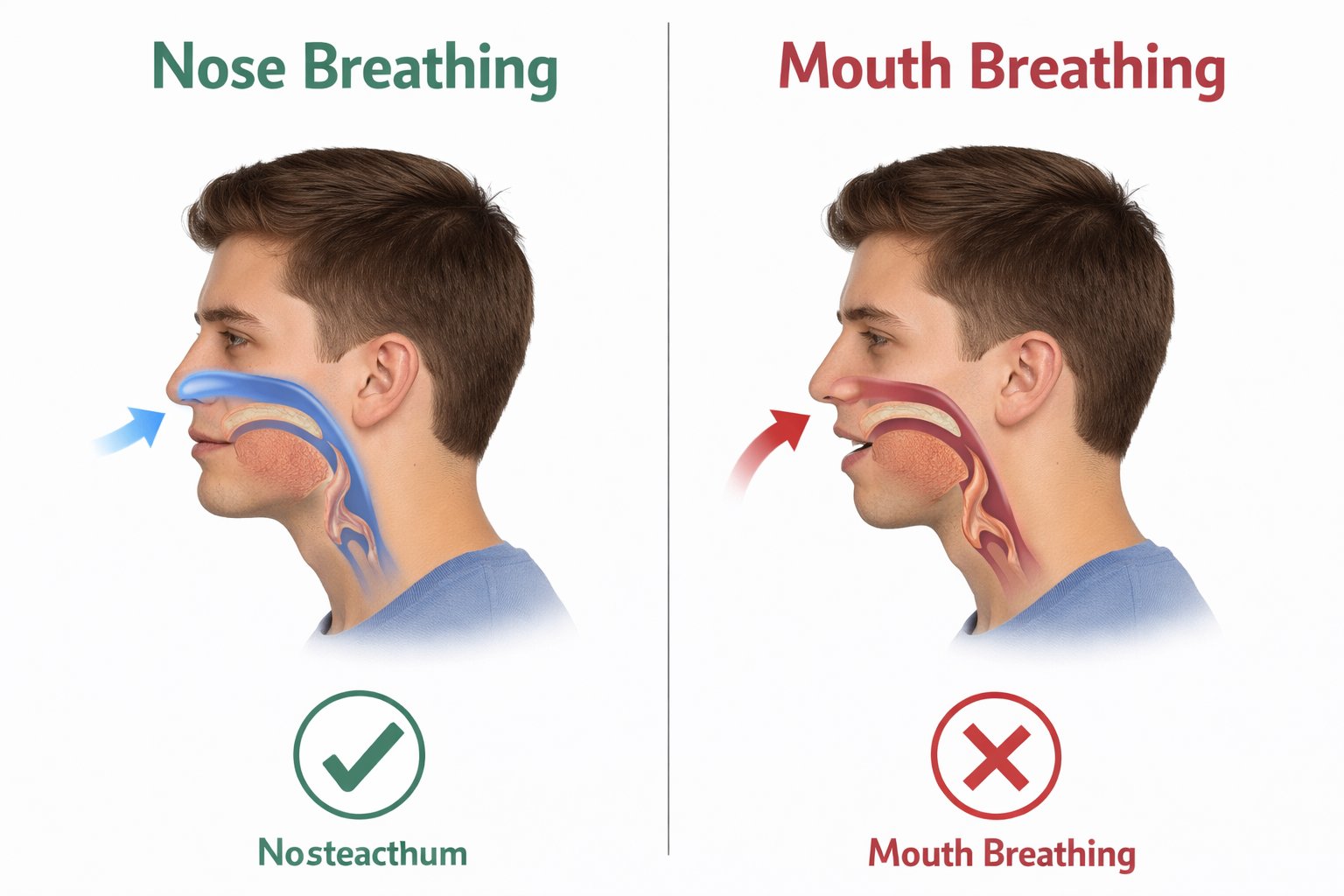
Breathing is a natural process that sustains life, yet the way we breathe can significantly influence our overall health and well-being. While both the nose and mouth can serve as pathways for air to enter the body, they are not equally suited for the task. The nose is specially designed for breathing—it filters dust and germs, warms and humidifies incoming air, and helps the lungs receive clean, healthier oxygen. In contrast, habitual mouth breathing bypasses these protective mechanisms and may lead to various health concerns over time.
Many people breathe through their mouths without realizing it, especially during sleep, physical exertion, or when nasal passages are blocked. Although mouth breathing may provide a temporary alternative when the nose is congested, relying on it regularly can contribute to dry mouth, poor sleep quality, dental problems, snoring, and even reduced oxygen efficiency. On the other hand, nose breathing supports better respiratory function, enhances oxygen uptake, promotes relaxation, and contributes to overall physical and mental health.
Understanding the differences between nose breathing and mouth breathing is important because this simple daily habit can affect energy levels, sleep, concentration, oral health, and long-term wellness. By recognizing the benefits of nose breathing and the potential drawbacks of mouth breathing, individuals can take steps toward healthier breathing patterns and improved quality of life.
Nose Breathing: Nature’s Ideal Way to Breathe for Better Health
Nose breathing is the natural and healthiest way for the body to take in air. The human nose is specially designed to prepare the air before it reaches the lungs.
What Happens During Nose Breathing?
When we breathe through our nose, several important processes occur that help protect and support our body:
1. Air Is Filtered
Tiny hairs (cilia) and mucus inside the nose trap dust, pollen, germs, and other particles before they reach the lungs.
2. Air Is Warmed
Blood vessels in the nasal passages warm the incoming air to a temperature suitable for the lungs, especially during cold weather.
3. Air Is Humidified
The nose adds moisture to the air, preventing the airways and lungs from becoming dry and irritated.
https://journals.physiology.org/doi/full/10.1152/jappl.1999.87.1.400
4. Nitric Oxide Is Produced: Nitric oxide (NO) is a powerful natural vasodilator, meaning it helps relax and widen blood vessels.
The nasal passages release nitric oxide, a natural gas that helps widen blood vessels, improve blood circulation, and enhance oxygen uptake in the lungs.
https://pubmed.ncbi.nlm.nih.gov/9715735/
5. Breathing Becomes Slower and Deeper
Nose breathing naturally slows the breathing rate, allowing the lungs to extract oxygen more efficiently and helping the body remain calm.
6. The Diaphragm Works More Effectively
Nasal breathing encourages the use of the diaphragm, the main breathing muscle, leading to deeper and more efficient breaths.
7. More Oxygen Reaches Body Tissues
Better oxygen exchange in the lungs means that organs, muscles, and the brain receive an adequate oxygen supply for optimal function.
8. The Nervous System Is Calmed
Nose breathing stimulates the parasympathetic nervous system, often called the "rest-and-digest" system, which promotes relaxation and reduces stress. Nose breathing naturally slows and deepens breathing, which activates the vagus nerve and the parasympathetic nervous system. This helps the body relax, lowers heart rate, reduces stress, and promotes a calm "rest-and-digest" state.
9. Protection Against Infections Improves
By filtering and conditioning the air, the nose helps reduce the number of harmful microorganisms entering the respiratory tract.
10. Sleep and Overall Health Benefit
Consistent nose breathing can improve sleep quality, reduce snoring, support oral health, and contribute to better overall well-being
Summary: Nose breathing is not just a way of getting air into the body—it is a sophisticated process that filters, warms, humidifies, and optimizes the air, making breathing safer and more efficient.
Why Is Mouth Breathing Not Ideal?
The mouth is designed primarily for eating and speaking, not for continuous breathing. While mouth breathing is useful when the nose is blocked or during intense exercise, regular mouth breathing can have several drawbacks.
.1. Air is not filtered properly: The mouth lacks the nasal hairs, mucus, and cilia that trap dust, allergens, and microorganisms before they reach the lungs.
https://pmc.ncbi.nlm.nih.gov/articles/PMC4047298/
2. Air is not warmed and humidified efficiently: Air entering through the mouth reaches the throat and lungs with less warming and humidification, which may dry and irritate the airways.
3. Reduced exposure to nasal nitric oxide: Mouth breathing bypasses the nasal passages, where nitric oxide is produced. Nitric oxide helps regulate pulmonary blood flow and oxygen exchange.
https://academic.oup.com/atsjournals
4. Less efficient oxygen utilization: Nasal nitric oxide helps optimize blood flow within the lungs. Mouth breathing bypasses this mechanism.
5. Dry mouth develops easily: Continuous airflow through the mouth evaporates saliva, reducing the mouth's natural protection against bacteria.
6. Increased risk of tooth decay and gum disease: Reduced saliva allows harmful oral bacteria to grow more easily, increasing the risk of dental problems.
7. Poor sleep quality and snoring: Mouth breathing is associated with upper-airway instability, snoring, and sleep-disordered breathing.
8. Sore throat and throat irritation: Dry, unconditioned air passing through the mouth can irritate throat tissues.
9. May alter facial and dental development in children: Long-term mouth breathing can affect tongue position, jaw growth, and facial development. Long-term mouth breathing often causes the tongue to rest low in the mouth instead of against the roof of the mouth. This can alter normal jaw and facial growth, leading to a narrower upper jaw, dental crowding, improper bite alignment, and changes in facial appearance, especially during childhood.
https://www.mdpi.com/2304-6767/12/2/21
10. May affect concentration and daytime functioning: Chronic mouth breathing and associated sleep disturbances may impair attention and cognitive performance.
11. Fatigue and brain fog: "Brain fog" is a non-medical term for cognitive dysfunction, characterized by mental exhaustion, forgetfulness, confusion, and poor concentration. Mouth breathing, especially during sleep, can lead to poor sleep quality and reduced oxygen efficiency. As a result, the brain and body may not get adequate rest, causing daytime fatigue, difficulty concentrating, mental sluggishness, and "brain fog."
https://www.mdpi.com/2227-9032/9/6/645
Conclusion
Mouth breathing is not ideal because it bypasses many of the nose's protective and physiological functions. The nose filters, warms, humidifies air, and delivers nitric oxide to the lungs. Regular mouth breathing may contribute to dry mouth, dental problems, snoring, poor sleep quality, and altered facial development, especially in children. Therefore, nasal breathing is generally considered healthier.
Common Causes of Mouth Breathing
Mouth breathing often occurs when the normal nasal airway is blocked or when a person develops the habit of breathing through the mouth. The most common causes include:
1. Nasal Congestion
Colds, flu, sinus infections, and allergies can cause swelling and mucus buildup in the nose, making nasal breathing difficult.
2. Allergic Rhinitis (Nasal Allergies)
Allergies to dust, pollen, pet dander, or mold can cause chronic nasal blockage, leading to mouth breathing.
3. Enlarged Adenoids
Adenoids are lymphoid tissues located behind the nose. When enlarged, especially in children, they can obstruct the nasal airway and promote mouth breathing.
4. Enlarged Tonsils
Large tonsils can narrow the airway and contribute to mouth breathing, particularly during sleep.
5. Deviated Nasal Septum
A bent or displaced nasal septum can partially block one or both nasal passages, making it harder to breathe through the nose.
6. Nasal Polyps
These are soft, noncancerous growths inside the nose or sinuses that can obstruct airflow and encourage mouth breathing.
7. Chronic Sinusitis
Long-term inflammation of the sinuses can cause persistent nasal congestion and difficulty breathing through the nose.
8. Structural Abnormalities of the Nose
Conditions such as narrow nasal passages, nasal valve collapse, or congenital nasal abnormalities may interfere with normal nasal breathing.
9. Sleep-Disordered Breathing and Sleep Apnea
People with snoring or obstructive sleep apnea may breathe through their mouths during sleep because of airway obstruction.
10. Habitual Mouth Breathing
Sometimes mouth breathing continues as a habit even after the original cause, such as a cold or allergy, has resolved.
11. Obesity
Excess tissue around the neck and upper airway can increase airway resistance, making mouth breathing more likely, especially during sleep.
12. Stress and Anxiety
Stress can lead to rapid, shallow breathing patterns and may encourage breathing through the mouth instead of the nose.
13. Intense Physical Exercise
During vigorous exercise, the body's demand for oxygen increases, and some individuals switch to mouth breathing to move larger volumes of air.
14. Certain Medications
Some medications can cause nasal dryness or congestion, indirectly increasing the tendency to breathe through the mouth, such as antihistamines, decongestants, blood pressure medicines, and antidepressants,
15. Craniofacial or Dental Problems
Jaw abnormalities, dental malocclusion, or facial structural differences can sometimes affect airway function and promote mouth breathing.
Warning Signs That Mouth Breathing May Need Medical Evaluation
Persistent mouth breathing during the day
Chronic snoring
Dry mouth upon waking
Frequent sore throat
Poor sleep quality
Daytime fatigue or difficulty concentrating
Recurrent sinus or ear infections
Conclusion:
The most common causes of mouth breathing are nasal congestion, allergies, enlarged adenoids or tonsils, deviated septum, chronic sinus problems, and sleep-disordered breathing. Identifying and treating the underlying cause can often help restore healthy nasal breathing and improve overall health.
When Is Mouth Breathing OK?
Although nose breathing is generally the preferred way to breathe, mouth breathing can be normal and necessary in certain situations:
1. During Nasal Congestion
When the nose is blocked due to a cold, flu, allergies, or sinus infection, mouth breathing provides an alternative route for air to enter the lungs.
2. During Intense Physical Exercise
During vigorous exercise, the body's oxygen demand increases significantly. Some people naturally use both the nose and mouth to move larger volumes of air.
3. Temporary Nasal Obstruction
Conditions such as a deviated septum, nasal polyps, or temporary swelling of the nasal passages may require mouth breathing until the obstruction is treated.
4. During Certain Medical Emergencies
In situations where rapid airflow is needed or the nasal passages are blocked, mouth breathing can help maintain adequate oxygen intake.
5. While Speaking or Singing
Brief mouth breathing between sentences or during singing is normal and helps meet increased respiratory demands.
Conclusion:
Occasional or temporary mouth breathing is usually not a problem. However, chronic or habitual mouth breathing, especially during sleep, may lead to health issues and should be evaluated if it persists.
Simple Tips to Improve Nose Breathing
Keep nasal passages clear (steam inhalation, saline rinse)
Treat allergies early
Practice conscious nasal breathing during the day
Maintain good hydration
Sleep on your side (reduces mouth breathing)
Message
Nose breathing = healthier, more efficient, protective
Mouth breathing = okay short-term, harmful if chronic