
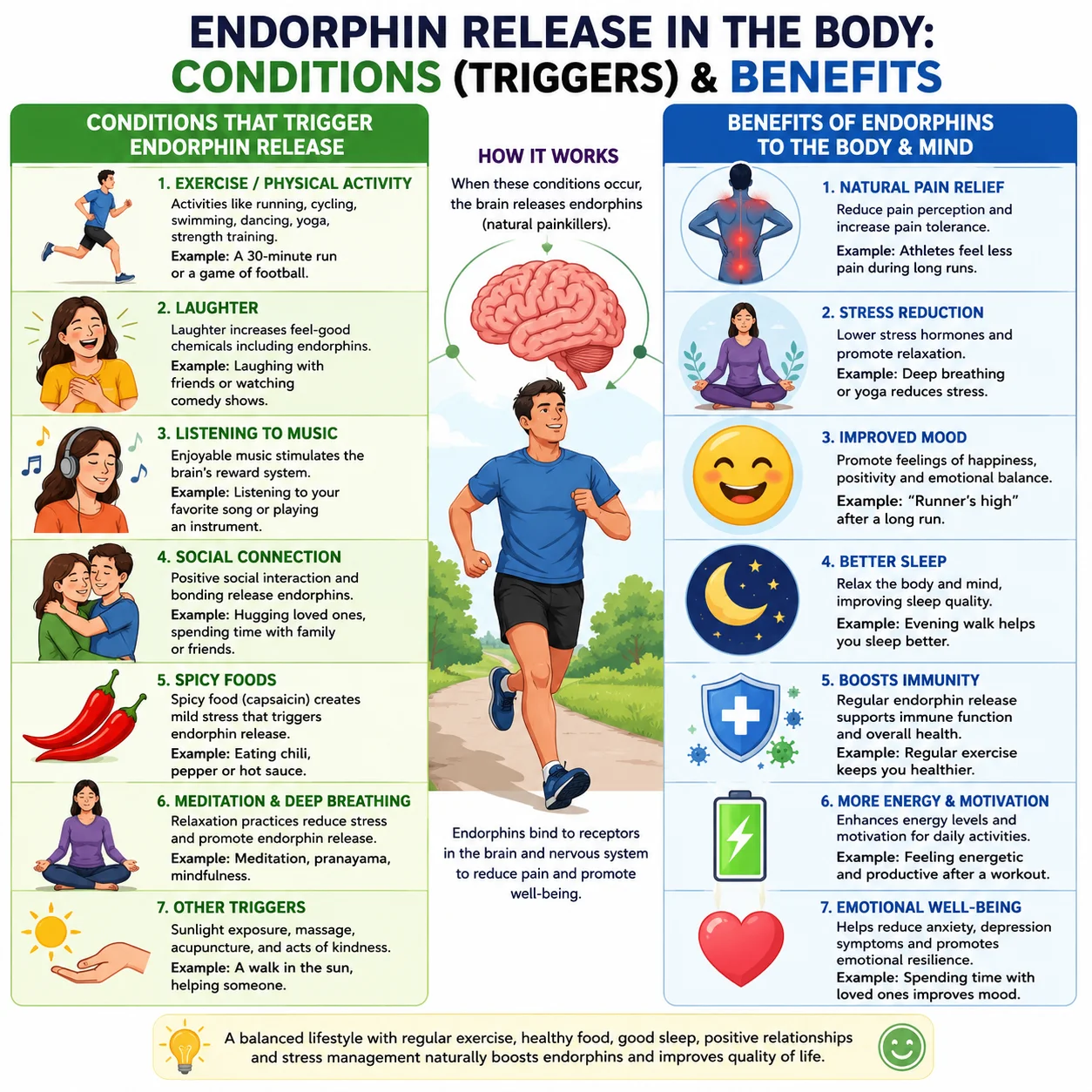
The word comes from “endogenous morphine” (morphine made inside the body). Endorphins are natural chemicals called neuropeptides that act as the body’s own painkillers and mood boosters. They bind to opioid receptors in the brain, helping reduce pain and create feelings of pleasure or well-being.
Where Are Endorphins Produced?
Mainly in the hypothalamus: The hypothalamus is a small, almond-sized structure deep within the brain that acts as the body's primary control center. It is the main link between the nervous and endocrine systems, keeping the body in a stable, balanced state known as homeostasis.
Also in the pituitary gland: The pituitary gland is a pea-sized endocrine organ located at the base of the brain. Often called the "master gland," it regulates critical bodily functions—including growth, metabolism, and stress responses—by secreting essential hormones and directing other endocrine glands.
Released into the brain and bloodstream
Main Functions of Endorphins
1. Pain Relief
Pain signals travel through nerves to the brain.
The body releases endorphins in response to stress, injury, or exercise.
Endorphins attach to opioid receptors on neurons.
This blocks or slows the release of neurotransmitters involved in pain signaling.
The brain interprets the pain as less intense and thus reduces the perception of pain, helping the body cope with injury or stress
2. Mood Elevation
Endorphins are released during activities like exercise, laughter, music, excitement, or stress relief.
They bind to opioid receptors in areas of the brain linked to emotion and reward.
This causes:
Reduced stress signaling
Reduced pain perception
Increased feelings of comfort and pleasure
The brain then produces feelings such as:
Calmness
Happiness
Mild euphoria
Emotional relief
In this way, endorphins create feelings of pleasure and well-being and thus elevate mood.
3. Stress Reduction
During stress, the body releases stress hormones such as cortisol and adrenaline.
The brain also releases endorphins as a protective response.
Endorphins bind to opioid receptors in the brain and nervous system.
This produces several effects:
Reduces anxiety and emotional distress
Lowers perception of pain and discomfort
Promotes relaxation and emotional stability
Counterbalances some effects of stress hormones and thus helps the body handle physical and emotional stress
4. “Runner’s High.”
“Runner’s high” is the name given to the pleasant feeling some people experience after prolonged exercise, especially running.
It is called a “high” because the person may feel:
Euphoric
Energetic
Calm
Mentally clear
Less sensitive to pain or fatigue
This happens partly because exercise increases the release of endorphins in the brain.
During sustained exercise:
The body experiences physical stress and increased exertion.
The brain releases endorphins to help the body cope.
Endorphins bind to opioid receptors.
Pain perception decreases, and positive feelings increase.
Modern research also suggests that other brain chemicals — especially endocannabinoids — contribute strongly to runner’s high, alongside endorphins.
The term became popular because runners often described feeling naturally “high” or intensely good after long-distance running, without any drug use.
Natural Ways to Increase Endorphins
Here are some natural ways to increase endorphin release in the body:
Physical Activity
Exercise is one of the strongest triggers.
Examples:
Running or brisk walking
Cycling
Swimming
Dancing
Strength training
Yoga
This is why exercise is linked to the “runner’s high.”
Laughter
Genuine laughter stimulates endorphin release and reduces stress.
Examples:
Watching comedy
Spending time with funny friends
Humor and playful activities
Music
Listening to enjoyable music — especially singing or dancing along — can activate reward pathways and increase endorphins.
Social Bonding
Positive social interactions help the brain release feel-good chemicals.
Examples:
Hugging
Spending time with loved ones
Group activities
Acts of kindness
Meditation and Deep Breathing
Relaxation practices lower stress and may increase endorphin activity.
Examples:
Mindfulness meditation
Slow breathing exercises
Prayer or chanting
Eating Certain Foods
Some foods may stimulate endorphin release indirectly.
Examples:
Dark chocolate
Spicy foods (capsaicin in chili peppers)
Favorite comfort foods in moderation
Sunlight and Nature
Being outdoors and getting sunlight can improve mood and support endorphin-related pathways.
Creative Activities
Activities that create enjoyment or “flow” may boost endorphins.
Examples:
Painting
Writing
Playing instruments
Gardening
Why They Are Important
Endorphins are important because they help the body and brain cope with pain, stress, and emotions while supporting overall well-being.
Balanced endorphin levels:
Improve mental health
Support heart health
Improve sleep
Strengthen immune response
Conditions That May Lower Endorphin Levels
Endorphin levels can fall when the body experiences prolonged stress, poor lifestyle habits, illness, or reduced stimulation of the brain’s reward systems.
Chronic Stress
Long-term stress can disrupt normal brain chemical balance and reduce healthy endorphin activity.
Lack of Exercise
Physical inactivity reduces one of the body’s major natural triggers for endorphin release.
Poor Sleep
Sleep deprivation affects brain function and neurotransmitter regulation, including endorphin pathways.
Depression or Low Mood States
Some mood disorders are associated with altered endorphin and reward-system activity.
Social Isolation
A lack of positive social interaction may reduce the natural release of “feel-good” chemicals.
Chronic Pain or Illness
Persistent illness or inflammation can disturb normal endorphin regulation.
Drug or Opioid Misuse
Long-term use of opioid drugs can suppress the body’s own natural endorphin production because the brain becomes dependent on external stimulation. Opioids are a powerful class of drugs that act on the nervous system to relieve severe pain. While highly effective for medical use, they are also highly addictive and carry a high risk of overdose
Poor Diet and Excess Alcohol
Unhealthy habits may negatively affect brain chemistry and stress regulation.
Effects of Low Endorphin Levels
When endorphin activity is reduced, a person may experience:
Increased Pain Sensitivity
Pain may feel stronger because the body’s natural pain-control system is weaker.
Low Mood
Possible feelings:
Sadness
Irritability
Emotional emptiness
Reduced motivation
Higher Stress and Anxiety
The body may react more strongly to stressors.
Fatigue and Low Energy
People may feel mentally and physically drained.
Reduced Pleasure Response
Once enjoyable activities may feel less rewarding.
Sleep Problems
Stress and mood disturbances can interfere with sleep quality.
A simplified relationship is:
Lower Endorphin Activity→Higher Stress and Pain Perception
Maintaining healthy endorphin activity is supported by:
Regular exercise
Good sleep
Healthy social interaction
Stress management
Balanced nutrition
Enjoyable activities and hobbies
Medical Help Needed, when the body's natural release of endorphin can not be obtained
f the body’s natural endorphin release is low, the “remedy” depends on the cause and severity. In many cases, lifestyle changes help improve natural production, while medical treatment may be needed in some situations.
If symptoms are severe or persistent, a doctor may evaluate for:
Depression
Chronic stress disorders
Chronic pain conditions
Sleep disorders
Hormonal or neurological problems
Treatment may include:
Counseling or psychotherapy
Exercise therapy
Stress-management programs
Medicines for mood or pain disorders (when appropriate)
Important Note About Artificial Substitutes
Opioid drugs can mimic endorphins because they act on the same receptors, but long-term misuse is dangerous and may actually suppress the body’s own natural endorphin system.
So the safer goal is usually:
Healthy Lifestyle→Natural Endorphin Balance
rather than relying on artificial stimulation.
Possible Conditions Linked With Reduced Endorphin Activity
Low endorphin function has been studied in association with:
Chronic stress
Depression
Anxiety disorders
Chronic pain conditions
Fibromyalgia--->Fibromyalgia is a chronic disorder characterized by widespread musculoskeletal pain, fatigue, sleep disturbances, and cognitive impairment (known as "fibro fog"). It is a long-term condition linked to how the central nervous system processes pain signals, amplifying sensations that are normally non-painful.
Burnout
Opioid dependence or withdrawal
But symptoms vary from person to person.
Foods That May Help Increase Endorphin Activity
Dark chocolate
Dark chocolate contains compounds that may improve mood and stimulate feel-good brain chemicals.
Possible effects:
Mild pleasure and relaxation
Stress reduction
Reward-system activation
Higher cocoa content is generally preferred.
Chili peppers
Spicy foods contain capsaicin, which creates a mild burning sensation.
The body responds by releasing endorphins to counter discomfort.
This is why some people feel a pleasurable “rush” after eating spicy food.
Banana
Bananas contain vitamin B6 and carbohydrates that support neurotransmitter production and brain energy balance.
Yogurt
Fermented foods may support gut health, which can influence mood and brain signaling through the gut-brain connection.
Other fermented foods:
Kefir
Kimchi
Sauerkraut
Salmon and other fatty fish
Rich in omega-3 fatty acids, which support healthy brain function and mood regulation.
Nuts and seeds
Contain healthy fats, magnesium, and amino acids important for nervous system function.
Examples:
Almonds
Walnuts
Pumpkin seeds
Strawberry and berries
Contain antioxidants that help reduce oxidative stress, affecting brain health.
Green tea
Contains L-theanine, which may promote relaxation and emotional calmness.
Important Point
Foods usually do not create a dramatic endorphin surge by themselves. Their effects are generally mild and work best together with:
Exercise
Good sleep
Stress management
Positive social interaction
Exercise increases endorphins because the body interprets sustained physical activity as a form of controlled physical stress and responds by activating natural protective systems.
Step-by-Step Process
1. Physical Exertion Begins
During exercise:
Heart rate increases
Muscles work harder
Energy demand rises
Mild physical stress and muscle strain occur
The brain detects this increased physical load.
2. Brain Activates Stress-Response Systems
The hypothalamus and pituitary gland respond by releasing chemicals that help the body cope with exertion.
One important response is the release of endorphins.
Main production areas:
Hypothalamus
Pituitary gland
3. Endorphins Enter the Nervous System
Endorphins bind to opioid receptors in the brain and spinal cord.
This produces several effects:
Reduced pain perception
Increased pain tolerance
Reduced discomfort from muscle fatigue
Improved emotional state
4. Mood and Reward Pathways Activate
Exercise also influences:
Dopamine
Serotonin
Endocannabinoids
Together, these chemicals contribute to:
Relaxation
Better mood
Mental clarity
“Runner’s high”
Why This Is Helpful Biologically
From an evolutionary perspective, endorphins help humans continue functioning during prolonged physical effort or stressful situations.
A simplified pathway is:
Exercise Stress→Endorphin Release→Reduced Pain and Improved Mood
Which Exercise Increases Endorphins the Most?
Endorphin release tends to increase more with:
Moderate-to-intense exercise
Sustained activity (often 20–45+ minutes)
Rhythmic aerobic exercise
Examples:
Running
Cycling
Swimming
Dancing
Fast walking
Team sports
However, even lighter activities like yoga or stretching may help improve mood through milder endorphin and relaxation responses.
Simple Message:
Endorphins are your body’s natural painkillers that make you feel happy and relaxed.