
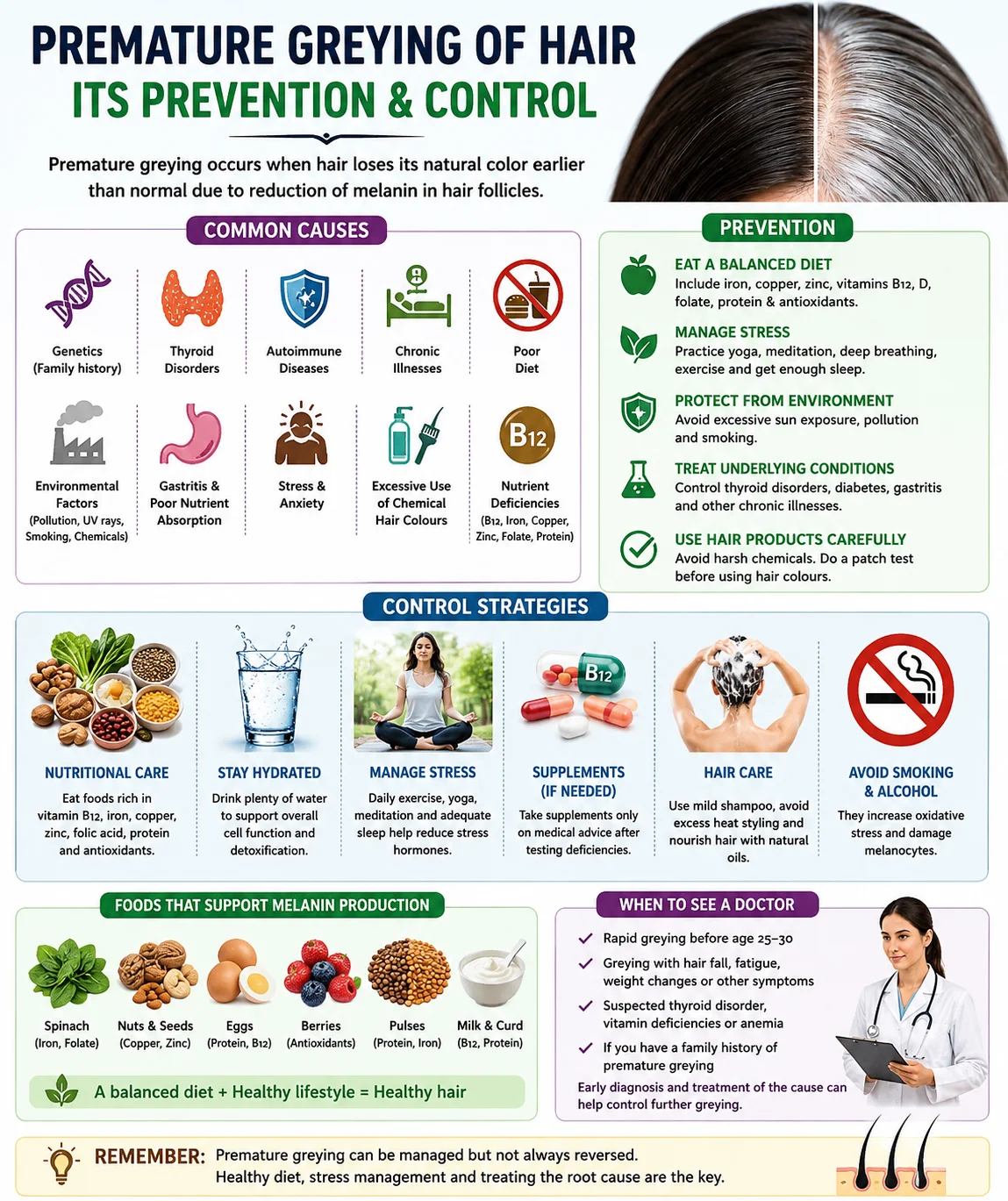
Hair is an important part of a person's appearance and often reflects overall health and well-being. While greying of hair is a natural sign of aging, the appearance of grey or white hair at a young age is known as premature or immature greying of hair. This condition occurs when the hair follicles produce less melanin, the natural pigment responsible for giving hair its color. As melanin production decreases, hair gradually loses its natural color and turns grey, silver, or white.
Premature greying has become increasingly common among young adults and even teenagers. Various factors can contribute to this condition, including genetic predisposition, nutritional deficiencies, chronic stress, hormonal imbalances, certain medical conditions, smoking, and oxidative stress caused by free radicals. Deficiencies of vitamin B12, iron, copper, folic acid, and other essential nutrients may also play a role in the early loss of hair pigmentation.
Although premature greying is generally not a serious medical problem, it can affect self-confidence and emotional well-being. For many individuals, the appearance of grey hair at a young age may be a source of concern and may prompt them to seek ways to slow its progression. Fortunately, adopting a healthy lifestyle, maintaining a balanced diet, managing stress, avoiding smoking, and correcting nutritional deficiencies may help support healthy hair pigmentation and overall hair health.
Understanding the causes and risk factors of premature greying is essential for its prevention and management. By taking appropriate care of the body and hair, individuals may be able to delay the onset of premature greying and maintain healthy, vibrant hair for a longer period of time.
Causes of Premature Greying of Hair
Premature greying occurs when hair loses its natural pigment (melanin) earlier than expected. Several factors can contribute to this condition:
1. Genetic Factors
Heredity is the most common cause. If parents or close relatives experienced early greying, the likelihood of premature greying increases.
2. Nutritional Deficiencies
Deficiencies of certain nutrients can affect melanin production, including:
Vitamin B12
Iron
Copper
Folic acid
Zinc
Vitamin D
Hair color is produced by pigment-producing cells called melanocytes. These cells require certain vitamins and minerals to make melanin, the pigment that gives hair its natural color.
When the body lacks nutrients such as vitamin B12, iron, copper, zinc, folic acid, and vitamin D, melanin production may decrease. As a result, hair can lose its natural color and turn grey prematurely
3. Oxidative Stress
Oxidative stress occurs when harmful molecules called free radicals accumulate in the body and damage cells.
In hair follicles, free radicals can damage melanocytes, the cells that produce melanin (the pigment responsible for hair color). When melanocytes are damaged, they produce less melanin, causing hair to lose its natural color and turn grey prematurely.
4. Chronic Stress
Long-term physical or emotional stress may contribute to premature greying. Chronic stress increases the production of stress hormones and free radicals in the body. These can damage the melanocytes, the cells responsible for producing melanin (hair pigment).
Stress may also interfere with the normal functioning and regeneration of melanocytes, causing a reduction in melanin production and leading to early greying of hair.
5. Smoking
Smoking increases the production of free radicals and harmful chemicals in the body. These substances cause oxidative stress, which can damage the melanocytes (pigment-producing cells) in hair follicles.
Smoking may also reduce blood flow to the scalp, limiting the supply of oxygen and nutrients needed for healthy hair pigmentation.
6. Thyroid Disorders
Both hypothyroidism and hyperthyroidism can interfere with normal hair pigmentation and growth. The thyroid gland produces hormones that help control the growth and normal functioning of hair follicles. These hormones also help the melanocytes (pigment-producing cells) produce melanin, the substance that gives hair its natural color.
When a person has hypothyroidism (low thyroid hormone) or hyperthyroidism (high thyroid hormone), the melanocytes may not function properly. As a result, less melanin is produced, and the hair may turn grey earlier than normal.
7. Autoimmune Diseases
Autoimmune diseases are conditions in which the body's immune system mistakenly attacks its own healthy cells and tissues.
Examples:
Vitiligo (smooth, milky-white patches or spots on the skin. It is not contagious, life-threatening, or a form of skin cancer)
Alopecia Areata (Alopecia areata is an autoimmune disorder where our immune system mistakenly attacks hair follicles, causing hair to fall out in coin-sized patches on the scalp, face, or body. While there is no cure, hair often regrows on its own, and treatments like corticosteroids or topical creams can help stimulate recovery.)
Hashimoto's Thyroiditis (Hashimoto's thyroiditis is a chronic autoimmune disease where the immune system attacks and gradually destroys the thyroid gland. This typically leads to hypothyroidism (an underactive thyroid), resulting in a sluggish metabolism and symptoms like fatigue, weight gain, hair loss, and cold intolerance.)
How Do Autoimmune Diseases Cause Premature Greying of Hair?
In some autoimmune diseases, the immune system may damage or destroy melanocytes, the cells that produce melanin (the pigment in hair). When melanocytes are damaged, less melanin is produced, causing hair to lose its natural color and turn grey prematurely.
8. Chronic Illnesses
Chronic illnesses are long-lasting health conditions that persist for months or years and often require ongoing treatment.
Examples:
Diabetes Mellitus
Chronic Kidney Disease
Anemia
Inflammatory Bowel Disease
In diabetes Mellitus, long-term use of the diabetes medicine Metformin can reduce vitamin B12 absorption in the intestine. Diabetic patients may therefore develop B12 deficiency over time.
In diabetes Mellitus, High blood sugar causes increased urination, so more magnesium and zinc is lost in the urine.
In diabetes mellitus, People with diabetes often have lower vitamin D levels due to various metabolic factors and lifestyle factors.
Diabetes mellitus, associated kidney disease, inflammation, or poor diet may contribute to iron deficiency.
In inflammatory Bowel Disease, fails to absorb nutrients.
So, chronic illnesses can reduce the body's ability to absorb and utilize important nutrients such as vitamin B12, iron, zinc, and copper, which are needed for melanin production. They may also increase oxidative stress and inflammation, which can damage the pigment-producing cells (melanocytes) in hair follicles.
9. Poor Diet
Hair follicles need adequate protein, vitamins, minerals, and antioxidants to produce melanin, the pigment that gives hair its natural color.
A poor diet lacking nutrients such as vitamin B12, iron, copper, zinc, folic acid, protein, and vitamin D can reduce melanin production and weaken the pigment-producing cells (melanocytes). This may cause hair to lose its natural color earlier than normal.
10. Environmental Factors
Environmental factors such as air pollution, ultraviolet (UV) rays from sunlight, cigarette smoke, and exposure to harsh chemicals increase the production of free radicals in the body.
These free radicals cause oxidative stress, which can damage the melanocytes (pigment-producing cells) in hair follicles. When melanocytes are damaged, they produce less melanin, causing hair to turn grey prematurely.
11. Gastritis and Poor Nutrient Absorption
Chronic gastritis can damage the stomach lining and reduce the production of intrinsic factor, a substance needed for the absorption of vitamin B12. Gastritis and other digestive disorders may also impair the absorption of iron, zinc, folic acid, and other nutrients important for hair health.
When these nutrients are not absorbed properly, the melanocytes (pigment-producing cells) cannot produce enough melanin, the pigment responsible for hair color. As a result, hair may turn grey prematurely.
In Short
Genetics + Nutritional Deficiencies + Oxidative Stress + Smoking + Chronic Stress + Medical Conditions = Increased Risk of Premature Greying of Hair.
Prevention and Control of Premature Greying of Hair
Although premature greying cannot always be completely reversed, healthy lifestyle habits and proper nutrition may help slow its progression and support healthy hair pigmentation.
1. Eat a Balanced, Nutrient-Rich Diet
Include foods rich in:
Vitamin B12 (milk, eggs, fish, meat)
Iron (green leafy vegetables, lentils, dates)
Copper (nuts, seeds, whole grains)
Zinc (beans, nuts, dairy products)
Protein (eggs, fish, pulses, soybeans)
2. Increase Antioxidant Intake
Antioxidants help protect pigment-producing cells from free radical damage.
Include:
Amla (Indian gooseberry)
Citrus fruits
Berries
Carrots
Tomatoes
Green leafy vegetables
Nuts and seeds
3. Manage Stress Effectively
Chronic stress may accelerate premature greying.
Helpful practices:
Yoga
Meditation
Deep breathing exercises
Walking
Regular physical activity
Adequate relaxation
4. Get Sufficient Sleep
Aim for 7–8 hours of quality sleep each night to support overall health and hair follicle function.
5. Avoid Smoking
Smoking increases oxidative stress and has been strongly associated with premature greying.
6. Treat Nutritional Deficiencies
Check and correct deficiencies of:
Vitamin B12
Iron
Vitamin D
Zinc
Folate
Under medical guidance.
7. Treat Underlying Medical Conditions
Proper management of:
Thyroid disorders
Chronic gastritis
Autoimmune diseases
Digestive disorders
May help prevent further greying.
8. Protect Hair from Environmental Damage
Avoid excessive sun exposure.
Protect hair from pollution and harsh chemicals.
Limit frequent use of hair dyes and chemical treatments.
9. Maintain Good Scalp and Hair Care
Use mild shampoos.
Avoid excessive heat styling.
Keep the scalp clean and healthy.
10. Traditional Herbal Support
Some people use:
Amla
Bhringraj
Curry leaves
Coconut oil
These may help maintain hair health, although scientific evidence for reversing grey hair is limited.
Conclusion
Premature greying of hair is influenced by genetics, nutrition, stress, lifestyle, and health conditions. A balanced diet rich in vitamins, minerals, antioxidants, and protein, combined with stress management, adequate sleep, avoidance of smoking, and proper treatment of underlying deficiencies or illnesses, offers the best approach for preventing and controlling early hair greying. While complete reversal may not always be possible, these measures can help slow the process and support healthier hair.
Is Hair Coloring Good or Bad for Health?
In general, hair coloring is not harmful to overall health when used properly and occasionally. However, frequent or improper use of hair dyes can cause some side effects, especially to the hair and scalp.
Possible Benefits
✔ Covers grey hair and improves appearance
✔ May increase self-confidence
✔ Allows personal style and fashion choices
Possible Risks
1. Hair Damage
Many permanent hair dyes contain chemicals that can:
Dry the hair
Make hair brittle
Increase hair breakage
Causes hair thinning if used excessively
2. Scalp Irritation
Some people may experience:
Itching
Redness
Burning sensation
Scalp inflammation
3. Allergic Reactions
Certain hair dyes contain paraphenylenediamine (PPD), which can cause allergic reactions in sensitive individuals.
Symptoms may include:
Rash
Swelling
Severe itching
A patch test is recommended before using a new dye.
4. Temporary Hair Fall
Frequent coloring, bleaching, or chemical treatments can weaken hair shafts and increase hair breakage, which may appear as hair loss.
Does Hair Coloring Cause Cancer?
Current evidence does not clearly show that occasional personal hair dye use causes cancer. However, people who work with hair dyes regularly (such as hairdressers) may have greater long-term exposure to certain chemicals.
Tips for Safer Hair Coloring
Choose reputable brands.
Perform a patch test before use.
Follow the instructions carefully.
Avoid coloring too frequently.
Condition hair regularly.
Consider natural alternatives such as henna for those who are sensitive to chemical dyes.
Conclusion
Hair coloring is generally safe when used occasionally and correctly. It mainly affects the hair and scalp rather than the whole body. However, frequent use of chemical dyes may damage hair, cause irritation, or trigger allergic reactions. For people with premature greying, it is often better to first address possible causes such as nutritional deficiencies, stress, smoking, thyroid disorders, or gastritis, rather than relying solely on hair coloring.