
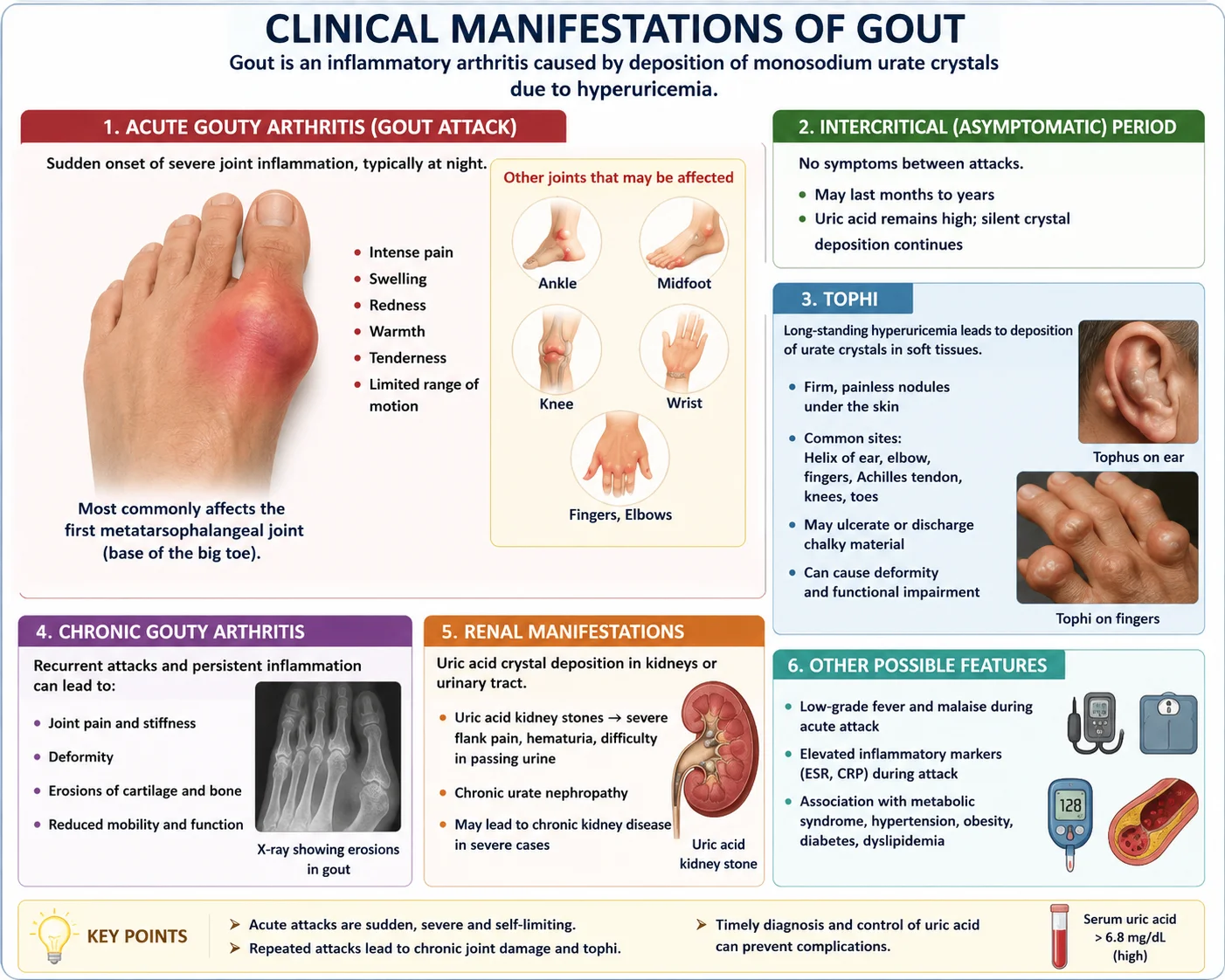
A swollen and painful big toe is often the first and most recognizable sign of #gout, a condition caused by high levels of uric acid in the blood. When excess uric acid forms sharp crystals, they commonly settle in the joint at the base of the big toe, triggering sudden inflammation. This results in intense pain, swelling, redness, warmth, and tenderness that may appear overnight and make even simple activities such as walking or wearing shoes extremely painful. Although the big toe is most frequently affected, gout can also involve other joints if left untreated. Recognizing this early symptom is important because timely diagnosis and proper management of high uric acid can prevent recurrent attacks, joint damage, and other serious complications.
Gout is one of the most common forms of inflammatory arthritis and can affect both men and women, although #it is more common in men and in #women after menopause. Early treatment, along with lifestyle changes such as maintaining a healthy weight, drinking adequate water, limiting alcohol, and reducing purine-rich foods, can help lower uric acid levels and reduce the frequency of gout attacks. Seeking medical attention at the first sign of a painful, swollen joint can improve long-term outcomes and help preserve joint function and quality of life.
#Gout is a painful type of inflammatory arthritis caused by the buildup of uric acid crystals in the joints. It occurs when there is too much uric acid in the blood, allowing sharp crystals to form and trigger inflammation.
The big toe is the most commonly affected joint, although the ankles, knees, wrists, fingers, and elbows can also be involved.
#Before menopause, women have higher levels of estrogen, which helps the kidneys remove more uric acid through urine. #Men have much lower estrogen levels, so they excrete less uric acid. As a result, men tend to have higher blood uric acid levels, making gout more common.
#After menopause, estrogen levels decline sharply. Without estrogen's protective effect, the kidneys remove less uric acid, causing uric acid to build up in the blood. This increases the risk of Gout.
Clinical Manifestations of Gout
1. Sudden, Severe Joint Pain
Gout attacks usually begin suddenly, often at night, with intense pain in one joint.
Gout attacks often begin suddenly at night because uric acid is less soluble at lower temperatures. During sleep, body temperature—especially in the hands and feet—drops slightly, and joints are inactive. These conditions favor the formation of uric acid (monosodium urate) crystals in the joint. The immune system recognizes these crystals as foreign, triggering a rapid inflammatory response that causes sudden, severe pain, swelling, redness, and warmth. Most first attacks involve only one joint, commonly the big toe.
https://erofirving.com/gout-attack-relief-night-joint-pain/
Research link:
Gout National Institute of Arthritis and Musculoskeletal and Skin Diseases
https://www.niams.nih.gov/health-topics/gout
Research article:
Gout Lancet Seminar National Center for Biotechnology Information
https://pmc.ncbi.nlm.nih.gov/articles/PMC6297580/?utm_source=chatgpt.com
2. Swelling of the Affected Joint
The joint becomes swollen due to inflammation caused by uric acid crystal deposition.
When uric acid crystals accumulate in a joint, the body's immune system recognizes them as foreign particles. Immune cells move into the joint and release inflammatory chemicals (#cytokines), causing increased blood flow and leakage of fluid into the surrounding tissues. This results in swelling, redness, warmth, and pain in the affected joint.
Cytokines are small signaling proteins released by immune cells that help the body respond to infection or injury. They act as chemical messengers, telling other immune cells where to go and what to do.
Research link:
Gout National Institute of Arthritis and Musculoskeletal and Skin Diseases
https://www.niams.nih.gov/health-topics/gout?utm_source=chatgpt.com
Research article:
Gout Lancet Seminar National Center for Biotechnology Information
https://pmc.ncbi.nlm.nih.gov/articles/PMC6297580/?utm_source=chatgpt.com
3. Redness and Warmth
The skin over the affected joint appears red, warm, and inflamed.
When uric acid crystals accumulate in a joint, they trigger an immune response. Immune cells release cytokines and other inflammatory chemicals that widen nearby blood vessels and increase blood flow to the affected area. More fluid and immune cells then enter the joint and surrounding tissues. This increased blood flow and fluid leakage make the skin over the joint red, warm, swollen, and inflamed.
Research link:
Gout National Institute of Arthritis and Musculoskeletal and Skin Diseases
Research article:
Gout Lancet Seminar National Center for Biotechnology Information
4. Extreme Tenderness
Even light touch, such as a bedsheet resting on the joint, may cause severe pain.
During a gout attack, uric acid crystals trigger intense inflammation in the joint. The inflammatory chemicals released by immune cells sensitize the pain-sensing nerve endings, making them extremely sensitive. As a result, even a very light touch—such as a bedsheet resting on the affected joint—can activate these nerves and cause severe pain. This increased sensitivity to normally non-painful touch is called #allodynia.
#Allodynia is pain caused by a stimulus that normally does not cause pain, such as light touch or gentle pressure.
Research link:
Gout National Institute of Arthritis and Musculoskeletal and Skin Diseases
Research article:
Gout Lancet Seminar National Center for Biotechnology Information
5. Big Toe Involvement (#Podagra)
#Podagra is the medical term for gout affecting the joint at the base of the big toe. It is the most common and often the first presentation of gout.
The base of the big toe is the most commonly affected site during the first gout attack.
The base of the big toe is the most common site of the first gout attack because it is #farther from the body's core and therefore slightly cooler than other joints. Uric acid is less soluble at lower temperatures, making it more likely to form #monosodium urate crystals in this joint. In addition, the big toe bears much of the body's weight during walking and is frequently subjected to minor trauma, which can further promote crystal formation and trigger inflammation.
#Farther from the body's core: Farther from the body's core means farther away from the center of the body (chest and abdomen). so it is usually cooler than the central parts of the body. This cooler temperature favors the formation of uric acid crystals.
#Monosodium urate crystals are tiny, sharp crystals formed when excess uric acid combines with sodium in the body. These crystals can accumulate in joints and trigger inflammation.
Research link:
Gout National Institute of Arthritis and Musculoskeletal and Skin Diseases
Research article:
Gout Lancet Seminar National Center for Biotechnology Information
6. Limited Joint Movement
Pain and swelling make it difficult to move the affected joint normally.
During a gout attack, uric acid crystals trigger intense inflammation in the joint. The resulting pain, swelling, and stiffness make movement uncomfortable. Swelling also reduces the joint's normal range of motion, so bending or using the joint becomes difficult until the inflammation subsides.
Research link:
Gout National Institute of Arthritis and Musculoskeletal and Skin Diseases
Research article:
Gout Lancet Seminar National Center for Biotechnology Information
7. Recurrent Gout Attacks
Without treatment, attacks may become more frequent and involve multiple joints.
If high uric acid levels are not treated, uric acid crystals continue to accumulate in the joints over time. Each crystal deposit can trigger another inflammatory attack. As more crystals build up, additional joints become affected, and gout attacks become more frequent, longer-lasting, and more severe.
Research link:
Gout National Institute of Arthritis and Musculoskeletal and Skin Diseases
Research article:
Gout Lancet Seminar National Center for Biotechnology Information
8. Tophi Formation
Long-standing gout may lead to the development of tophi—hard, painless deposits of uric acid crystals beneath the skin, commonly around the fingers, toes, elbows, and ears.
When high uric acid levels remain elevated for many years, monosodium urate crystals continue to accumulate in the body. Over time, these crystals collect in soft tissues beneath the skin, especially around the fingers, toes, elbows, ears, and other joints. The body surrounds these crystal deposits with inflammatory tissue, forming tophi. Tophi are usually firm, painless lumps, but they can enlarge over time and may damage nearby joints, bones, and tendons.
Research link:
Gout National Institute of Arthritis and Musculoskeletal and Skin Diseases
Research article:
Gout Lancet Seminar National Center for Biotechnology Information
9. Kidney Stones
Excess uric acid may form stones in the kidneys, causing severe flank pain, blood in the urine, and difficulty passing urine.
When there is too much uric acid in the urine, it can crystallize and clump together, forming uric acid kidney stones. These stones may block the flow of urine or irritate the urinary tract. This can cause severe pain in the side or back (flank pain), blood in the urine, painful or difficult urination, and sometimes nausea or vomiting.
Research link:
National Institute of Diabetes and Digestive and Kidney Diseases Uric Acid Stones
ttps://www.govinfo.gov/content/pkg/GOVPUB-HE20-PURL-gpo64719/pdf/GOVPUB-HE20-PURL-gpo64719.pdf
https://www.niddk.nih.gov/health-information/urologic-diseases/kidney-stones/definition-facts
Research article:
Uric Acid Nephrolithiasis National Center for Biotechnology Information
https://www.ncbi.nlm.nih.gov/books/NBK560726/
10. Chronic Joint Damage
Repeated gout attacks can permanently damage joints, leading to stiffness, deformity, and reduced mobility.
Repeated gout attacks cause ongoing inflammation in the affected joints. Over time, uric acid crystals and persistent inflammation gradually damage the cartilage, bones, ligaments, and surrounding tissues. This damage can lead to joint stiffness, deformity, chronic pain, and reduced mobility, making it difficult to perform everyday activities.
Research link:
Gout National Institute of Arthritis and Musculoskeletal and Skin Diseases
Research article:
Gout Lancet Seminar National Center for Biotechnology Information
Conclusion:
The hallmark clinical features of gout are sudden severe joint pain, swelling, redness, warmth, tenderness, and limited movement, most commonly affecting the big toe. If untreated, gout can lead to tophi, kidney stones, and permanent joint damage.
Some questions may arise in our mind. The answers are as folloiws:
Q1. Why is the big toe commonly affected first?
Ans: The big toe (first metatarsophalangeal joint) is one of the coolest parts of the body because it is far from the body's core and has less blood flow than central joints. **MoQ2nosodium urate crystal crystals are less soluble at lower temperatures, so they are more likely to form in cooler joints. This is one reason why gout often starts in the big toe.
**Monosodium urate (MSU) is the crystalline form of uric acid that deposits in joints and causes gout.
Q2. Would wrapping the big toe to keep it warm prevent gout?
Ans: No, there is no good scientific evidence that keeping the big toe warm prevents gout.
Although warmth may theoretically make crystal formation less favorable, the main cause of gout is elevated blood uric acid, not cold itself. If blood uric acid remains high, crystals can still form despite wearing socks or wrapping the toe.
Q3. Are cool weather and air-conditioned rooms responsible for gout?
Ans: Not directly.
Cold temperatures may trigger a gout attack in someone who already has urate crystals in their joints.
However, cold weather or an air-conditioned room does not cause hyperuricemia or create gout by itself.
Other factors associated with winter—such as dehydration, increased alcohol intake, and eating more purine-rich foods—may contribute more to gout attacks than the cold alone.
Conclusion:
The big toe is commonly affected because it is cooler, making urate crystals more likely to form.
Keeping the toe warm has not been proven to prevent gout.
Cold environments may trigger an attack in susceptible people, but they are not the primary cause of gout. The key preventive measure is maintaining normal blood uric acid levels through diet, hydration, weight management, and medications when needed.