
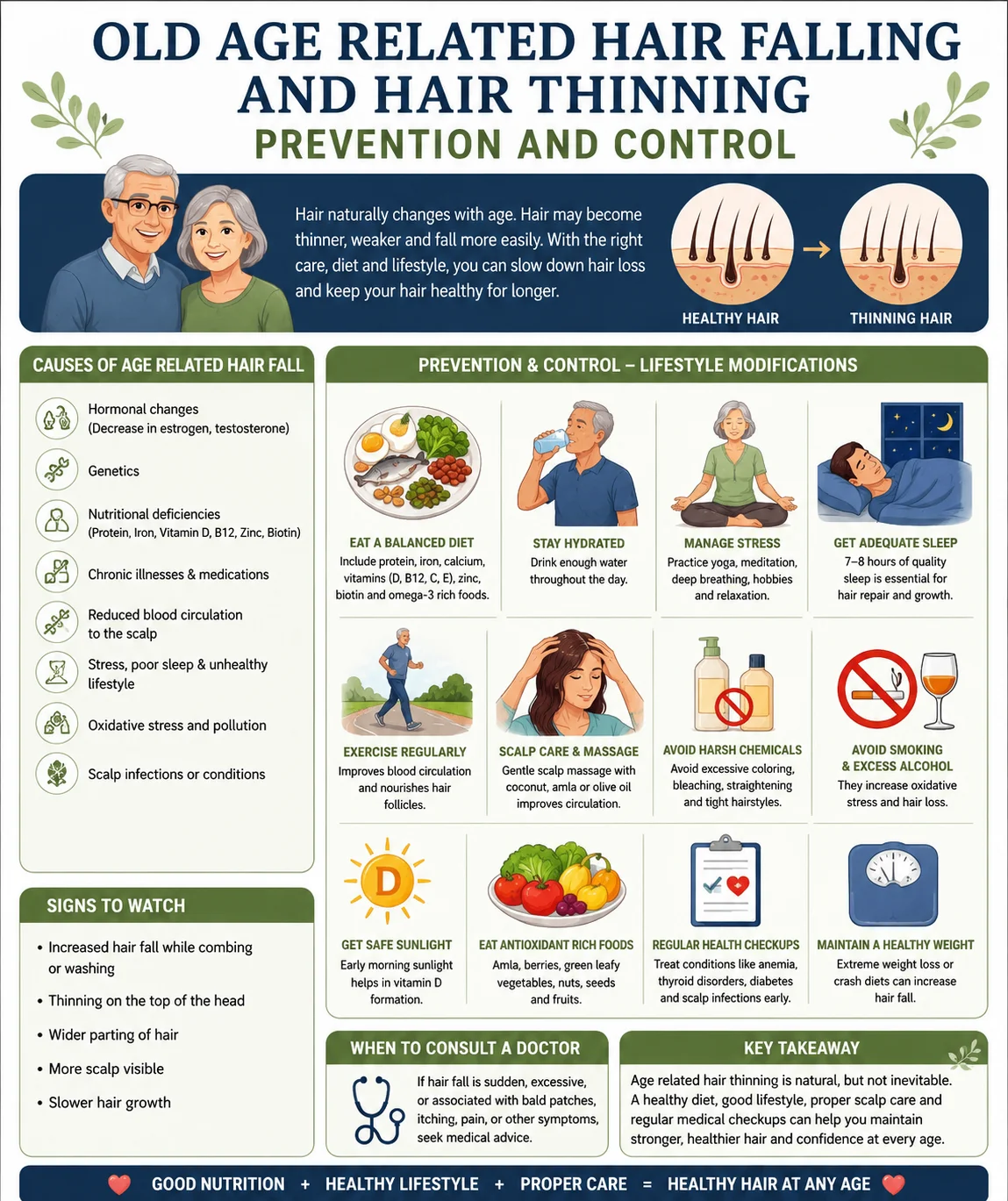
Hair is often considered a symbol of youth, vitality, and good health. However, as people grow older, it is natural for changes to occur in the hair's texture, thickness, and growth pattern. One of the most common concerns among older adults is age-related hair fall or hair thinning. While losing a small amount of hair each day is a normal part of the hair growth cycle, aging can gradually slow down hair production and cause hair follicles to become smaller and less active. As a result, hair may become thinner, weaker, and less dense over time.
Old-age hair fall is a natural biological process influenced by several factors, including genetics, hormonal changes, reduced blood circulation to the scalp, and the gradual decline in the body's ability to regenerate cells. Nutritional deficiencies, chronic illnesses, certain medications, stress, and lifestyle factors can further accelerate hair loss in older individuals. Although age-related hair thinning is common, it can sometimes affect self-confidence and emotional well-being, making it an important health concern for many people.
Fortunately, aging does not necessarily mean accepting excessive hair loss without action. A balanced diet rich in protein, iron, vitamins, and minerals, along with proper scalp care, regular physical activity, stress management, and healthy lifestyle habits, can help maintain stronger and healthier hair. In some cases, medical treatments or nutritional supplements may also help slow the progression of hair loss.
Understanding the causes of old-age hair fall is the first step toward managing it effectively. By adopting healthy habits and addressing any underlying health issues, older adults can support hair health, improve hair quality, and maintain confidence as they age gracefully. Hair may naturally change with age, but proper care can help preserve its strength, appearance, and vitality for many years.
Causes of Age-Related Hair Thinning and Hair Loss
As people age, hair naturally undergoes changes that can lead to thinning and increased hair loss. Several factors contribute to this process:
1. Shrinking of Hair Follicles
With age, hair follicles gradually become smaller and less active. As a result, new hairs grow thinner, shorter, and weaker than before.
2. Slower Hair Growth Cycle
The hair growth phase (anagen phase) becomes shorter with aging. Hair grows more slowly and spends less time actively growing, leading to reduced hair density. The anagen phase is the active, growing stage of the hair cycle. Cells in the hair root divide rapidly, pushing the hair shaft up. Lasting 2 to 7 years, it determines your maximum hair length. About 85–90% of your hair is in this phase, growing roughly 1 cm every 28 days.
3. Genetic Factors
Inherited traits play a major role in age-related hair loss. If close family members experience hair thinning or baldness, the likelihood increases with age.
4. Hormonal Changes
Changes in hormone levels can affect hair growth. In men, sensitivity to dihydrotestosterone (DHT, an androgen derived from testosterone) contributes to male-pattern baldness, while women may experience hair thinning after menopause due to declining estrogen levels.
5. Reduced Blood Circulation to the Scalp
Aging may reduce blood flow to the scalp, limiting the supply of oxygen and nutrients needed by hair follicles for healthy growth.
6. Nutritional Deficiencies
Older adults may develop deficiencies in:
Iron
Protein
Vitamin D
Vitamin B12
Zinc
Folate
These nutrients are essential for healthy hair growth.
7. Chronic Medical Conditions
Certain age-related diseases can contribute to hair loss, including:
Thyroid disorders
Diabetes
Anemia
Kidney disease
Autoimmune disorders
8. Medications
Some medications commonly used by older adults may cause hair thinning as a side effect, including drugs for:
High blood pressure
Heart disease
Depression
Arthritis
Cancer treatment
9. Oxidative Stress and Cellular Aging
Free radicals are unstable molecules produced naturally in the body during normal metabolism and also by factors such as pollution, smoking, stress, and UV radiation.
Over time, these free radicals can damage cells, including the cells of hair follicles. This damage is called oxidative stress. As oxidative stress increases with age, hair follicles may become weaker, smaller, and less efficient at producing thick, healthy hair.
Simple Explanation
Aging → More free radical damage → Weaker hair follicles → Thinner hair and increased hair fall
How to Reduce Oxidative Stress
Eat foods rich in antioxidants, such as:
Amla (Indian gooseberry)
Berries
Citrus fruits
Green leafy vegetables
Carrots
Tomatoes
Nuts and seeds
Regular exercise, adequate sleep, stress management, and avoiding smoking can also help reduce oxidative stress and support healthy hair aging.
10. Stress and Poor Sleep
Chronic stress, anxiety, and inadequate sleep can disrupt the hair growth cycle and increase hair shedding.
11. Scalp Conditions
Dandruff, fungal infections, psoriasis, and chronic scalp inflammation can weaken hair roots and contribute to hair loss.
12. Environmental and Lifestyle Factors
Long-term exposure to:
Sunlight (UV radiation)
Pollution
Smoking
Poor diet
Can accelerate hair aging and thinning.
Conclusion
Age-related hair thinning and hair loss result from a combination of genetic, hormonal, nutritional, medical, and lifestyle factors. While some degree of hair thinning is a natural part of aging, maintaining good nutrition, managing health conditions, reducing stress, and caring for the scalp can help preserve hair health and slow the progression of hair loss.
Remedies for age-related hair thinning and hair loss
The remedy depends on the causes.
If hair fall is mainly due to aging (age-related hair thinning), it usually cannot be completely reversed because hair follicles gradually become smaller and produce thinner, shorter hairs. However, hair loss can often be slowed, and hair density may be improved to some extent.
1. Ensure Adequate Protein Intake
Hair is made primarily of protein (keratin). Older adults sometimes consume less protein than needed.
Good sources include:
Milk and yogurt
Eggs
Fish
Lean meat
Soybeans
Lentils and beans
Nuts and seeds
2. Correct Nutritional Deficiencies
Hair thinning in older adults may worsen if there is a deficiency of:
Iron
Vitamin D
Vitamin B12
Zinc
Folate
A doctor can identify deficiencies through blood tests.
3. Treat Underlying Medical Conditions
Conditions such as:
Thyroid disorders
Anemia
Chronic illness
Hormonal imbalances
Can contribute to hair loss and should be addressed.
4. Gentle Hair Care
Avoid excessive heat styling.
Avoid harsh chemical treatments.
Use mild shampoos.
Avoid tight hairstyles that pull on the hair.
5. Scalp Massage
Gentle scalp massage may improve blood circulation to the scalp and promote a healthy environment for hair follicles.
6. Medications
Two treatments have the strongest scientific evidence:
Minoxidil (applied to the scalp)
Finasteride (primarily for men and only under medical supervision)
These treatments can slow hair loss and sometimes stimulate new growth, but they usually need to be continued long-term.
7. Hair Transplantation
For suitable candidates, hair transplantation can provide a more permanent solution for certain types of baldness.
Natural Expectations
For age-related hair loss:
Complete restoration of youthful hair is uncommon.
Slowing further hair loss is often achievable.
Some thickening and regrowth may occur with proper treatment.
Earlier treatment generally produces better results.
An Important Point
Many people assume their hair loss is simply due to aging, but in older adults, factors such as iron deficiency, vitamin D deficiency, thyroid disease, medications, or poor nutrition may also play a role. These causes are often treatable.
So, before accepting hair loss as "just old age," it is worth having a medical evaluation to identify any reversible factors.
Herbal and natural remedies traditionally used for hair health:
Several herbal and natural remedies are traditionally used for hair health. However, it is important to understand that no herbal treatment has been proven to completely reverse age-related hair loss, although some may improve scalp health, reduce hair breakage, and support healthier hair growth.
1. Aloe Vera
Applying Aloe Vera to the Scalp
Aloe vera gel may:
Moisturize the scalp
Reduce dandruff and scalp irritation
Soothe inflammation
Improve overall scalp health
How to use:
Apply fresh aloe vera gel to the scalp.
Leave it on for 30–60 minutes.
Wash with a mild shampoo.
Repeat 2–3 times per week.
Consuming Aloe Vera
While aloe vera contains vitamins and antioxidants, there is limited scientific evidence that drinking aloe vera directly promotes hair growth. Excessive consumption may cause digestive upset and other side effects, so it should be used cautiously.
2. Amla (Indian Gooseberry)
Amla is rich in vitamin C and antioxidants and is traditionally used to support hair health.
Use:
Amla oil for scalp massage.
Fresh amla or amla powder in the diet.
3. Bhringraj
In Ayurvedic medicine, bhringraj is often called the "king of herbs" for hair.
It is traditionally believed to:
Strengthen hair roots
Reduce hair fall
Improve hair texture
Use:
Bhringraj Oil (Most Common Method)
Apply Bhringraj oil gently to the scalp.
Massage for 5–10 minutes.
Leave it on for at least 1 hour or overnight.
Wash with a mild shampoo.
Use 2–3 times per week.
Bhringraj Powder
Mix Bhringraj powder with water or aloe vera gel to make a paste.
Apply to the scalp for 30 minutes.
Rinse thoroughly.
Use once weekly.
Scientific evidence is limited. Bhringraj may support hair health, but it cannot completely reverse age-related or genetic hair loss. It works best when combined with proper nutrition, adequate sleep, stress management, and good scalp care.
4. Fenugreek (Methi)
Fenugreek seeds contain protein and plant compounds that may help condition hair.
Use:
Soak seeds overnight.
Grind into a paste.
Apply to the scalp for 30–45 minutes.
5. Rosemary
Some studies suggest that rosemary oil may help stimulate hair growth in certain types of hair loss.
Use:
Mix a few drops with a carrier oil (such as coconut oil).
Massage gently into the scalp.
6. Coconut Oil
Coconut oil helps reduce protein loss from hair and may decrease breakage.
A Realistic View
For old-age hair thinning, herbal remedies may:
✔ Improve scalp condition
✔ Reduce hair breakage
✔ Make hair appear healthier
✔ Support existing hair growth
But they generally cannot fully restore hair follicles that have permanently shrunk due to aging or genetic baldness.
Best Natural Approach
A combination of:
Adequate protein intake
Iron, vitamin D, and B12 sufficiency
Regular scalp massage
Aloe vera or coconut oil application
Stress management
Good sleep
is likely to provide more benefit than any single herbal remedy alone.
Conclusion: Aloe vera, amla, bhringraj, fenugreek, rosemary, and coconut oil may support scalp health and help reduce hair breakage, but current scientific evidence does not show that they can completely reverse age-related hair loss. Their greatest benefit lies in maintaining a healthy scalp environment and supporting the growth of existing hair.
Lifestyle Modifications for Prevention and Correction of Old-Age Hair Fall and Hair Thinning
As people age, some degree of hair thinning is natural. However, healthy lifestyle habits can help slow hair loss, strengthen existing hair, and improve overall scalp health.
1. Eat a Protein-Rich Diet
Hair is primarily made of protein (keratin). Adequate protein intake is essential for maintaining healthy hair.
2. Ensure Adequate Iron Intake
Iron deficiency is a common cause of hair loss, especially in older adults. Iron from food is absorbed mainly in the duodenum and upper jejunum (the first part of the small intestine). Some foods contain iron that is absorbed very efficiently, while others contain iron that is less readily absorbed.
Iron-rich foods: Green leafy vegetables, Lentils, Chickpeas, Fish, Meat, Dates and raisins.Take these foods with vitamin C-rich foods such as lemon, amla, guava, or oranges to improve absorption.
Foods That Reduce Iron Absorption
Avoid taking these together with iron-rich meals:
Tea
Coffee
Excess bran
Large amounts of calcium supplements or milk
For example, drinking tea immediately after meals can significantly reduce iron absorption.
3. Maintain Adequate Vitamin D Levels
Vitamin D supports healthy hair follicles.
Sources:
Early morning sunlight exposure
Egg yolks
Fatty fish
Fortified milk
4. Prevent Vitamin B12 Deficiency
Vitamin B12 deficiency can contribute to hair thinning.
Sources:
Milk and dairy products
Eggs
Fish
Chicken
Fortified foods
Chronic gastritis, particularly in older adults, can be an important cause of vitamin B12 deficiency and may contribute indirectly to age-related hair thinning and hair loss. Vitamin B12 absorption requires a protein called intrinsic factor, which is produced by specialized cells in the stomach lining. In chronic gastritis, especially atrophic gastritis, these cells may become damaged, leading to reduced intrinsic factor production. As a result, the intestine cannot absorb vitamin B12 efficiently.
Atrophic gastritis is a chronic inflammation of the stomach lining where glandular cells are destroyed and replaced by intestinal or fibrous tissue.
5. Stay Hydrated
Adequate water intake helps maintain scalp and hair health.
Aim for approximately 1.5–2.5 liters of water daily unless restricted by a physician.
6. Manage Stress
Chronic stress can increase hair shedding.
Helpful practices:
Walking
Yoga
Meditation
Deep breathing exercises
Laughter therapy
Spending time with family and friends
7. Get Adequate Sleep
Hair repair and growth occur during sleep.
Aim for:
7–8 hours of quality sleep each night
8. Exercise Regularly
Regular physical activity improves blood circulation, including blood flow to the scalp.
Examples:
Walking
Cycling
Swimming
Yoga
Stretching exercises
9. Practice Gentle Hair Care
Avoid very hot water on the scalp.
Use mild shampoos.
Avoid excessive hair coloring, bleaching, and chemical treatments.
Avoid tight hairstyles that pull on the hair.
10. Regular Scalp Massage
Gentle massage may improve scalp circulation and relaxation.
You may use:
Coconut oil
Amla oil
Aloe vera gel
Massage gently for 5–10 minutes several times per week.
11. Avoid Smoking and Excessive Alcohol
Smoking reduces blood supply to hair follicles and accelerates aging, including hair aging.
12. Treat Medical Conditions Promptly
Regular health checkups are important to detect:
Thyroid disorders
Diabetes
Anemia
Nutritional deficiencies
These conditions can worsen hair loss if left untreated.
13. Maintain a Healthy Body Weight
Extreme dieting and rapid weight loss can trigger significant hair shedding.
14. Protect Hair from Environmental Damage
Wear a hat in strong sunlight.
Protect hair from excessive pollution and dust.
Avoid prolonged exposure to harsh weather conditions.
Conclusion
Although age-related hair thinning cannot always be completely reversed, a healthy lifestyle can significantly slow hair loss and improve hair quality. A balanced diet rich in protein, iron, vitamin D, vitamin B12, and zinc, combined with regular exercise, stress management, adequate sleep, proper hydration, and gentle hair care, provides the best natural approach to maintaining stronger, healthier hair during the aging process.