
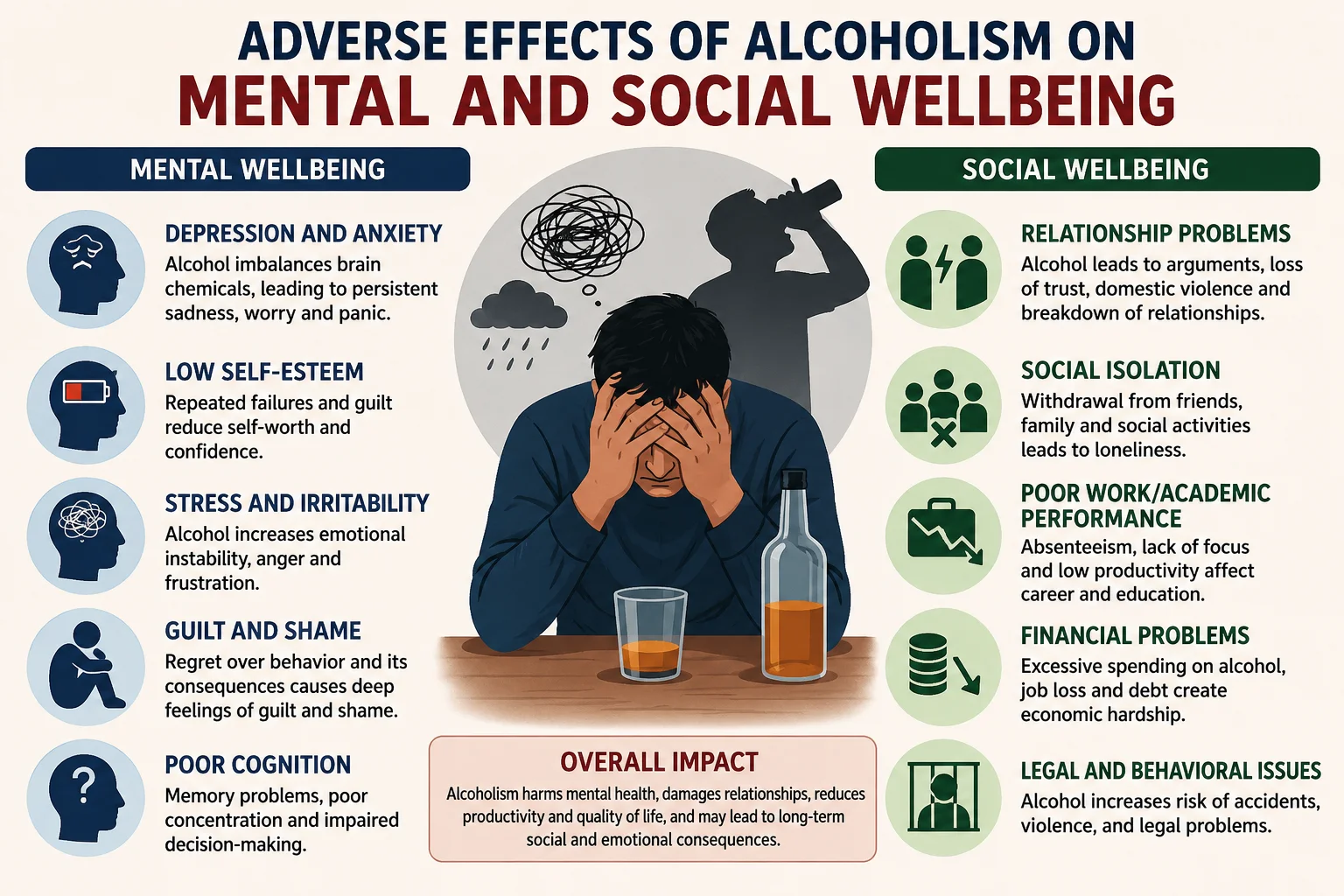
Alcoholism is a chronic disorder that affects not only physical health but also has profound consequences for mental and social wellbeing. Excessive and prolonged alcohol consumption can alter brain function, leading to emotional instability, depression, anxiety, memory problems, and impaired judgment. These mental health challenges often make it difficult for individuals to cope with daily stress and maintain a positive quality of life. Beyond its psychological effects, alcoholism can severely disrupt social relationships, causing conflicts within families, weakening friendships, reducing workplace productivity, and increasing social isolation. The combined impact on mental and social wellbeing can create a cycle of distress that affects both the individual and the wider community. Understanding these consequences is essential for promoting awareness, encouraging early intervention, and supporting recovery and healthy social functioning.
Adverse Mental Effects of Alcoholism
1. Depression
Chronic alcohol use can alter brain chemicals that regulate mood, leading to persistent sadness and depression.
Alcohol affects several neurotransmitters in the brain, including serotonin, dopamine, gamma-aminobutyric acid (GABA), and glutamate, which play important roles in regulating mood, emotions, and motivation. While alcohol may temporarily produce feelings of relaxation or pleasure, long-term use disrupts the normal balance of these brain chemicals. Over time, the brain becomes less able to regulate mood naturally, leading to persistent sadness, loss of interest, hopelessness, and depression. In addition, alcohol can increase stress hormone levels and damage brain regions involved in emotional regulation, further contributing to depressive symptoms.
Study link:
National Institute on Alcohol Abuse and Alcoholism Alcohol and Mental Health
https://en.wikipedia.org/wiki/National_Institute_on_Alcohol_Abuse_and_Alcoholism
Research article:
Alcohol Use Disorder and Depressive Disorders National Center for Biotechnology Information
https://pmc.ncbi.nlm.nih.gov/articles/PMC6799954/?utm_source=chatgpt.com
2. Anxiety Disorders
Alcohol may temporarily reduce anxiety, but long-term use often worsens anxiety symptoms and can trigger panic attacks.
Alcohol initially produces a calming effect by enhancing the activity of GABA (gamma-aminobutyric acid), a neurotransmitter that reduces brain activity and promotes relaxation. However, with repeated and heavy alcohol use, the brain adapts by reducing its natural GABA activity and increasing excitatory neurotransmitters such as glutamate. As alcohol levels fall or during withdrawal, this imbalance can lead to excessive brain activity, resulting in anxiety, nervousness, restlessness, irritability, and even panic attacks. Over time, alcohol dependence can therefore worsen anxiety rather than relieve it.
Study link:
National Institute on Alcohol Abuse and Alcoholism Alcohol and Mental Health Effects
https://www.niaaa.nih.gov/alcohols-effects-health/alcohols-effects-body
Research article:
Anxiety and Alcohol Use Disorders Comorbidity National Center for Biotechnology Information
https://pmc.ncbi.nlm.nih.gov/articles/PMC3860396/?utm_source=chatgpt.com
3. Memory Loss
Excessive alcohol consumption can impair short-term and long-term memory and may lead to blackouts.
Excessive alcohol consumption affects the hippocampus, a region of the brain that is essential for learning and memory formation. Alcohol interferes with the communication between nerve cells and disrupts the process by which short-term memories are converted into long-term memories. During heavy drinking episodes, the brain may fail to store new information properly, resulting in alcohol-induced blackouts, where a person is awake and functioning but later cannot recall events that occurred while intoxicated. Long-term alcohol abuse can also damage brain tissue and lead to persistent memory problems and cognitive decline
Study link:
National Institute on Alcohol Abuse and Alcoholism Alcohol and Memory Blackouts
Research article:
Alcohol Induced Blackouts A Review of Recent Clinical Research National Center for Biotechnology Information
https://pmc.ncbi.nlm.nih.gov/articles/PMC6668891/?utm_source=chatgpt.c
4. Poor Concentration and Attention
Alcohol affects cognitive functions, making it difficult to focus, learn, and make decisions.
Alcohol affects the prefrontal cortex, hippocampus, and other brain regions responsible for attention, learning, memory, reasoning, and decision-making. It disrupts communication between neurons by altering neurotransmitters such as GABA and glutamate, which are essential for normal cognitive function . As a result, individuals may experience difficult in concentrating, slower information processing, impaired learning, poor problem-solving abilities, and reduced decision-making capacity. Long-term alcohol misuse can cause structural and functional brain changes that further impair cognitive performance.
Study link:
National Institute on Alcohol Abuse and Alcoholism Alcohol and the Brain
https://www.niaaa.nih.gov/publications/alcohol-and-brain-overview
Research article:
Alcohol Related Cognitive Impairment and Brain Damage National Center for Biotechnology Information
https://pmc.ncbi.nlm.nih.gov/articles/PMC5086415/?utm_source=chatgpt.com
5. Emotional Instability
Individuals may experience mood swings, irritability, anger, and difficulty controlling emotions.
Alcohol affects brain regions involved in emotional regulation, particularly the prefrontal cortex, amygdala, and limbic system. It disrupts the balance of neurotransmitters such as serotonin, dopamine, and GABA, which help control mood and behavior. As a result, individuals may experience mood swings, irritability, anger, aggression, and difficulty in managing emotions. With chronic alcohol use, these changes can become more pronounced, making emotional responses less predictable and more difficult to control.
Study link:
National Institute on Alcohol Abuse and Alcoholism Alcohol and Mental Health Effects
https://www.niaaa.nih.gov/alcohols-effects-health/alcohols-effects-body
Research article:
The Effects of Alcohol on Emotion in Social Drinkers National Center for Biotechnology Information
6. Impaired Judgment and Decision Making
Alcohol affects the brain's frontal lobe, leading to poor judgment, impulsive behavior, and risky decisions.
The frontal lobe, particularly the prefrontal cortex, is responsible for judgment, planning, self-control, decision-making, and evaluating consequences. Alcohol depresses the activity of this part of the brain, reducing a person's ability to think clearly and control impulses. As a result, individuals may exhibit poor judgment, impulsive behavior, increased risk-taking, aggression, and unsafe decisions such as reckless driving, unprotected sex, or violence. Long-term alcohol misuse can cause structural and functional damage to the frontal lobe, making these problems more persistent.
Study link:
National Institute on Alcohol Abuse and Alcoholism Alcohol and the Brain
https://www.niaaa.nih.gov/publications/alcohol-and-brain-overview
Research article:
Alcohol and the Adolescent Brain Frontal Lobe Effects National Center for Biotechnology Information
https://pmc.ncbi.nlm.nih.gov/articles/PMC7183385/?utm_source=chatgpt.com
7. Sleep Disturbances
Alcohol disrupts normal sleep patterns, causing insomnia, poor-quality sleep, and daytime fatigue.
Alcohol may make a person fall asleep faster, but it disrupts the normal sleep cycle, especially during the second half of the night. It suppresses rapid eye movement (REM) sleep, which is important for memory, learning, and emotional health. As alcohol is metabolized, it can cause frequent awakenings, lighter sleep, and fragmented sleep patterns. Chronic alcohol use can also worsen breathing problems during sleep and contribute to insomnia, resulting in poor-quality sleep, daytime fatigue, reduced concentration, and impaired performance.
Study link:
National Institute on Alcohol Abuse and Alcoholism Alcohol and Sleep
https://en.wikipedia.org/wiki/National_Institute_on_Alcohol_Abuse_and_Alcoholism
Research article:
Alcohol and the Sleeping Brain National Center for Biotechnology Information
https://pmc.ncbi.nlm.nih.gov/articles/PMC5821259/?utm_source=chatgpt.com
8. Increased Stress and Reduced Coping Ability
Dependence on alcohol can make it harder to manage everyday stress and emotional challenges.
Alcohol dependence can reduce a person's ability to cope with stress because the brain becomes increasingly reliant on alcohol to regulate emotions. Chronic alcohol use alters stress-response systems, including the hypothalamic–pituitary–adrenal (HPA) axis, and disrupts neurotransmitters involved in mood regulation. Over time, individuals may become less able to handle everyday pressures without drinking. When alcohol is unavailable or its effects wear off, they may experience increased stress, anxiety, irritability, and emotional distress, making normal life challenges feel more difficult to manage.
Study link:
National Institute on Alcohol Abuse and Alcoholism Alcohol and Stress Response
https://www.niaaa.nih.gov/publications/cycle-alcohol-addiction
Research article:
Stress and Alcohol Use Disorders National Center for Biotechnology Information
https://pmc.ncbi.nlm.nih.gov/articles/PMC3860387/?utm_source=chatgpt.com
9. Alcohol-Induced Psychosis
Severe alcoholism may cause hallucinations, delusions, and confusion, especially during withdrawal.
Severe alcoholism can lead to alcohol withdrawal syndrome when a person suddenly reduces or stops drinking after prolonged heavy alcohol use. Chronic alcohol exposure causes the brain to adapt by increasing excitatory activity and decreasing inhibitory activity. During withdrawal, this balance is disrupted, resulting in excessive brain stimulation. In severe cases, this can cause hallucinations (seeing or hearing things that are not present), delusions, severe confusion, agitation, and disorientation. The most serious form of alcohol withdrawal, known as Delirium Tremens (trembling), can be life-threatening if not treated promptly.
Study link:
National Institute on Alcohol Abuse and Alcoholism Alcohol Withdrawal Syndrome
https://www.ncbi.nlm.nih.gov/books/NBK441882/
Research article:
Alcohol Withdrawal Syndrome National Center for Biotechnology Information
https://www.ncbi.nlm.nih.gov/books/NBK441882/?utm_source=chatgpt.com
10. Suicidal Thoughts and Behavior
Alcoholism is associated with an increased risk of self-harm, suicidal ideation, and suicide attempts.
Alcoholism increases the risk of self-harm, suicidal thoughts, and suicide attempts through several mechanisms. Chronic alcohol use can contribute to depression, anxiety, hopelessness, and emotional distress, all of which are major risk factors for suicide. Alcohol also impairs judgment, reduces self-control, increases impulsivity, and weakens problem-solving abilities, making individuals more likely to act on suicidal thoughts during periods of crisis. In addition, social problems associated with alcoholism, such as relationship conflicts, financial difficulties, and social isolation, can further increase suicide risk.
Study link:
World Health Organization Suicide and Alcohol Use
https://www.who.int/news-room/fact-sheets/detail/suicide?utm_source=chatgpt.com
Research article:
Suicidal Behavior and Alcohol Use Disorders National Center for Biotechnology Information
https://pmc.ncbi.nlm.nih.gov/articles/PMC2872355/?utm_source=chatgpt.com
11. Cognitive Impairment
Long-term alcohol abuse can damage brain cells, resulting in difficulties with thinking, reasoning, and problem-solving.
Long-term alcohol abuse can damage the brain through the direct toxic effects of alcohol and its metabolite acetaldehyde, as well as through nutritional deficiencies, especially thiamine (vitamin B1) deficiency. Chronic alcohol exposure causes the loss of neurons, shrinkage of brain tissue, and disruption of connections between brain cells. Areas involved in thinking, reasoning, planning, memory, and problem-solving, particularly the frontal lobes, are especially vulnerable. These changes can lead to cognitive impairment, making it difficult to process information, make decisions, solve problems, and perform everyday tasks effectively.
Study link:
National Institute on Alcohol Abuse and Alcoholism Alcohol and the Brain
Research article:
Alcohol Related Cognitive Impairment and Brain Damage National Center for Biotechnology Information
https://pmc.ncbi.nlm.nih.gov/articles/PMC5086415/?utm_source=chatgpt.com
12. Alcohol Dependence and Addiction
Psychological dependence develops when a person feels unable to function normally without alcohol.
Psychological dependence develops because repeated alcohol use alters the brain's reward and motivation pathways, particularly those involving the neurotransmitter dopamine. Over time, the brain begins to associate alcohol with pleasure, stress relief, and emotional comfort. As a result, individuals may feel that they need alcohol to relax, cope with stress, socialize, or function normally in daily life. When alcohol is unavailable, they may experience intense cravings, anxiety, irritability, restlessness, and difficulty enjoying activities without drinking. This creates a strong emotional and mental reliance on alcohol, even before severe physical withdrawal symptoms occur.
Study link:
National Institute on Alcohol Abuse and Alcoholism Understanding Alcohol Use Disorder
https://www.niaaa.nih.gov/publications/brochures-and-fact-sheets/understanding-alcohol-use-disorder
Research article:
The Neurobiology of Substance Use Motivation and Addiction National Center for Biotechnology Information
https://pmc.ncbi.nlm.nih.gov/articles/PMC6135092/?utm_source=chatgpt.com
13. Low Self-Esteem and Feelings of Guilt
Alcohol-related problems can lead to shame, guilt, social withdrawal, and reduced self-worth.
Alcohol-related problems often affect many areas of a person's life, including relationships, work, finances, and health. Repeated experiences such as conflicts with family members, poor work performance, accidents, or failure to meet personal responsibilities can lead to feelings of shame and guilt. Over time, these negative emotions may lower a person's self-esteem and self-worth. Individuals may also begin to avoid social situations because of embarrassment, fear of judgment, or worsening mental health symptoms, leading to social withdrawal and isolation. This can create a cycle in which loneliness and low self-esteem further reinforce alcohol use.
Study link:
National Institute on Alcohol Abuse and Alcoholism Alcohol Use Disorder and Recovery
Research article:
Shame Guilt and Alcohol Use Disorders National Center for Biotechnology Information
14. Increased Risk of Dementia
Chronic heavy drinking can contribute to alcohol-related brain damage and increase the risk of dementia later in life.
Chronic heavy drinking can damage the brain through the toxic effects of alcohol and its metabolite acetaldehyde, causing the loss of brain cells and shrinkage of brain tissue. Alcohol also contributes to thiamine (vitamin B1) deficiency, which can damage areas of the brain involved in memory and cognition. Over time, these changes may lead to alcohol-related brain damage (ARBD), characterized by memory loss, impaired reasoning, poor judgment, and difficulty with daily activities. Long-term heavy alcohol consumption is also associated with an increased risk of developing Dementia later in life, particularly when drinking begins at a younger age and continues for many years.
Study link:
Alzheimer Society Alcohol and Dementia Risk
Research article:
Alcohol Use Disorders and Risk of Dementia National Center for Biotechnology Information
https://pmc.ncbi.nlm.nih.gov/articles/PMC6320619/?utm_source=chatgpt.com
15. Social Isolation and Loneliness
Mental health problems associated with alcoholism often strain relationships and lead to withdrawal from social activities.
Mental health problems associated with alcoholism, such as depression, anxiety, irritability, mood swings, and low self-esteem, can make it difficult for individuals to maintain healthy relationships. These problems may lead to poor communication, conflicts with family and friends, loss of trust, and reduced emotional support. Feelings of shame, guilt, or fear of being judged can cause individuals to avoid social gatherings and isolate themselves from others. Over time, this social withdrawal can weaken relationships, increase loneliness, and further worsen both alcohol use and mental health problems.
Study link:
National Institute on Alcohol Abuse and Alcoholism Understanding Alcohol Use Disorder
Research article:
Social Relationships and Alcohol Use Disorders National Center for Biotechnology Information
https://pmc.ncbi.nlm.nih.gov/articles/PMC6683828/?utm_source=chatgpt.com
Adverse Social Effects of Alcoholism:
1. Family Conflicts and Relationship Breakdown
Alcoholism often leads to arguments, loss of trust, domestic violence, and emotional distress within families. It can strain marriages and relationships, sometimes resulting in separation or divorce.
Research link:
Alcohol Misuse and Family Relationships NCBI Review Article
https://pmc.ncbi.nlm.nih.gov/articles/PMC3725219/?utm_source=chatgpt.com
2. Social Isolation
Individuals with alcoholism may withdraw from friends, relatives, and social activities due to shame, guilt, or dependence on alcohol, leading to loneliness and reduced social support.
Research link:
Social Isolation and Alcohol Use Disorders NCBI Article
https://pmc.ncbi.nlm.nih.gov/articles/PMC8059487/
3. Poor Work and Academic Performance
Alcohol abuse can cause absenteeism, reduced productivity, impaired concentration, and poor decision-making, negatively affecting employment and educational achievements.
Research link:
Alcohol Use and Workplace Productivity NCBI Review
https://pmc.ncbi.nlm.nih.gov/articles/PMC6760381/
4. Financial Problems
Spending money on alcohol, combined with reduced work performance and possible job loss, can create significant financial difficulties for individuals and their families.
Research link:
Economic Costs of Alcohol Consumption World Health Organization
https://pmc.ncbi.nlm.nih.gov/articles/PMC8200347/
5. Increased Risk of Accidents and Violence
Impaired judgment and self-control increase the likelihood of road traffic accidents, workplace injuries, aggressive behavior, and criminal activities.
Research link:
Alcohol and Injury Risk World Health Organization
https://www.who.int/news-room/fact-sheets/detail/alcohol?utm_source=chatgpt.com
6. Neglect of Family Responsibilities
Alcohol dependence may lead individuals to neglect childcare, household duties, and other responsibilities, affecting the wellbeing of family members.
Research link:
Impact of Parental Alcohol Misuse on Families NCBI Article
https://pmc.ncbi.nlm.nih.gov/articles/PMC3725219/
7. Stigma and Social Discrimination
People with alcoholism may face negative attitudes, social rejection, and discrimination, which can further reduce their self-esteem and willingness to seek help.
Research link:
Stigma Associated With Alcohol Use Disorders NCBI Article
https://pmc.ncbi.nlm.nih.gov/articles/PMC12517604/
8. Community and Public Health Burden
Alcohol-related accidents, healthcare costs, law enforcement involvement, and loss of productivity place a significant burden on society and community resources.
Research link:
Global Burden of Alcohol Use The Lancet Study
https://www.thelancet.com/article/S0140-6736(18)31310-2/fulltext
These links provide strong research evidence supporting the major adverse social effects of alcoholism.
Therefore, Alcoholism affects not only the individual but also families, workplaces, and communities by causing relationship problems, social isolation, financial hardship, reduced productivity, and increased social and public health challenges.
Key:
cognitive function: It encompasses all conscious and unconscious activities of the brain, including thinking, learning, remembering, reasoning, and perceiving the world around.
Cognitive decline refers to the gradual loss or deterioration of mental functions such as memory, reasoning, attention, and language.
The brain's reward system is a specialized network of structures that reinforces essential survival behaviors (like eating or socializing) by driving motivation and pleasure. When some experiences a rewarding stimulus, the brain releases the neurotransmitter dopamine to encourage for repeat that action
The brain's "motivation pathway" (primarily the mesolimbic pathway) is a neural circuit that drives goal-oriented behavior, desire, and learning. It determines how much effort someone is willing to exert for a reward