
"Digestion is the foundation of health. Give it the time it deserves."
We often focus on what we put on our plate — counting calories, choosing vegetables over junk food, or picking the right protein. But there is one equally powerful factor that most of us overlook — the time we give our body between meals.
Our digestive system is not just a simple tube that processes food. It is a highly sophisticated, intelligent system that works in rhythmic cycles — breaking down food, absorbing nutrients, cleaning itself, and preparing for the next meal. Like any well-oiled machine, it performs best when given the right time to complete each cycle.
Think of it this way — we wouldn't load a washing machine with a new batch of clothes before the previous cycle finishes. Similarly, eating before our body finishes digesting the last meal can lead to bloating, poor nutrient absorption, fatigue, and digestive discomfort.
The gap between meals is not wasted time. It is working time — a window during which our gut heals, cleans, and recharges. Getting this gap right can improve nutrient absorption, boost gut health, stabilize energy levels, reduce bloating and acidity, and support healthy weight management
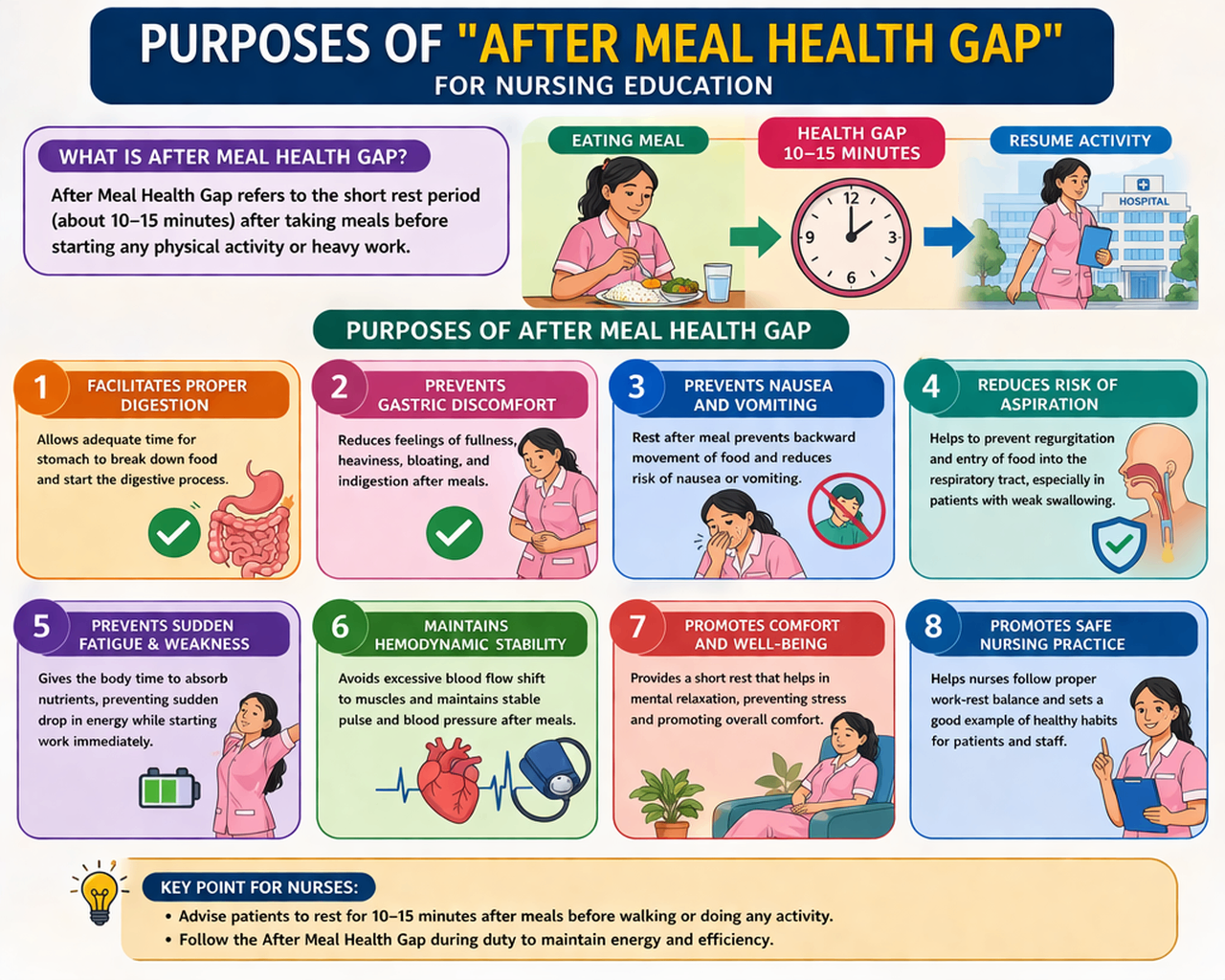
The hours between your meals are a golden window — not just for our digestive system, but for our overall well-being. Rather than reaching for another snack out of boredom or habit, we can use this time intentionally and wisely, starting with a simple 10–15-minute walk after eating — this gentle movement stimulates digestion, helps regulate blood sugar, and prevents that sluggish, heavy feeling after a meal. Stay well hydrated by sipping warm water or herbal teas like ginger, fennel, or peppermint, which actively soothe the gut and support digestive enzyme activity. Avoid cold water or carbonated drinks as they can slow down digestion and cause bloating. If you feel the urge to rest, a short 10–20-minute light rest is fine, but avoid lying down completely as it can cause acid reflux. Use this gap to engage in light, mindful activities — a gentle stretch, a short breathing exercise, or simply a calm walk in fresh air. These activities not only keep our minds off unnecessary hunger but also activate the parasympathetic nervous system — our body's "rest and digest" mode — which is essential for deep, efficient digestion. Remember, the gap between meals is not empty time — it is our body's most productive behind-the-scenes work hours, and honoring it with the right habits can transform how we feel every single day.
How Meal Spacing + a Short Walk Helps Blood Sugar & Diabetes Prevention
1. What Happens to Blood Sugar After Eating?
When we eat, carbohydrates break down into glucose (sugar) and enter our bloodstream. This causes blood sugar to rise. In response, our pancreas releases insulin — a hormone that moves glucose from the blood into cells for energy.
Too much glucose at once → insulin spike → excess glucose stored as fat
Repeated insulin spikes over time → cells become insulin resistant → leads to Type 2 Diabetes
2. How a 15–20 Minute Walk Helps
When we walk after a meal, our muscles start contracting. Here is the magic:
Muscles Act Like a Glucose Sponge
Contracting muscles absorb glucose directly from the bloodstream
This happens without needing insulin — through a protein called GLUT-4 (Glucose Transporter Type 4)
Result → blood sugar drops naturally, reducing the burden on insulin
Reduces Insulin Spikes
Less glucose in the blood = the pancreas releases less insulin
Lower insulin = less fat storage
Over time, = better insulin sensitivity
Speeds Up Glucose Consumption
Walking burns glucose as immediate fuel
Our muscles essentially "consume" the rising blood sugar before it can spike dangerously
3. How Meal Spacing Helps
Without Proper Spacing | With Proper Spacing |
|---|---|
Glucose from the previous meal is still in the blood | Previous glucose is fully processed |
New meal adds more glucose on top | Fresh start for the next glucose wave |
Continuous high blood sugar | Natural dips and rises — healthy pattern |
Pancreas overworked | The pancreas gets rest and recovery time |
Spacing meals 3–4 hours apart allows:
Blood sugar to return to baseline before the next meal
Insulin levels to normalize
The pancreas needs to rest and recover
The science behind it:
We eat, + blood sugar rises. --->. We walk +. Muscles absorb glucose ( no insulin needed). ---> Blood sugar rise is slower and lower. ---> Less insulin is released. +. Less fat is stored. --->. Repeated daily +. Better insulin sensitivity. ---> Diabetes risk is significantly reduced
Real World Impact:
Studies show that a 15–20 minute walk after meals can reduce post-meal blood sugar by up to 30% compared to sitting — more effective than a single long walk once a day.
"Our muscles are the most powerful blood sugar regulators in our body — activate them after every meal."
How Meal Spacing Helps Metabolism & Body Weight
1. What is Metabolism?
Metabolism is our body's engine — the process by which it converts food into energy. A well-functioning metabolism:
Burns calories efficiently
Maintains healthy body weight
Keeps energy levels stable throughout the day
Meal spacing directly fuels and regulates this engine.
2. How Meal Spacing Boosts Metabolism
Activates the Thermic Effect of Food (TEF)
Every time we eat, our body burns calories just to digest the food
This is called the Thermic Effect of Food
Proper meal spacing allows each meal's TEF to complete fully
Eating too soon interrupts this process → fewer calories burned → slower metabolism
Triggers Fat Burning Mode (Lipolysis)
After 3–4 hours of not eating, insulin levels drop
Low insulin signals the body to switch from glucose burning to fat burning
This process is called Lipolysis — where stored fat is broken down for energy
Proper meal spacing activates this fat-burning window between meals
Supports the Migrating Motor Complex (MMC)
The MMC is a powerful digestive cleaning wave that activates between meals
It sweeps undigested food, bacteria, and waste through the intestines
It only activates when you are NOT eating
Proper spacing = MMC completes fully = better gut health = better metabolism
3. How Meal Spacing Manages Body Weight
Prevents Unnecessary Calorie Accumulation
Eating too frequently = constantly elevated insulin
High insulin = body stays in fat storage mode
Proper spacing = insulin drops between meals = body burns stored fat
Regulates Hunger Hormones
Two key hormones control hunger:
Hormone | Role | Effect of Proper Spacing | |
|---|---|---|---|
Ghrelin | Triggers hunger | Becomes more regulated and predictable | |
Leptin | Signals fullness | Becomes more sensitive and effective | |
Without proper spacing → ghrelin stays high, → constant hunger and overeating
With proper spacing → hormones reset naturally, → we eat only when truly hungry
Prevents Mindless Snacking
Proper meal spacing creates structured eating windows
Reduces the habit of eating out of boredom or habit
Fewer unnecessary calories are consumed throughout the day
Stabilizes Energy Levels
Constant eating = constant blood sugar spikes and crashes = energy roller coaster
Proper spacing = steady, sustained energy = less craving for sugary quick fixes
Fewer sugar cravings = lower calorie intake = better weight management
4. The Metabolic Switch — A Key Concept
Time After Last Meal | What Happens in the Body |
|---|---|
0 – 1 hour | Digestion is active, and blood sugar is rising |
1 – 2 hours | Blood sugar peaks and begins to fall |
2 – 3 hours | Insulin drops, digestion is complete |
3 – 4 hours | Metabolic switch activated — body begins burning fat |
4+ hours | Full fat burning mode, MMC cleaning begins |
This is why skipping the gap by snacking constantly keeps our body permanently in storage mode and never allows it to burn what it has already stored.
💡 Simple Daily Practice for Better Metabolism & Weight:
Maintain 3–4-hour gaps between meals
Take a 15–20 minute walk after each meal
Drink warm water or herbal tea between meals
Avoid snacking unless genuinely hungry
Eat mindfully and slowly to activate TEF fully
Sleep at least 7–8 hours — metabolism resets during sleep
"Our body is not just what we eat — it is also when we eat and how long we rest between meals. Spacing our meals is not a diet — it is a lifestyle that keeps our metabolism young and our weight in check."
How Waiting 2–3 Hours After Dinner Prevents Acid Reflux & Improves Sleep
1. What Happens in Our Stomach After Dinner?
When we eat dinner, our stomach immediately gets to work:
Releases hydrochloric acid (HCl) and digestive enzymes
Actively churns and breaks down food
The stomach is full, heavy, and highly acidic
This process takes approximately 2–3 hours to complete
If we lie down during this active phase, we are working against gravity and biology.
2. How Acid Reflux Happens When We Lie Down Too Soon
The Role of the Lower Esophageal Sphincter (LES)
Between our stomach and the food pipe (esophagus) is a muscular valve called the LES (Lower Oesophageal Sphincter)
When working properly, it opens to let food in and closes tightly to keep acid out
When we lie down too soon:
Stomach still full & acidic ---> Gravity no longer keeps acid down. --->. Pressure builds inside the stomach. --->. LES struggles to stay tightly closed. --->. Stomach acid flows back into the oesophagus. --->. Acid reflux / Heartburn
Symptoms: This Causes:
Burning chest sensation (heartburn)
Sour or bitter taste in the mouth
Difficulty breathing or chest tightness
Frequent night wakings
Throat irritation and discomfort
3. How the 2–3 Hour Gap Prevents This
With Gap | Without Gap |
|---|---|
The stomach empties before lying down | Stomach still full when lying down |
Acid production reduces naturally | Acid at peak levels |
LES closes and holds firmly | LES under pressure may leak |
No acid flows back | Acid reflux likely |
Comfortable, undisturbed sleep | Interrupted, uncomfortable sleep |
When we wait 2–3 hours:
The stomach empties 50–60% of its contents
Acid production naturally reduces
LES strengthens its seal
Gravity has done its job — food has moved to the small intestine
No acid left to reflux back
4. How This Directly Improves Sleep Quality
No Acid Reflux = Uninterrupted Sleep
Acid reflux causes micro-arousals — brief wakings we may not even remember
These destroy deep sleep (REM and slow wave sleep)
Eliminating reflux = longer, deeper, more restorative sleep
Body Temperature Drop — The Sleep Trigger
After a meal, our body temperature rises during digestion
Sleep is triggered when body temperature drops
Waiting 2–3 hours allows digestion to complete and body temperature to fall naturally
This temperature drop signals the brain to release melatonin — the sleep hormone
Nervous System Shifts to Sleep Mode
Active digestion keeps the body in sympathetic mode (alert, active)
After 2–3 hours, digestion winds down
Body shifts to parasympathetic mode (rest and digest → rest and sleep)
This shift is essential for falling asleep easily and deeply
Blood Flow Redistributes
During digestion, blood flow is concentrated in the stomach and intestines
The brain receives less blood flow → we feel mentally foggy
After digestion is complete, blood flow redistributes to the brain
Brain gets proper circulation → better sleep quality and cognitive restoration overnight
Growth Hormone Released During Sleep
Deep sleep triggers Human Growth Hormone (HGH) release
HGH is responsible for cell repair, muscle recovery, and fat burning
A full stomach suppresses HGH release
Waiting 2–3 hours = stomach empty = HGH released fully = better recovery overnight
5. The Complete Chain of Events —
Finish Dinner. --->. Wait 2-3 hours (Walk, relax, light activity). --->. Stomach empties. ---> Acid reduces. --->. LES seals tightly. --->. Body temperature drops. --->. Melatonin released. --->. The nervous system shifts to parasympathetic (Rest mode). --->. Blood flow returns to the brain. --->. Fall asleep easily. --->. Deep uninterrupted sleep. --->. Growth hormone released. ---> Body repairs and recovers. --->. Wake up refreshed, energized, and healthier
What to Do in the 2–3 Hour Gap After Dinner
Take a gentle 15–20 minute walk
Sip warm herbal tea — chamomile, ginger, or fennel
Do light stretching or yoga
Engage in calm activities — reading, light conversation
Avoid screens — blue light suppresses melatonin
Avoid lying on the couch, even casually
Sleep on the left side if needed — keeps acid away from the LES naturally
What to Avoid After Dinner:
Avoid | Why |
|---|---|
Lying down immediately | Triggers acid reflux |
Heavy desserts or sweets | Spikes insulin, delays sleep |
Cold water or drinks | Slows digestion |
Vigorous exercise | Overstimulates the nervous system |
Screens and bright lights | Suppresses melatonin |
Arguing or stress | Keeps the sympathetic nervous system active |
"Dinner is not the end of our day — it is the beginning of our body's overnight repair process. Give it the time and space it needs, and it will reward us with deep sleep, better digestion, and a healthier tomorrow."
Why We Should Wait 30–45 Minutes After a Meal Before Bathing
1. What is Happening in our Body Right After a Meal?
The moment we finish eating, our body shifts into full digestive mode:
Our stomach and intestines become the body's top priority
Blood flow is massively redirected to the digestive organs
The digestive system needs maximum energy and circulation to break down food
This is an active, energy-intensive process that demands the body's full attention
Bathing — especially with hot or cold water — during this critical window directly disrupts this process.
2. The Core Science — Blood Flow Diversion
This is the most important reason:
Eat a meal. --->. The body directs a large amount of blood to the stomach, intestines, and digestive organs. --->. If someone bathes immediately (hot or cold). --->. The body now diverts blood to skin and muscles to regulate temperature. --->. Digestive organs receive less blood flow. --->. Digestion slows down significantly. --->. Food sits undigested. ---> Bloating, cramps, indigestion, nausea
Our body simply cannot serve two masters at once — it cannot fully digest food AND regulate skin temperature simultaneously.
3. Hot Bath vs Cold Bath — Different but Both Problematic
Hot Water Bath After Eating:
What Happens | Effect on Digestion |
|---|---|
Blood vessels in the skin dilate (expand) | Blood rushes to the skin surface |
Core body temperature rises | Digestive enzyme activity is disrupted |
Blood drawn away from the stomach | Digestion slows dramatically |
Heart rate increases | The body prioritizes cooling over digesting |
Sweating begins | The body loses fluids needed for digestion |
Result → Bloating, heaviness, nausea, indigestion
Cold Water Bath After Eating:
What Happens | Effect on Digestion |
|---|---|
Blood vessels constrict (tighten) | Blood pulled inward away from the digestive tract |
The body works hard to maintain core temperature | Energy diverted from digestion |
Digestive enzymes slow down | Enzymes work best at body temperature (37°C) |
Stomach muscles tighten | Churning of food is disrupted |
Result → Cramping, slow digestion, discomfort
4. Impact on Digestive Enzymes
Digestive enzymes are temperature sensitive:
They work optimally at body temperature (37°C)
A hot bath raises core temperature → enzymes become less effective
A cold bath lowers temperature → enzymes slow down significantly
Either way → nutrient breakdown is compromised
5. Impact on the Heart and Circulation
After eating:
The heart works harder to pump extra blood to the digestive organs
Blood pressure slightly adjusts to support digestion
This is a normal, controlled cardiovascular shift
Bathing immediately:
Forces the heart to supply blood to both digestive organs AND skin simultaneously
Creates cardiovascular stress
Can cause dizziness, lightheadedness, or fainting — especially in the elderly or those with heart conditions
In extreme cases, sudden hot baths after heavy meals have been linked to vagal syncope (fainting due to nerve reflex)
6. The Drowsy, Heavy Feeling — Why It Happens
When we bathe right after eating:
Digestion is interrupted
Blood sugar regulation is disrupted
The body goes into mild stress mode
Result → we may feel unusually tired, heavy, and uncomfortable
This is our body signaling that it is struggling to manage two major processes at once
7. The Complete Picture
Meal eaten. --->. Digestion begins. --->. Blood flows to the gut.
--->. Wait 30-45 minutes --->. Initial digestion phase completes; blood flow to the gut stabilizes; enzyme activity well established ----->. Safe to bathe. --->. Blood can now shift to skin safely, digestion continues undisturbed, no nausea, bloating, or discomfort
8. Best Bathing Practices Around Meals
Situation | Recommendation |
|---|---|
After a light meal | Wait at least 30 minutes |
After a regular meal | Wait at least 45 minutes |
After a heavy meal | Wait at least 60 minutes |
Hot water bath | Wait longer — more blood diversion |
Cold water bath | Wait at least 30–45 minutes |
Lukewarm bath | The safest option if you must bathe sooner |
9. Additional Tips
If we must bathe sooner, choose lukewarm water — least disruptive to circulation
Keep the bath short if bathing close to mealtime
Avoid vigorous scrubbing — keeps heart rate calmer
The best time to bathe is before meals — refreshes us and stimulates appetite
Morning baths before breakfast are ideal for most people
Stay hydrated — bathing causes mild fluid loss, which affects digestion
Who Should Be Extra Careful:
Elderly people — circulation is slower, the risk of dizziness is higher
Heart patients — extra cardiovascular stress is dangerous
Diabetics — blood sugar fluctuations make this riskier
Pregnant women already have shifted blood circulation patterns
Children's digestive systems are more sensitive
"Our body is remarkably intelligent — it knows exactly where to send blood and energy at every moment. Respect its priorities, and it will reward us with smooth digestion, steady energy, and lasting health."
Drinking Water: While small sips during a meal are fine, wait 30 minutes after eating before drinking a full glass of warm water to aid nutrient breakdown.
Brushing Teeth: Wait 30 minutes after eating before brushing to avoid damaging tooth enamel, especially after acidic foods.