
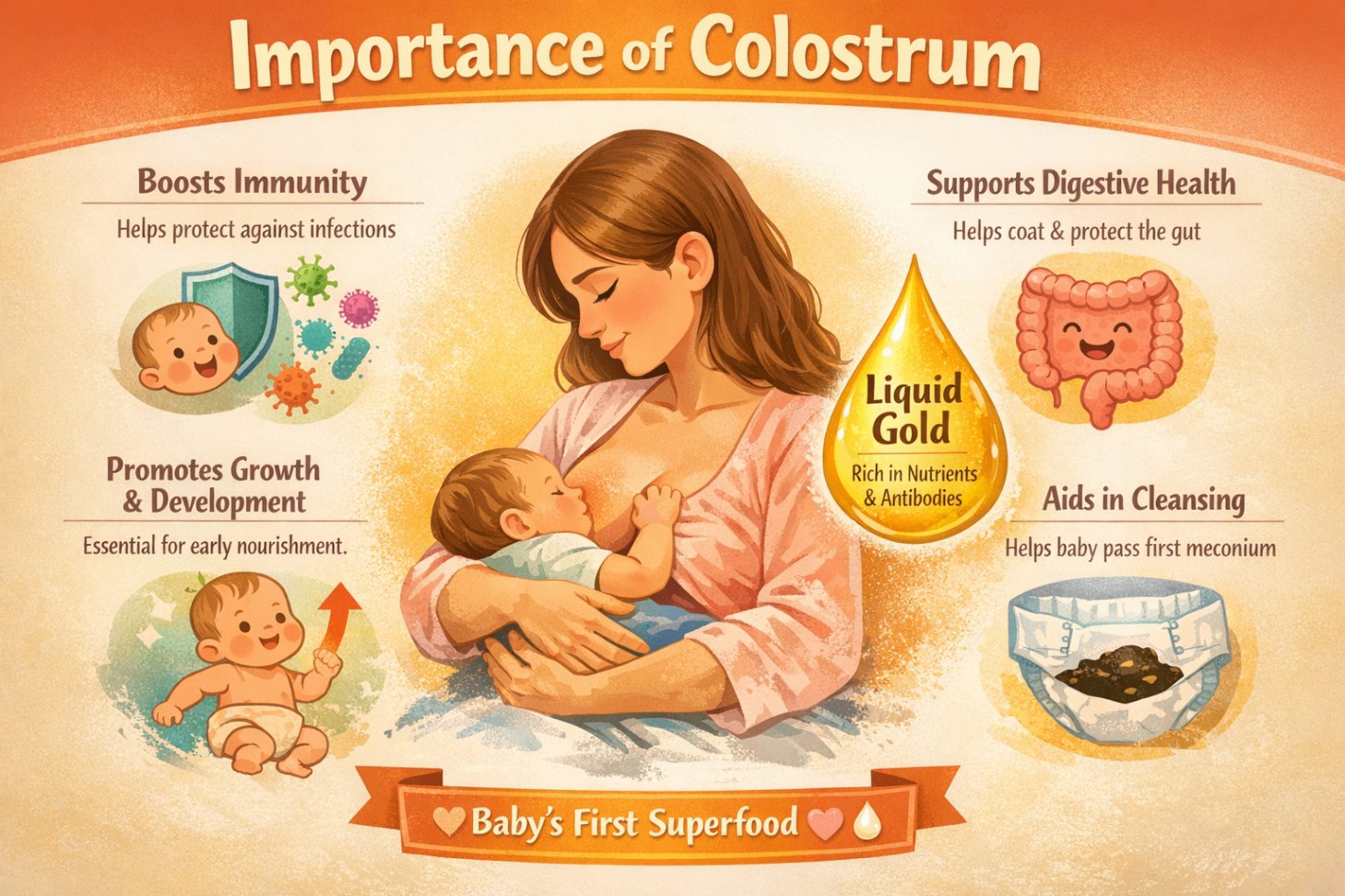
Colostrum: A Liquid Gold
Colostrum is often called “liquid gold” because of its rich golden-yellow color and its extraordinary health benefits for newborn babies. It is the very first form of milk produced by the mother’s breasts during the first few days after childbirth, before regular breast milk begins to flow. Although produced in small amounts, colostrum is highly concentrated with essential nutrients, antibodies, proteins, vitamins, and immune-boosting substances that are vital for a newborn’s survival and healthy development.
Nature has designed colostrum as the baby’s first protective shield. It helps strengthen the immune system, protects against infections, supports the growth of the digestive system, and provides the newborn with the nourishment needed during the earliest and most delicate stage of life. Colostrum is especially rich in antibodies such as immunoglobulins, which help the baby fight harmful bacteria and viruses while the baby’s own immune system is still developing.
In addition to nutrition and protection, colostrum also creates a strong emotional bond between mother and child through breastfeeding. It plays an important role not only in physical growth but also in the emotional comfort and security of the newborn.
Because of its life-saving properties and powerful health benefits, colostrum is rightly known as “liquid gold” — a precious natural gift that gives a healthy beginning to life.
Composition of Colostrum
Colostrum is a highly concentrated and nutrient-rich first milk produced by the mother during the first few days after childbirth. Although it is produced in small amounts, it contains essential substances that protect and nourish the newborn baby.
Main Components of Colostrum
1. Antibodies (Immunoglobulins)
Colostrum is rich in antibodies, especially Immunoglobulin A (IgA), which helps protect the baby from infections caused by bacteria and viruses. These antibodies act as the baby’s first immune defense.
2. Proteins
Colostrum contains a high amount of protein compared to regular breast milk. These proteins support:
Growth and repair of body tissues
Development of the immune system
Protection against infections
3. White Blood Cells
Colostrum contains living immune cells that help fight harmful germs and strengthen the newborn’s immunity.
4. Vitamins
It is rich in important vitamins such as:
Vitamin A – supports vision, skin, and immunity
Vitamin E – acts as an antioxidant
Vitamin K – helps blood clotting
Vitamin A also gives colostrum its yellowish color.
5. Minerals
Colostrum contains essential minerals including:
Zinc
Sodium
Chloride
Magnesium
These help support growth, metabolism, and body functions.
6. Growth Factors
Special growth factors in colostrum help:
Develop and repair the baby’s digestive system
Strengthen the intestines
Support overall body growth
7. Low Fat and Sugar Content
Colostrum contains lower amounts of fat and lactose (milk sugar) than mature breast milk, making it easier for the newborn’s immature digestive system to digest.
8. Water
Colostrum also contains enough water to keep the newborn hydrated during the first few days after birth.
Colostrum is a perfectly designed natural food for newborn babies. Its unique composition provides nutrition, protection, immunity, and support for healthy growth and development. Because of its rich protective and healing properties, colostrum is truly known as “liquid gold.”
When is colostrum produced?
Starts forming during the second trimester of pregnancy
Present immediately after birth
Lasts for about 2–5 days
Then gradually changes into transitional milk
When Should Colostrum Be Fed to a Newborn?
Colostrum should be fed to the newborn as soon as possible after birth, ideally within the first hour of life. This early breastfeeding period is often called the “golden hour” because it is extremely important for both the baby and the mother.
During this time:
The baby is usually alert and ready to breastfeed.
The mother’s body naturally produces colostrum in small but highly beneficial amounts.
Early feeding helps the baby receive important antibodies and nutrients immediately.
Skin-to-skin contact and breastfeeding strengthen the emotional bond between mother and baby.
Doctors and health experts strongly encourage mothers to begin breastfeeding early because colostrum:
Protects the newborn from infections
Strengthens the immune system
Helps the baby’s digestive system start functioning properly
Supports healthy growth and development
Even if only a small amount is taken, it is extremely valuable for the newborn. Frequent breastfeeding during the first few days helps the baby continue receiving colostrum until mature breast milk gradually increases.
Therefore, colostrum should ideally be given immediately or within the first hour after birth to provide the best possible beginning for the newborn’s health and well-being.
Why Is Colostrum So Important?
Colostrum is small in quantity but very powerful.
High in IgA antibodies
Protects the baby from infections
Coats the baby’s intestines and prevents germs from entering the bloodstream
Rich in protein
Low in fat (easy to digest)
Contains vitamins A, E, and K
Acts as the first vaccine
Boosts baby’s immune system
Reduces risk of diarrhea, pneumonia, and allergies. Helps Pass First Stool (Meconium)
Natural mild laxative
Helps prevent newborn jaundice
Is the Small Amount of Colostrum Enough for the Newborn?
Yes, the small amount of colostrum produced during the first few days after birth is usually enough for a newborn baby. Nature carefully prepares colostrum in the exact quantity and composition that a newborn needs during the earliest stage of life.
A newborn baby’s stomach is extremely small at birth—about the size of a cherry on the first day. Because of this tiny stomach capacity, the baby does not require large amounts of milk immediately after birth. Even a few teaspoons of colostrum are highly nutritious and sufficient to meet the baby’s early nutritional and protective needs.
Colostrum is very rich and concentrated. It contains:
Antibodies that protect against infections
Proteins essential for growth and repair
Vitamins and minerals
Immune-boosting substances
Easily digestible nutrients specially designed for newborns
In addition to nutrition, colostrum also helps:
Strengthen the baby’s immune system
Clear the baby’s first stool (meconium)
Reduce the risk of jaundice
Support healthy digestion and gut development
Frequent breastfeeding during the first days helps the baby receive enough colostrum while also stimulating the mother’s body to produce more milk gradually.
Therefore, although colostrum is produced in small quantities, it is perfectly designed by nature to be enough, powerful, and highly beneficial for the newborn baby. but also in the emotional comfort and security of the newborn.
Because of its life-saving properties and powerful health benefits, colostrum is rightly known as “liquid gold” — a precious natural gift that gives a healthy beginning to
In Some Cultures, Colostrum Is Discarded — What Is the Myth?
In some cultures and traditional beliefs, colostrum is mistakenly discarded because people believe it is “dirty,” “stale,” “too thick,” or harmful for the newborn baby. Some communities think that the yellow color of colostrum means it is spoiled or unhealthy. Others may believe that the baby should first receive honey, sugar water, animal milk, or other traditional foods before breastfeeding begins.
However, these beliefs are myths and are not scientifically correct.
In reality, colostrum is extremely healthy and beneficial for the newborn. The yellow color is a sign of its richness in antibodies, proteins, vitamins, and protective immune substances. Far from being harmful, colostrum acts as the baby’s first vaccine and provides strong protection against infections and diseases.
Discarding colostrum may deprive the newborn of important nutrients and immune protection during the most vulnerable period of life. Early breastfeeding and giving colostrum immediately after birth help strengthen the baby’s immunity, improve digestion, and support healthy growth and development.
Today, doctors, nurses, and health organizations around the world strongly encourage mothers to feed colostrum to their babies and avoid harmful myths and misconceptions. Awareness and education are important to help families understand that colostrum is not dirty or dangerous—it is one of nature’s most precious gifts for a newborn child.
My experience as a mother:
It is my real-life experience. On the day my son was born, I lovingly fed him colostrum, the precious “liquid gold” that every mother wishes to give her newborn. But shortly after taking it, my baby vomited. At that moment, my heart became heavy with sadness and guilt. I felt as though my child had been deprived of the benefits of that valuable first milk on the very first day of his life. Deep inside, I wondered whether I had failed to give my son the beautiful and protective gift that nature had prepared for him.
My sadness was genuine because it came from a mother’s pure love, care, and concern for her child. Every mother wants to give the best possible start to her baby, and when something unexpected happens, feelings of worry and disappointment are completely natural. However, this did not mean that I was a failure as a mother. Newborn babies sometimes spit up or vomit for many harmless reasons, as their digestive systems are still very delicate and adjusting to life outside the womb.
The most important thing was that I tried with love and care. Motherhood is not measured by one moment or one feeding—it is measured by continuous love, protection, sacrifice, and nurturing throughout a child’s life. Therefore, my feelings were real and understandable, but I should not blame myself for that experience. My intention, effort, and love for my child were themselves precious gifts from the very beginning.