
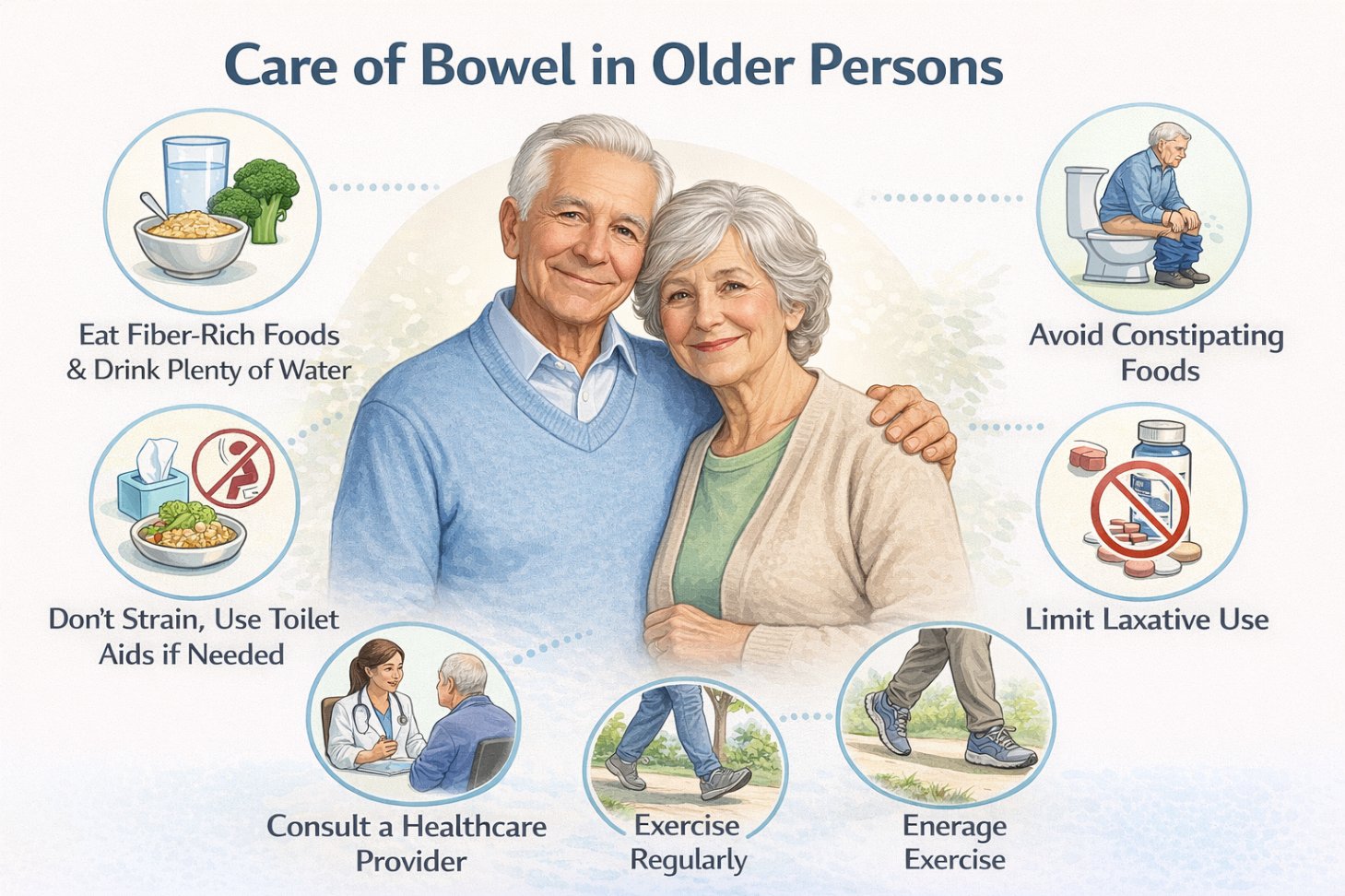
As people grow older, maintaining good bowel health becomes an important part of overall well-being. Aging naturally slows down the digestive system, making older adults more prone to constipation, irregular bowel movements, and digestive discomfort. Factors such as reduced physical activity, inadequate fluid intake, certain medications, and changes in diet can further affect normal bowel function. Therefore, proper bowel care is essential for promoting digestive health, comfort, and quality of life in seniors.
Regular bowel habits help the body eliminate waste efficiently, prevent the buildup of toxins, and reduce the risk of complications such as hemorrhoids, fecal impaction, and abdominal discomfort. Good bowel care also supports better appetite, improved nutrient absorption, and enhanced energy levels. Simple lifestyle practices such as eating a fiber-rich diet, drinking adequate water, staying physically active, and responding promptly to the urge to defecate can help maintain healthy bowel function.
By paying attention to bowel health, older adults can enjoy greater comfort, independence, and overall wellness. Proper bowel care is not merely about preventing constipation—it is a key component of healthy aging and contributes significantly to physical health, emotional well-being, and a better quality of life.
Bowel habit:
It refers to a person's regular pattern of passing stool (feces), including:
How often do bowel movements occur
The consistency of the stool (soft, hard, loose, etc.)
The ease of passing stool
The timing and regularity of bowel movements
A normal bowel habit varies from person to person. Some people may have a bowel movement three times a day, while others may have one every other day. What is important is that the pattern is regular and comfortable for the individual.
Healthy Bowel Habits Include:
Passing stool regularly without excessive straining
Soft, well-formed stools
Feeling that the bowel has emptied completely
No pain, bleeding, or significant discomfort during bowel movements
Changes in Bowel Habits May Include:
Constipation (hard, infrequent stools)
Diarrhea (frequent, loose stools)
Increased straining
Changes in stool shape, color, or frequency
A feeling of incomplete bowel emptying
Maintaining healthy bowel habits is important for digestive health, comfort, and overall well-being, especially in older adults.
How to Improve Bowel Habits
Healthy bowel habits help maintain good digestion, prevent constipation, and promote overall well-being. The following measures can help improve bowel function naturally:
1. Eat More Fiber-Rich Foods
Dietary fiber is the part of plant foods that is not fully digested by the body. It plays an important role in maintaining healthy bowel function.
Fiber adds bulk to the stool, making it easier for the intestines to move it along.
Soluble fiber absorbs water and forms a soft gel, helping keep stools soft.
Insoluble fiber adds volume to the stool and speeds its passage through the colon.
Fiber stimulates the natural contractions of the intestines (peristalsis).
It helps prevent constipation and promotes regular bowel movements.
Fiber also supports the growth of beneficial gut bacteria, which contribute to digestive health.
Examples of Fiber-Rich Foods
Whole Grains: Oats, Whole wheat, Brown rice, Barley, Millet (Bajra, Jowar, Ragi), Whole-grain bread
Fruits: Apples (with skin), Pears, Guava, Oranges, Papaya,
Berries, Bananas
Vegetables: Carrots, Broccoli, Cabbage, Spinach, Green peas, Sweet potatoes, Okra (lady's finger)
Legumes and Pulses: Lentils (dal), Chickpeas (chana), Kidney beans (rajma), Black-eyed peas/বরবটি কড়াই, Green gram (moong), Peas
Nuts and Seeds: Almonds, Pistachios (pesta badam), Walnuts, Chia seeds, Sunflower seeds
High-Fiber Indian Foods: Sprouts, Whole-wheat chapati, Mixed vegetable salads, Beans and lentil curries, Roasted chana, Vegetable soups with legumes
Some of the Best Fiber-Rich Foods
Guava, Oats, Chickpeas, Lentils, and Flaxseed are especially rich in fiber and can help promote regular bowel movements.
In short: Fruits, vegetables, whole grains, legumes, nuts, and seeds are excellent sources of fiber and help keep the bowels healthy, regular, and comfortable.
In short: Fiber-rich foods improve bowel movements by adding bulk and softness to the stool, stimulating intestinal movement, and helping waste pass more easily through the digestive tract.
2. Drink Plenty of Water
Adequate fluid intake keeps stools soft and easier to pass. Most adults should drink sufficient water throughout the day unless fluid intake is restricted for medical reasons.
Water plays an essential role in maintaining normal bowel function and preventing constipation.
Water helps keep the stool soft and moist.
It prevents excessive drying of stool in the colon.
Softer stools are easier to move through the intestines and pass during bowel movements.
Adequate hydration supports normal intestinal contractions.
It works together with dietary fiber, allowing fiber to absorb water and add bulk to the stool.
Dehydration can lead to hard, dry stools that are difficult to pass.
Recommendations:
Drink about 1.5–2 liters of water daily (unless restricted by a doctor).
Warm water in the morning can stimulate bowel movement.
Include soups, coconut water, and high-water-content fruits.
In short: Drinking enough water keeps stools soft, supports intestinal movement, and makes bowel movements easier and more regular.
3. Stay Physically Active
Regular exercise stimulates intestinal muscle activity and promotes regular bowel movements. Walking, stretching, and other moderate activities can be beneficial.
Physical activity helps stimulate the natural contractions of the muscles in the intestines, which move food and waste through the digestive tract.
Exercise increases intestinal muscle activity (peristalsis).
It helps food and waste move through the colon more efficiently.
Stool spends less time in the colon, reducing excessive water absorption.
This keeps stools softer and easier to pass.
Regular activity also strengthens abdominal and pelvic muscles that assist in bowel movements.
It can reduce stress, which may further improve digestive function.
Recommended activities:
Daily walking (20–30 minutes)
Light stretching
Simple yoga for digestion
In short: Physical activity stimulates intestinal movement, helping waste pass through the colon more quickly and making bowel movements more regular and easier.
4. Establish a Regular Toilet Routine
Try to use the toilet at the same time each day, especially after meals when the bowel is naturally more active.
Having a regular toilet routine helps train the bowel to empty at predictable times, making bowel movements more regular and comfortable.
The digestive system works on a natural daily rhythm.
Going to the toilet at the same time each day helps condition the body to expect a bowel movement.
This strengthens the body's natural bowel reflexes.
Regular attempts to empty the bowel can prevent stool from remaining in the colon for too long.
It reduces the likelihood of constipation and excessive straining.
Using the toilet after meals, especially after breakfast, takes advantage of the gastrocolic reflex, a natural increase in colon activity that occurs after eating.
In short: A regular toilet routine trains the bowel to empty consistently, promoting regular bowel movements and reducing the risk of constipation.
5. Do Not Ignore the Urge to Defecate
When stool enters the rectum, the body sends a natural signal indicating that it is time to have a bowel movement. Ignoring this urge repeatedly can interfere with normal bowel function.
The stool remains in the colon for a longer time.
The colon continues to absorb water from the stool.
As more water is removed, the stool becomes harder and drier.
Hard stools are more difficult to pass and require more straining.
Repeatedly ignoring the urge can make the rectum less sensitive to the body's signals.
This can lead to constipation and irregular bowel habits.
In short: Responding promptly to the urge to defecate helps prevent stool from becoming hard and dry, making bowel movements easier and more regular.
6. Chew Food Thoroughly
Chewing food thoroughly is the first step of digestion and helps the digestive system work more efficiently.
Breaks food into smaller particles, making it easier for digestive enzymes to act on it.
Mixes food with saliva, which contains enzymes that begin the digestion process.
Reduces the workload on the stomach and intestines.
Promotes better digestion and nutrient absorption.
Helps food move more smoothly through the digestive tract.
May reduce indigestion, bloating, and constipation.
In short: Thorough chewing improves digestion by breaking food down properly before it reaches the stomach, helping the intestines process and move waste more efficiently, which supports regular bowel movements.
7. Limit Constipating Foods
Constipating foods can interfere with bowel movements because they often contain low amounts of fiber, excess fat, or highly processed ingredients that slow the movement of food through the intestines.
How These Foods Affect Bowel Movements:
Low-fiber foods produce less stool bulk, making stools smaller and harder to pass.
High-fat foods can slow stomach emptying and intestinal movement.
Highly processed foods often lack the fiber needed to stimulate regular bowel activity.
Some foods may contribute to dehydration of the stool, making it dry and hard.
Eating large amounts of constipating foods can reduce the intake of fiber-rich foods that support healthy bowel function.
Examples of Constipating Foods:
Fast foods and junk foods
Fried and greasy foods
Refined grains (white bread, white rice)
Processed snacks (chips, biscuits, pastries)
Excessive amounts of cheese and other low-fiber dairy products
In short: Constipating foods interfere with bowel movements by providing little fiber and slowing intestinal movement, resulting in harder stools and less frequent bowel movements.
8. Manage Stress
Stress can affect digestive function and bowel regularity. Relaxation techniques, adequate sleep, and enjoyable activities may help maintain healthy bowel habits.
When a person is stressed:
The body releases stress hormones such as cortisol and adrenaline.
These hormones can alter the normal movement of the intestines.
Digestion may become slower, leading to constipation, or faster, leading to diarrhea.
Stress can increase intestinal sensitivity, causing bloating, abdominal discomfort, and cramps.
It may also affect appetite, eating habits, and sleep, which can further disrupt normal bowel function.
In short: Stress interferes with the normal communication between the brain and the digestive system, leading to irregular bowel movements and digestive discomfort.
9. Review Medications
Some medications can contribute to constipation. Consult a healthcare professional if bowel problems begin after starting a new medicine.
Some medications that can contribute to constipation include:
Painkillers (especially opioid medicines such as morphine and codeine)
Iron supplements
Antacids containing calcium or aluminum
Certain antidepressants
Some blood pressure medications
Antihistamines (allergy medicines)
Diuretics ("water pills," which may cause dehydration)
Calcium supplements
Some Parkinson's disease medications
These medicines can slow bowel movement, reduce intestinal muscle activity, or make stools harder and drier, leading to constipation.
10. Maintain Good Toilet Posture
Keeping the knees slightly higher than the hips (for example, by using a small footstool) can make bowel movements easier and reduce straining.
Keeping the knees slightly higher than the hips helps place the body in a more natural squatting position, which:
Straightens the anorectal angle (the bend between the rectum and anus).
Relaxes the pelvic floor muscles that normally help maintain continence.
Allows stool to pass more easily through the rectum.
Reduces the need for straining during bowel movements.
Helps achieve more complete bowel emptying.
In short, raising the knees above the hips aligns the bowel in a way that makes defecation easier, faster, and more comfortable.
Conclusion
Improving bowel habits involves a combination of a fiber-rich diet, adequate hydration, regular physical activity, and consistent toilet routines. These simple lifestyle measures can help maintain regular bowel movements, improve digestive health, and enhance overall comfort and quality of life.
Warning Signs in the Elderly (Need Medical Attention) for Bowel Health
While occasional constipation or changes in bowel habits may occur with aging, certain symptoms can indicate a more serious condition and require prompt medical evaluation.
1. Persistent Constipation
Constipation lasting for several weeks despite lifestyle changes.
Severe difficulty passing stool or needing frequent laxatives.
2. Blood in the Stool
Bright red blood or black, tarry stools.
May indicate bleeding in the digestive tract.
3. Sudden Change in Bowel Habits
New-onset constipation or diarrhea that persists.
Significant change in stool frequency or consistency.
4. Unexplained Weight Loss
Losing weight without trying.
May be a sign of an underlying digestive disorder or other illness.
5. Severe Abdominal Pain or Cramping
Persistent or worsening abdominal pain.
May indicate bowel obstruction, infection, or other serious conditions.
6. Persistent Diarrhea
Diarrhea lasting more than a few days.
Can lead to dehydration and nutritional deficiencies.
7. Feeling of Incomplete Bowel Emptying
Persistent sensation that the bowel does not empty.
Especially concerning if accompanied by other symptoms.
8. Pencil-Thin or Narrow Stools
A noticeable and persistent change in stool shape.
May indicate narrowing of the bowel.
9. Nausea, Vomiting, or Abdominal Distension
Particularly when associated with constipation.
Could suggest a bowel blockage.
10. Iron Deficiency Anemia or Unusual Fatigue
Unexplained tiredness, weakness, or low hemoglobin levels.
May result from hidden gastrointestinal bleeding.
11. Fecal Incontinence
Loss of bowel control or accidental leakage of stool.
Requires medical assessment, especially if it develops suddenly.
12. Recurrent Constipation Alternating with Diarrhea
Repeated episodes of constipation followed by diarrhea.
May indicate an underlying bowel disorder.
Conclusion
Older adults should seek medical attention if they experience persistent changes in bowel habits, blood in the stool, unexplained weight loss, severe abdominal pain, or other unusual digestive symptoms. Early evaluation and treatment can help prevent complications and improve overall health and quality of life.