
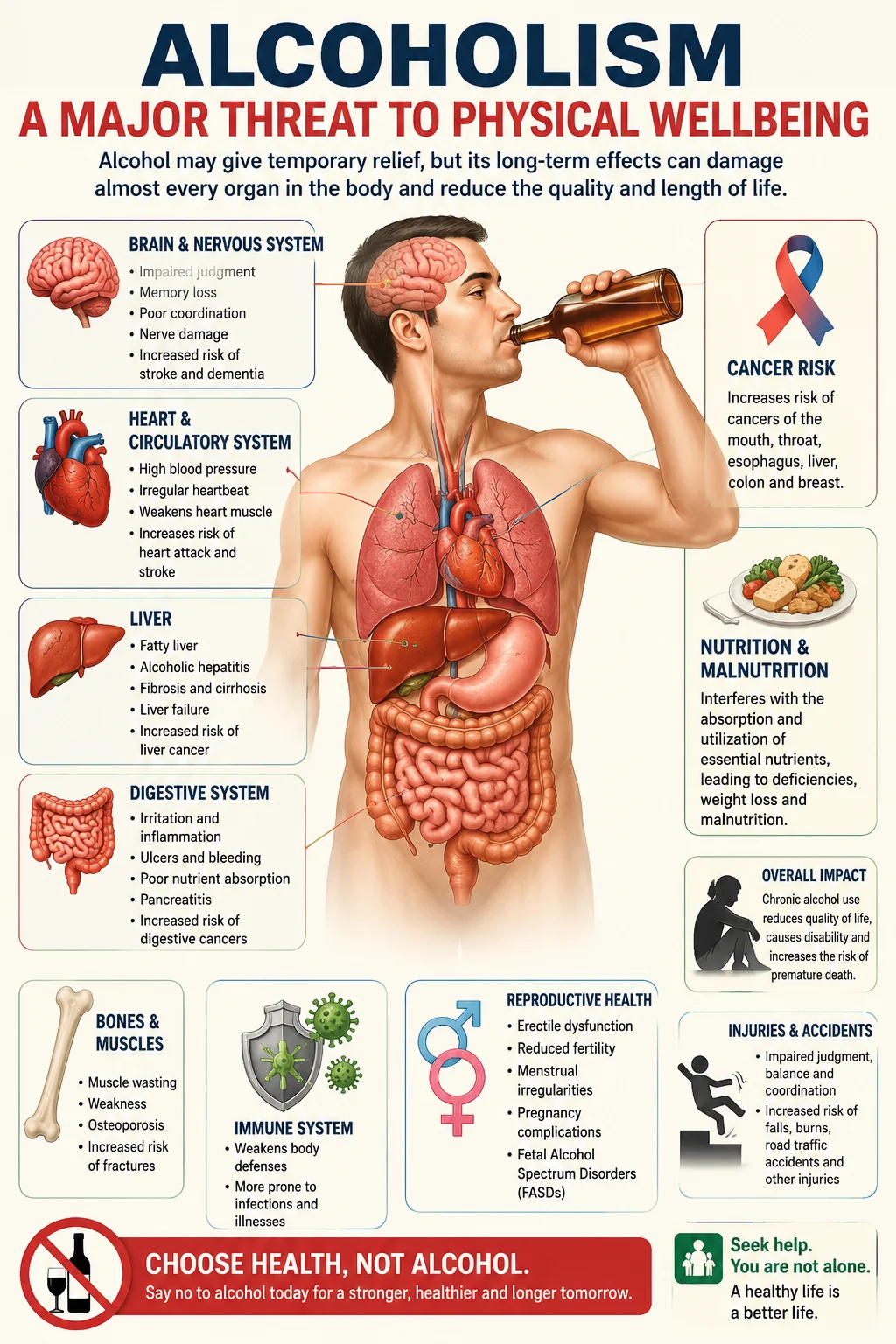
Alcoholism is a chronic disorder characterized by the excessive and uncontrolled consumption of alcohol despite its harmful consequences. It is a major public health concern that significantly threatens physical wellbeing. Alcohol affects nearly every organ in the body, and long-term misuse can lead to serious health problems such as liver disease, cardiovascular disorders, digestive system damage, weakened immunity, neurological impairment, cancer, malnutrition, and reproductive dysfunction. In addition, alcohol-related accidents and injuries contribute substantially to illness and premature death worldwide. The physical effects of alcoholism often develop gradually but can become severe and irreversible if alcohol use continues. Understanding the impact of alcoholism on physical health is essential for raising awareness, promoting prevention, and encouraging individuals to adopt healthier lifestyles and seek help when needed.
Physical Health Hazards of Alcoholism
1. Liver Disease
Chronic alcohol use can cause fatty liver, alcoholic hepatitis, fibrosis, and cirrhosis.
Alcohol is primarily metabolized in the liver. During this process, toxic substances such as acetaldehyde and reactive oxygen species (A highly reactive free radical produced mainly in the mitochondria during aerobic respiration) are produced. These substances damage liver cells, trigger inflammation, and promote the accumulation of fat within the liver. Continued alcohol consumption leads to progressive liver injury:
Fatty liver: Fat accumulates in liver cells due to altered fat metabolism.
Alcoholic hepatitis: Persistent alcohol exposure causes liver inflammation and cell damage.
Fibrosis: Repeated injury stimulates the formation of scar tissue in the liver.
Cirrhosis: Extensive scarring replaces healthy liver tissue, impairing liver function permanently.
Study link:
National Institute on Alcohol Abuse and Alcoholism: Alcohol and the Liver
https://www.niaaa.nih.gov/alcohols-effects-health/alcohols-effects-body
Research article:
Alcohol Associated Liver Disease Nature Reviews Disease Primers
https://www.nature.com/articles/s41572-018-0014-7
2. Cardiovascular Problems
Excessive drinking increases the risk of high blood pressure, irregular heartbeat, heart failure, and stroke.
Excessive alcohol consumption damages the heart and blood vessels in several ways. Alcohol stimulates the sympathetic nervous system, increases stress hormones, and affects the regulation of blood pressure, leading to hypertension (high blood pressure). It can also directly damage heart muscle cells, causing alcoholic cardiomyopathy, a condition in which the heart becomes enlarged and weakened, eventually leading to heart failure. In addition, alcohol can disrupt the heart's electrical activity, increasing the risk of irregular heart rhythms (arrhythmias) such as atrial fibrillation. High blood pressure and abnormal heart rhythms further increase the risk of stroke by promoting blood clot formation and reducing blood flow to the brain.
Study link:
American Heart Association Alcohol and Heart Health
Research article:
Alcohol Consumption and Cardiovascular Disease Nature Reviews Cardiology
https://www.ahajournals.org/doi/10.1161/CIR.0000000000001341
3. Digestive System Disorders
Alcohol can cause gastritis, stomach ulcers, acid reflux, and inflammation of the pancreas (pancreatitis).
Alcohol irritates and damages the lining of the stomach and digestive tract. It increases stomach acid production and weakens the protective mucus barrier, leading to gastritis and increasing the risk of stomach ulcers. Alcohol also relaxes the lower esophageal sphincter (LES), allowing stomach acid to flow back into the esophagus, causing acid reflux (GERD). In the pancreas, alcohol promotes the premature activation of digestive enzymes inside pancreatic cells, resulting in inflammation and injury known as pancreatitis.
Study link:
National Institute on Alcohol Abuse and Alcoholism: Alcohol Effects on the Digestive System
https://www.niaaa.nih.gov/alcohols-effects-health/alcohols-effects-body
Research article:
Alcoholic Pancreatitis Pathogenesis and Management National Center for Biotechnology Information
https://pmc.ncbi.nlm.nih.gov/articles/PMC5513683/?utm_source=chatgpt.com
4. Weakened Immune System
Alcohol suppresses immune cell function and weakens the body's natural defense mechanisms, increasing the risk of infections and illness.
Alcohol weakens the immune system by reducing the number and function of immune cells such as macrophages, neutrophils, and lymphocytes, which are essential for fighting infections. It also impairs the protective barriers of the lungs and gastrointestinal tract, making it easier for bacteria and viruses to enter the body. As a result, people with chronic alcohol use are more susceptible to infections such as pneumonia, tuberculosis, and other respiratory illnesses, and they may recover more slowly from infections.
Study link:
National Institute on Alcohol Abuse and Alcoholism: Alcohol and the Immune System
https://pmc.ncbi.nlm.nih.gov/articles/PMC4590613/
Research article:
Alcohol and the Immune System: Alcohol Research Current Reviews
https://pmc.ncbi.nlm.nih.gov/articles/PMC4590612/
5. Brain and Nervous System Damage
Chronic alcohol consumption damages brain cells and nerves and contributes to thiamine deficiency, leading to memory problems, impaired coordination, nerve damage, and reduced cognitive function.
Long-term alcohol abuse damages the brain and nervous system through direct toxic effects and nutritional deficiencies, particularly vitamin B1 (thiamine) deficiency. Alcohol can injure neurons, disrupt communication between brain cells, and cause shrinkage of brain tissue. These changes may result in memory loss, difficulty in concentrating, impaired judgment, and other forms of cognitive impairment. Alcohol also affects the cerebellum, the part of the brain responsible for balance and movement, leading to poor coordination. In addition, chronic alcohol use can damage peripheral nerves, causing alcoholic neuropathy, which is characterized by numbness, tingling, pain, and muscle weakness.
Study link:
National Institute on Alcohol Abuse and Alcoholism Alcohol and the Brain
Research article:
Alcohol and the Nervous System National Center for Biotechnology Information
https://www.ncbi.nlm.nih.gov/books/NBK499856/?utm_source=chatgpt.com
6. Increased Cancer Risk
Alcohol consumption is linked to cancers of the mouth, throat, esophagus, liver, colon, and breast. Alcohol promotes cancer by producing acetaldehyde, causing DNA damage and oxidative stress, increasing inflammation, and disrupting normal cell growth and repair mechanisms.
Alcohol increases cancer risk because its breakdown product, acetaldehyde, is a toxic and carcinogenic substance that can damage DNA and interfere with the body's ability to repair damaged cells. Alcohol also generates reactive oxygen species (ROS), which cause oxidative stress and further DNA damage. In addition, alcohol can increase the absorption of other carcinogens (such as those in tobacco smoke), alter hormone levels (particularly estrogen, increasing breast cancer risk), and cause chronic inflammation in tissues. Over time, these effects can contribute to the development of cancers of the mouth, throat, esophagus, liver, colon, and breast.
Study link:
National Cancer Institute Alcohol and Cancer Risk
Research article:
Alcohol Consumption and Cancer The Lancet Oncology Commission
https://www.thelancet.com/journals/lanpub/article/PIIS2468-2667(25)00040-4/fulltext
7. Nutritional Deficiencies
Alcohol interferes with the absorption and utilization of essential nutrients, leading to malnutrition.
Alcohol contributes to malnutrition by damaging the lining of the stomach and intestines, which reduces the absorption of essential nutrients such as vitamins (especially thiamine, folate, vitamin B12, and vitamin A), minerals, proteins, and fats. It also interferes with the digestion, storage, and utilization of nutrients by the liver and other organs. In addition, heavy drinkers often replace nutritious foods with alcohol, resulting in inadequate dietary intake. Over time, these effects can lead to nutrient deficiencies, weight loss, muscle wasting, anemia, weakened immunity, and other complications of malnutrition.
Study link:
National Institute on Alcohol Abuse and Alcoholism: Alcohol and Nutrition
https://pmc.ncbi.nlm.nih.gov/articles/PMC10096942/
Research article:
Alcohol Use and Nutritional Deficiencies National Center for Biotechnology Information
https://pmc.ncbi.nlm.nih.gov/articles/PMC5513689/?utm_source=chatgpt.com
8. Sexual and Reproductive Problems
Alcoholism can cause erectile dysfunction, reduced fertility, menstrual irregularities, and pregnancy complications.
In men, chronic alcohol use can lower testosterone levels, impair sperm production, and damage testicular function, leading to erectile dysfunction and reduced fertility.
In women, alcohol can interfere with the production of reproductive hormones such as estrogen and progesterone, causing menstrual irregularities, ovulation problems, and reduced fertility.
During pregnancy, alcohol can cross the placenta and affect fetal development, increasing the risk of miscarriage, stillbirth, preterm birth, and Fetal Alcohol Spectrum Disorders (FASDs).
Study link:
National Institute on Alcohol Abuse and Alcoholism Alcohol and Reproductive Health
https://www.niaaa.nih.gov/alcohols-effects-health/alcohols-effects-body
Research article:
Impact of Alcohol Consumption on Reproductive Health and Fertility National Center for Biotechnology Information
https://pmc.ncbi.nlm.nih.gov/articles/PMC6761906/?utm_source=chatgpt.com
9. Bone and Muscle Weakness
Chronic alcohol use can damage both muscles and bones. Alcohol interferes with protein synthesis in muscle cells, reduces nutrient absorption, and alters hormone levels needed for muscle growth and repair, leading to muscle wasting (alcoholic myopathy). In bones, alcohol suppresses the activity of osteoblasts (bone-forming cells), impairs calcium and vitamin D metabolism, and disrupts hormones involved in bone health. Over time, this reduces bone density, causing osteoporosis and making bones more fragile. Combined with alcohol-related poor balance and coordination, this significantly increases the risk of falls and fractures.
Study link:
National Institute on Alcohol Abuse and Alcoholism Alcohol and Bone Health
Research article:
Effects of Alcohol on Skeletal and Muscle Health National Center for Biotechnology Information
National Institute on Alcohol Abuse and Alcoholism Alcohol and Bone Health
Therefore, Alcohol reduces muscle protein synthesis, impairs bone formation, and disrupts calcium and vitamin D metabolism, leading to muscle loss, osteoporosis, and a higher risk of fractures.
10. Higher Risk of Injuries and Accidents
Impaired judgment, balance, and coordination increase the likelihood of falls, burns, road traffic accidents, and other injuries.
Alcohol acts as a central nervous system depressant, slowing brain activity and impairing communication between the brain and body. It affects areas of the brain responsible for judgment, decision-making, reaction time, balance, vision, and coordination. As a result, individuals under the influence of alcohol are more likely to take risks, misjudge situations, and respond slowly to hazards. These effects significantly increase the likelihood of falls, burns, drowning, road traffic accidents, workplace injuries, and other accidental injuries.
Study link:
World Health Organization Alcohol and Injuries
https://www.who.int/news-room/fact-sheets/detail/alcohol?utm_source=chatgpt.com
Research article:
Alcohol Use and Injury Risk Centers for Disease Control and Prevention
https://www.cdc.gov/alcohol/about-alcohol-use/index.html
Therefore, Alcohol impairs judgment, slows reflexes, and reduces balance and coordination, making accidents and injuries much more likely.
Oxidative stress is an imbalance between free radicals (unstable oxygen molecules) and antioxidants (defensive molecules) in the body.
DNA, or deoxyribonucleic acid, is the primary hereditary material in nearly all living organisms
Fetal Alcohol Spectrum Disorders (FASDs) are a group of physical, behavioral, and cognitive problems that can occur in a child when the mother consumes alcohol during pregnancy. Alcohol crosses the placenta and can interfere with the normal development of the baby's brain and other organs.