
Acidity is one of the most common digestive problems affecting people of all ages. Many individuals experience symptoms such as heartburn, a burning sensation in the chest, sour belching, bloating, stomach discomfort, and indigestion. In today's fast-paced lifestyle, irregular eating habits, excessive consumption of spicy and processed foods, stress, lack of physical activity, and inadequate sleep have made acidity a frequent health complaint. As a result, many people become dependent on antacids and other medications for temporary relief.
However, acidity is often not merely a problem of excess stomach acid; it is frequently linked to unhealthy lifestyle practices and poor dietary habits. In many cases, simple modifications in daily routines can significantly reduce symptoms and improve digestive health without the need for regular medication. Eating balanced meals, avoiding overeating, maintaining a healthy body weight, managing stress, staying physically active, and adopting proper eating habits can help restore the natural balance of the digestive system.
Natural approaches to managing acidity focus on addressing the root causes rather than simply suppressing symptoms. By understanding the factors that trigger acidity and making appropriate lifestyle changes, many people can achieve lasting relief and improve their overall quality of life. While medications may be necessary in certain situations, healthy daily habits remain the foundation for preventing and controlling acidity naturally.
The journey toward freedom from acidity begins with simple yet powerful lifestyle choices. With proper care, mindful eating, and a healthy routine, it is possible to promote better digestion, reduce discomfort, and enjoy long-term digestive wellness without excessive dependence on medicines.
Causes of Acidity
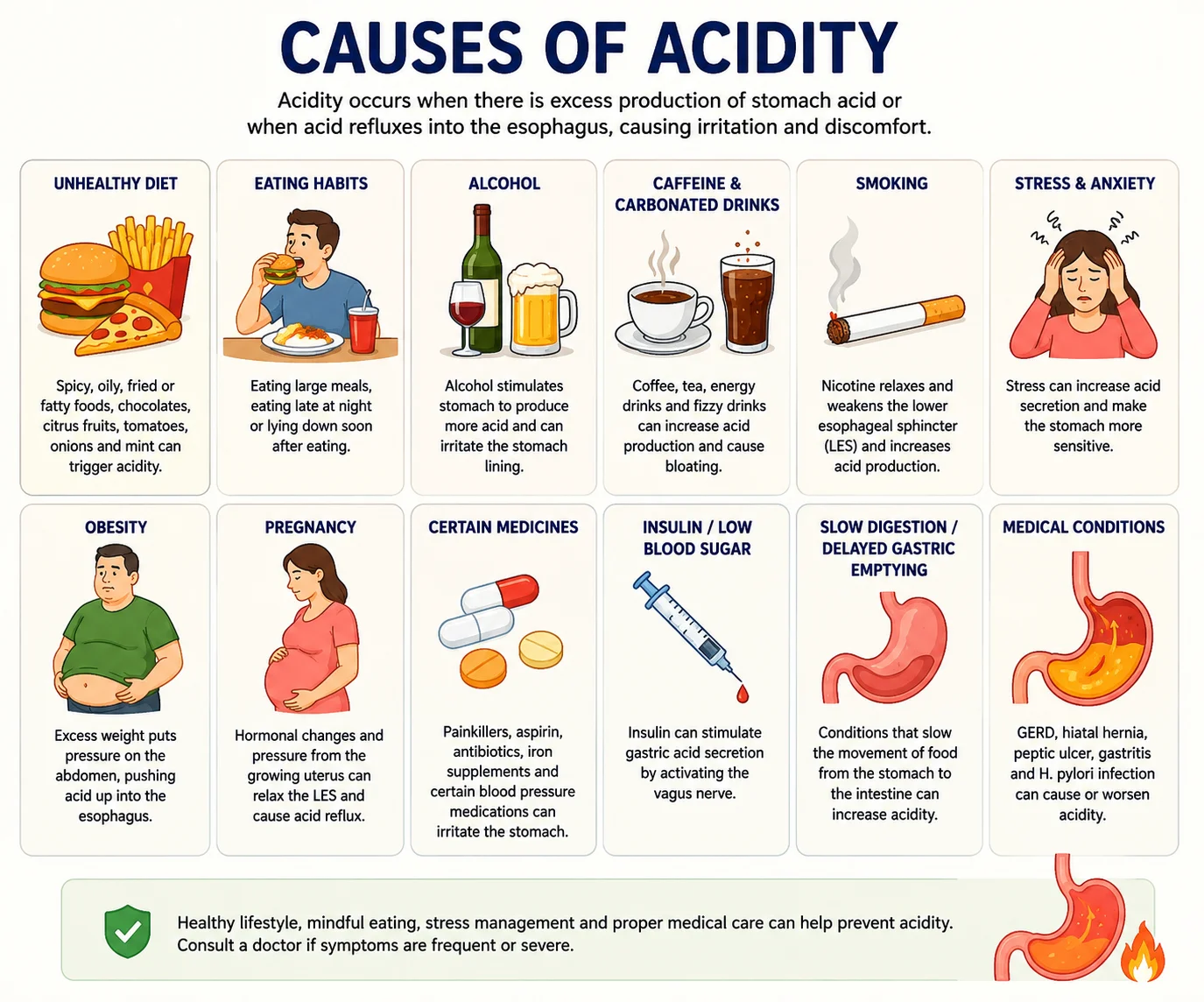
Acidity occurs when excess stomach acid irritates the stomach lining or flows back into the food pipe (esophagus), causing symptoms such as heartburn, sour belching, and stomach discomfort.
1. Overeating and Acidity
The stomach is like a flexible bag that expands when food enters it. When we eat a very large meal, the stomach stretches more than usual to accommodate the extra food.
This excessive stretching:
Increases the pressure inside the stomach.
Stimulates the stomach to produce more acid to digest the larger amount of food.
Puts pressure on the lower esophageal sphincter (LES), the valve between the stomach and the food pipe (esophagus).
When the pressure becomes too high, the LES may not close tightly, allowing stomach acid to flow backward into the esophagus, causing acidity, heartburn, and acid reflux.
2. Spicy, Oily Foods and Acidity
Spicy Foods such as chili contain compounds that can irritate the lining of the stomach and food pipe in sensitive individuals. This irritation may increase the burning sensation associated with acidity and heartburn.
Fatty foods take longer to digest than other foods. As a result, food remains in the stomach for a longer time.
This causes:
Increased stomach acid secretion
Delayed stomach emptying
Increased pressure inside the stomach
The increased pressure can force acid upward into the food pipe (esophagus), causing acid reflux and heartburn.
3. Irregular Meal Timing and Acidity
Skipping Meals or Long Gaps Between Meals
When the stomach remains empty for many hours:
Acid accumulates in the stomach.
The acid can irritate the stomach lining.
This may cause burning, discomfort, bloating, and acidity symptoms.
Eating Late at Night
After a late-night meal, people often lie down soon afterward.
When lying down:
Gravity no longer helps keep stomach contents in the stomach.
Acid can flow back into the food pipe (esophagus).
Heartburn and acid reflux become more likely.
4. Lying Down Soon After Eating and Acidity
When a person lies down immediately after meals, stomach acid can flow back into the esophagus.
5. Excess Tea, Coffee, Caffeinated Drinks, and Acidity
Tea, coffee, and other caffeinated beverages contain caffeine, which can stimulate the stomach to produce more acid. In some people, caffeine can also relax the lower esophageal sphincter (LES), the valve that normally prevents stomach acid from flowing back into the food pipe.
As a result:
More stomach acid is produced.
The LES may become less effective.
Acid can reflux into the esophagus more easily.
Heartburn and acidity symptoms may worsen.
In addition, drinking strong tea or coffee on an empty stomach may further irritate the stomach lining in sensitive individuals.
6. Smoking and Acidity
Between the stomach and the food pipe (esophagus) there is a muscular valve called the lower esophageal sphincter (LES). Normally, this valve opens to allow food into the stomach and then closes tightly to prevent stomach acid from flowing backward.
Chemicals in cigarette smoke, especially nicotine, can relax and weaken the LES. When the valve becomes weak, it does not close properly.
Dennish GW, Castell DO. Inhibitory Effect of Smoking on the Lower Esophageal Sphincter. New England Journal of Medicine. 1971;284(20):1136–1137. This study demonstrated that cigarette smoking significantly reduces lower esophageal sphincter (LES) pressure, thereby promoting acid reflux.
DOI: 10.1056/NEJM197105202842007
Inhibitory Effect of Smoking on the Lower Esophageal Sphincter (NEJM)
As a result:
Stomach acid can move upward into the esophagus.
The lining of the esophagus becomes irritated.
Heartburn, acid reflux, and acidity symptoms occur more frequently.
Smoking may also:
Increase stomach acid production.
Reduce saliva production (saliva helps neutralize acid).
Slow healing of the digestive lining.
7. Consumption of Alcohol and Acidity
Alcohol can affect the digestive system in several ways:
Irritates the Stomach Lining
Alcohol comes into direct contact with the stomach lining and can cause irritation and inflammation (gastritis). This irritation may lead to a burning sensation, discomfort, and increased acidity symptoms.
Increases Stomach Acid Production
Alcohol can stimulate the stomach to produce more acid, which may worsen heartburn and acid-related symptoms.
Chari S, Teyssen S, Singer MV. Alcohol and Gastric Acid Secretion in Humans. Gut. 1993;34(6):843–847.
The study found that alcoholic beverages, particularly beer and wine, can strongly stimulate gastric acid secretion and gastrin release, which may aggravate heartburn and acid-related symptoms.
Study link:
Alcohol and Gastric Acid Secretion in Humans (Gut, 1993)
Relaxes the Lower Esophageal Sphincter (LES)
Alcohol can relax the lower esophageal sphincter (LES), the valve between the stomach and the esophagus. When this valve becomes weak, stomach acid can flow back into the food pipe, causing acid reflux and heartburn.
Delays Stomach Emptying
Alcohol may slow the movement of food from the stomach into the intestine, allowing acid to remain in the stomach longer and increasing the likelihood of reflux.
Kasicka-Jonderko A, Jonderko K, et al. Potent inhibitory effect of alcoholic beverages upon gastrointestinal passage of food and gallbladder emptying. Journal of Gastroenterology. 2013;48:1311–1323.
Study link:
Journal of Gastroenterology study on alcohol and gastric emptying
What it found:
The researchers showed that alcoholic beverages significantly slowed gastric emptying (the movement of food from the stomach into the intestine), and the delay increased with higher ethanol concentrations.
8. Stress, Anxiety, and Acidity
Stress does not necessarily cause excess stomach acid in everyone, but it can make the digestive system more sensitive and worsen existing acidity symptoms.
Increases Stomach Sensitivity
During stress, the brain and digestive system communicate through the brain-gut axis. Stress can make the stomach and esophagus more sensitive to normal levels of acid, causing a stronger burning sensation or discomfort.
Slows Digestion
Stress can slow stomach emptying, causing food to remain in the stomach longer. This increases stomach pressure and the likelihood of acid reflux.
Increases Muscle Tension
Stress may affect the normal functioning of the digestive muscles, including those involved in stomach emptying and in preventing reflux.
Promotes Unhealthy Habits
People under stress may:
Skip meals
Overeat
Consume more tea, coffee, or alcohol
Smoke more
Sleep poorly
These habits can further worsen acidity.
9. Obesity and Acididity
Obesity contributes to acidity through several interconnected mechanisms:
Increased Intra-Abdominal Pressure
Excess visceral fat (belly fat) physically compresses the stomach and surrounding organs. This elevated pressure pushes stomach contents — including acid — upward toward the esophagus, causing reflux and the sensation of acidity.
Lower Esophageal Sphincter (LES) Dysfunction
The LES is the valve between the esophagus and stomach. In obese individuals, the constant upward pressure from abdominal fat weakens and relaxes this sphincter, making it less effective at keeping acid contained in the stomach.
Hiatal Hernia
Obesity significantly increases the risk of a hiatal hernia, where part of the stomach pushes through the diaphragm into the chest cavity. This anatomical disruption severely impairs the acid-containment mechanism.
Hormonal and Chemical Changes
Excess adipose (fat) tissue is metabolically active and releases hormones and inflammatory chemicals that can:
Increase gastrin secretion → gastrin directly stimulates parietal cells in the stomach to produce more hydrochloric acid (HCl)
Elevate leptin levels → high leptin (common in obesity) has been shown to stimulate acid secretion
Promote chronic low-grade inflammation in the gastric lining, disrupting normal acid regulation
Delayed Gastric Emptying
Obesity is associated with slower stomach emptying (gastroparesis-like effect), meaning food and acid stay in the stomach longer, increasing the duration and intensity of acid exposure.
Dietary Habits
Obesity is often associated with high-fat, high-calorie diets. Fatty foods:
Slow gastric emptying
Relax the LES
Directly stimulate more acid secretion
Insulin Resistance & Hyperinsulinemia
Obese individuals often have high insulin levels. Insulin can stimulate gastric acid secretion by activating the vagus nerve, which in turn signals parietal cells to produce more HCl.
Polacek MA, Ellison EH. Insulin-Induced Stimulation of Gastric Acid Secretion. JAMA. 1963;183(12):983–986.
Study link:
Insulin-Induced Stimulation of Gastric Acid Secretion (JAMA)
What it found:
The study demonstrated that insulin-induced hypoglycemia stimulates gastric acid secretion in individuals with intact vagus nerve function, while vagotomy abolishes this response, indicating that the effect is mediated through vagal activation rather than a direct action of insulin on the stomach.
The End Result: GERD
All these factors together make obese individuals to develop GERD (Gastroesophageal Reflux Disease) compared to normal-weight individuals. Weight loss of even 5–10% of body weight has been clinically shown to significantly reduce acid reflux symptoms.
10. Certain Medications
NSAIDs (e.g., Ibuprofen, Aspirin, Diclofenac) work by blocking COX-1 and COX-2 enzymes. NSAIDs=(Nonsteroidal Anti-Inflammatory Drugs)
COX-1 (Cyclooxygenase-1, protecting the stomach lining and maintaining normal kidney function) is responsible for producing protective prostaglandins in the stomach
When NSAIDs block COX-1 → prostaglandin synthesis drops
Fewer prostaglandins = thinner, weaker mucus layer of the stomach
The stomach's own acid now directly attacks the unprotected lining → causing irritation, inflammation, and acidity
Additionally
NSAIDs increase acid secretion directly
They impair blood flow to the stomach lining, reducing its ability to repair itself
Long-term use can lead to gastric ulcers and bleeding
Summary
NSAIDs block the enzyme that makes the stomach's protective mucus coat → acid erodes the exposed lining → irritation, burning, and acidity result.
That's why NSAIDs should always be taken with food or with a PPI or Proton Pump Inhibitor (like Omeprazole) to protect the stomach lining.
11. Gastritis and Acidity
How Stomach Lining Inflammation Causes Discomfort
Normal vs. Inflamed Stomach
When the stomach lining becomes inflamed (Gastritis), the following happens:
Damaged Mucus Barrier
Inflammation destroys the protective mucus layer
Stomach acid directly contacts the raw, sensitive lining→ Burning sensation
Sensitized Nerve Endings
Inflammation activates pain receptors (nociceptors) in the stomach wall. Nociceptors are specialized sensory nerve endings that detect actual or potential tissue-damaging stimuli. Found in skin, muscles, joints, and organs, they act as the body's alarm system, transmitting danger signals to the brain to trigger the sensation of pain
Even normal amounts of acid feel painful→ Increased discomfort and tenderness
Disrupted Acid Regulation
Inflamed parietal cells malfunction — they may overproduce acid
More acid on an already raw lining worsens irritation→ Burning and pain intensify
Impaired Digestion
Inflammation reduces the secretion of digestive enzymes and the stomach acid balance
Food is not broken down properly
The stomach empties more slowly→ Bloating, heaviness, and indigestion
Increased Histamine Release
Inflamed tissues release histamine
Histamine further stimulates acid-producing cells→ More acid, more irritation (a vicious cycle)
Summary
Inflammation damages the protective lining → acid burns exposed tissue → nerves fire pain signals → digestion slows → result is burning, discomfort, and indigestion.
12. Gastroesophageal Reflux Disease (GERD)
The Lower Esophageal Sphincter (LES) opens to let food pass down and stays tightly closed to prevent acid from moving up
A weakened LES fails to close properly, and then stomach acid escapes upward into the esophagus. Acid immediately burns the lining as the esophagus has no mucus protection. Sensitive esophageal tissue causes a burning sensation. Repeated acid exposure (heartburn) leads to inflammation and erosion. Acid reaching the throat/mouth that causes a sour taste and regurgitation.
13. Hiatal Hernia and Acid Reflux
Normally, the stomach lies below the diaphragm, and the diaphragm supports the LES. The diaphragm helps close the LES. So acid stays in the stomach. But in a hiatal hernia, part of the stomach is above the diaphragm, so the diaphragm no longer helps close the LES tightly, and LES support is lost. Acid escapes upward easily into the oesophagus.
Acid Trap Forms
The herniated portion of the stomach sits above the diaphragm
Acid pools in this herniated pouch→ Easily slips back into the esophagus
Pressure Gradient Reverses
Normally, chest pressure is lower than abdominal pressure, keeping acid down
Herniated stomach is now in chest → this pressure advantage is lost→ Acid moves upward freely
Delayed Acid Clearance
A normal esophagus clears acid quickly
Hiatal hernia traps acid longer in the esophagus→ Prolonged burning and damage
14. Pregnancy and Acidity
Two Main Causes
Hormonal Changes — Progesterone
Pregnancy causes a surge in the progesterone hormone
Progesterone relaxes smooth muscles throughout the body (to accommodate the growing baby)
This relaxation also affects the LES (Lower Esophageal Sphincter)
Relaxed LES → fails to close tightly → stomach acid escapes upward
Additionally, progesterone slows gastric emptying due to the muscle relaxation effect → food stays longer → more acid buildup → bloating and indigestion
Growing Uterus — Physical Pressure
As pregnancy progresses, the uterus enlarges upward
It physically compresses the stomach from below
This compression:
Pushes stomach contents upward toward the esophagus
Increases intra-abdominal pressure
Reduces stomach capacity → even small meals cause fullness and reflux
Why It Worsens in the 3rd Trimester
Baby is largest → maximum pressure on stomach
Progesterone levels are highest
Both factors peak together → worst acidity and heartburn
Malfertheiner SF, Malfertheiner MV, Kropf S, et al. A Prospective Longitudinal Cohort Study: Evolution of GERD Symptoms During the Course of Pregnancy. BMC Gastroenterology. 2012;12:131.
Study link:
A Prospective Longitudinal Cohort Study: Evolution of GERD Symptoms During the Course of PregnancyWhat it found:
In 510 pregnant women, the prevalence of gastroesophageal reflux symptoms increased from 26.1% in the first trimester to 36.1% in the second trimester and 51.2% in the third trimester, showing that pregnancy significantly increases the risk of acidity and heartburn.
Summary:
Unhealthy eating habits + Overeating + Spicy/Oily foods + Stress + Smoking + Alcohol + Obesity + Digestive disorders = Increased risk of acidity and acid reflux.